Ceasefire in name only?

Risk-off market amid ceasefire concerns
Wednesday ended firmly in risk-off territory, with European and US stock indices on the ropes and Asia-Pac bourses following suit. The S&P 500 fell 56 points (0.7%) to 7,553, the Nasdaq 100 was down 89 points (0.3%) to 30,571, and the Dow dropped 620 points (1.2%) to 50,687.
Fresh clashes between the US and Iran have understandably cast a bold question mark over the durability of the ceasefire agreement. However, President Trump reportedly told aides that the war with Iran would resume if US soldiers were killed, and the Secretary of State, Marco Rubio, described the recent attacks as ‘tit-for-tat’ and defensive, not an all-out war. As of writing, I do not think it is out of place to say that a ceasefire is an agreement to temporarily STOP fighting, designed to de-escalate violence; I could be off base here and missing something, but does this look like a ceasefire?
Oil climbs, USD gains, crypto slips
Oil prices wrapped up a third day in the green on Wednesday; both Brent crude and WTI added 1.5% and 3.0%, respectively. In FX, the USD gained ground against all G10 peers, with higher-beta currencies underperforming, while US Treasury yields bear steepened amid increased tensions in the Middle East, consequently fuelling inflationary concerns.
I have also been closely watching crypto prices lately, with some desks noting that the move out of digital currencies marks a shift into more traditional markets, including AI-related equities. Against the USD, BTC is on track to record its fourth losing day and is within touching distance of the YTD low of US$59,780, formed on 6 February.
The Fed: Stuck between inflation and a softening jobs market
While we have a relatively thin data slate ahead today, yesterday’s Fed speak along with the May US ADP non-farm employment print and the May ISM services PMI report are worth noting.
Fed officials are signalling a cautious, wait-and-see approach with no clear direction for rates. New York Fed President John Williams stated that monetary policy is ‘exactly in the right place’, seeing no immediate need to move rates either up or down.
Inflation remains elevated at 3.8% (the largest rise since 2023), pressured by energy prices, tariffs, and AI-related investment, and unemployment sits at 4.3%, near what many officials consider full employment. Complicating the outlook, of course, is the blocked Strait of Hormuz, which some Fed officials warn could necessitate a rate hike if the disruption persists.
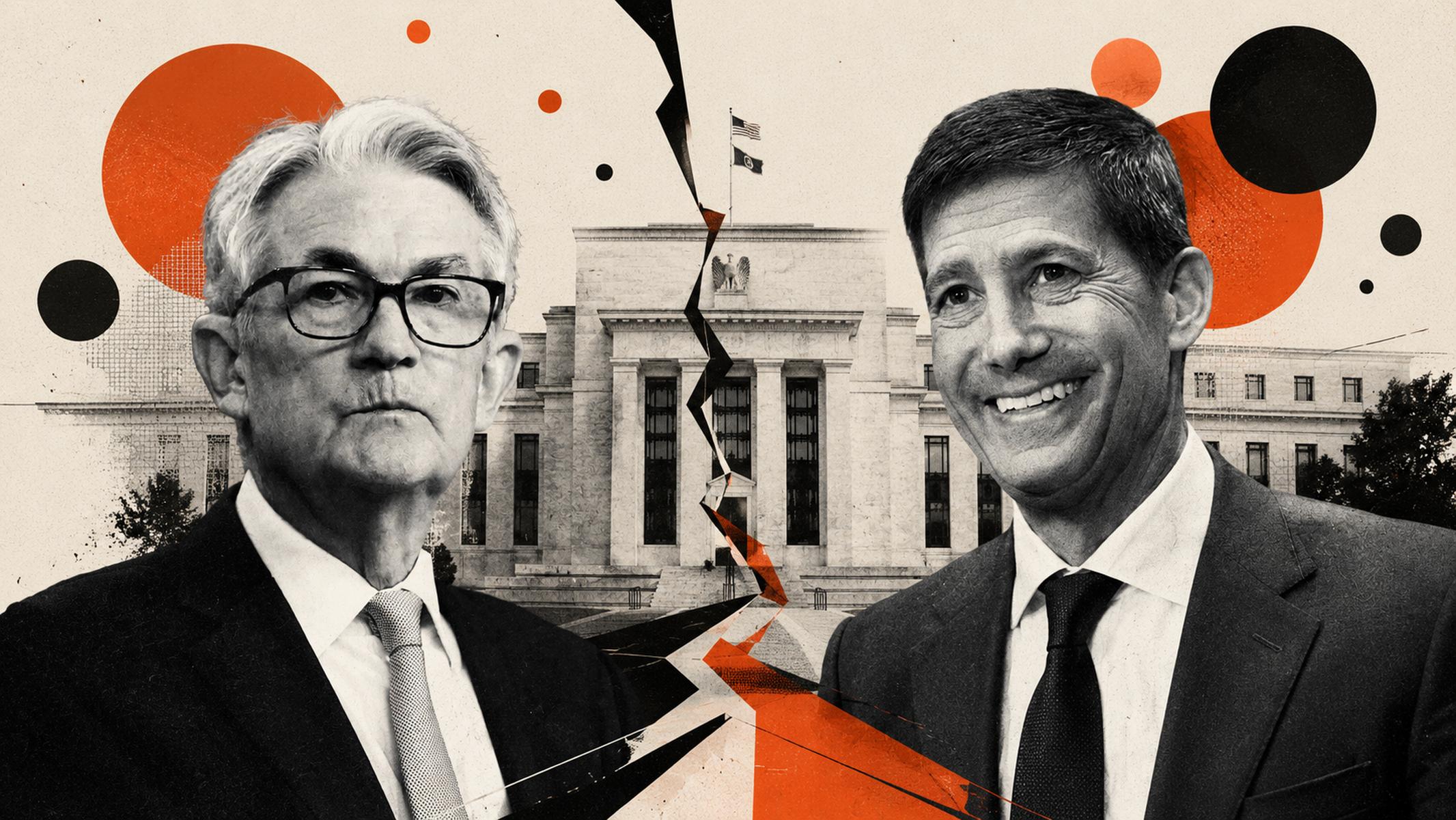
At the upcoming June meeting under new Chairman Kevin Warsh, policymakers are expected to debate dropping language that had signalled a cut as the likely next move – a notable hawkish shift in tone. Overall, the Fed appears to be moving away from a near-term easing bias, with the bar for cuts rising and a hike no longer off the table if energy-driven inflation proves persistent.
ADP beats and ISM prices jump
On the data front, ADP private payrolls came in stronger than forecast, at 122,000 jobs, beating the 117,000 consensus and accelerating from 109,000 in April. In the report, job growth was described as broad, with small, mid-sized, and large companies hiring, albeit the greater gains came from small companies. By sector, ‘education and health services’ dominated, adding 57,000 new jobs, followed by ‘trade, transportation, and utilities’ at 36,000.
For the ISM services PMI, the headline printed in expansionary territory (>50) for the 23rd month at 54.4, exceeding both consensus and prior data of 53.8 and 53.6, respectively. Importantly, the prices-paid component remained elevated at 71.3 (versus 70.7 in April) and was the highest since mid-2022. The employment sub-index also contracted for a third straight month at 47.9, down from 48.0.
For the Fed, it is a challenging situation, as on one hand, we have inflation pressures building – this has also been seen in PPI, CPI and PCE reports – suggesting higher-for-longer rates, while on the other hand, employment sub-indices coupled with hiring freezes argue against keeping rates higher. The stagflationary undertone (rising prices + softening employment) is the Fed’s least comfortable environment.
On balance, Friday’s payrolls number is unlikely to be strong enough to change the Fed’s current posture, but a print at or above 125,000 would catch many off guard and likely prompt investors to fully price in a rate hike this year (currently at 18 bps of tightening by year-end), action that could underpin the USD. Anything at or below 50,000 could be considered dovish, potentially removing most of the tightening bias from this year’s curve and weighing on the buck.
Author

Aaron Hill
FP Markets
After completing his Bachelor’s degree in English and Creative Writing in the UK, and subsequently spending a handful of years teaching English as a foreign language teacher around Asia, Aaron was introduced to financial trading,