Euro area: Momentum fades as energy shock bites
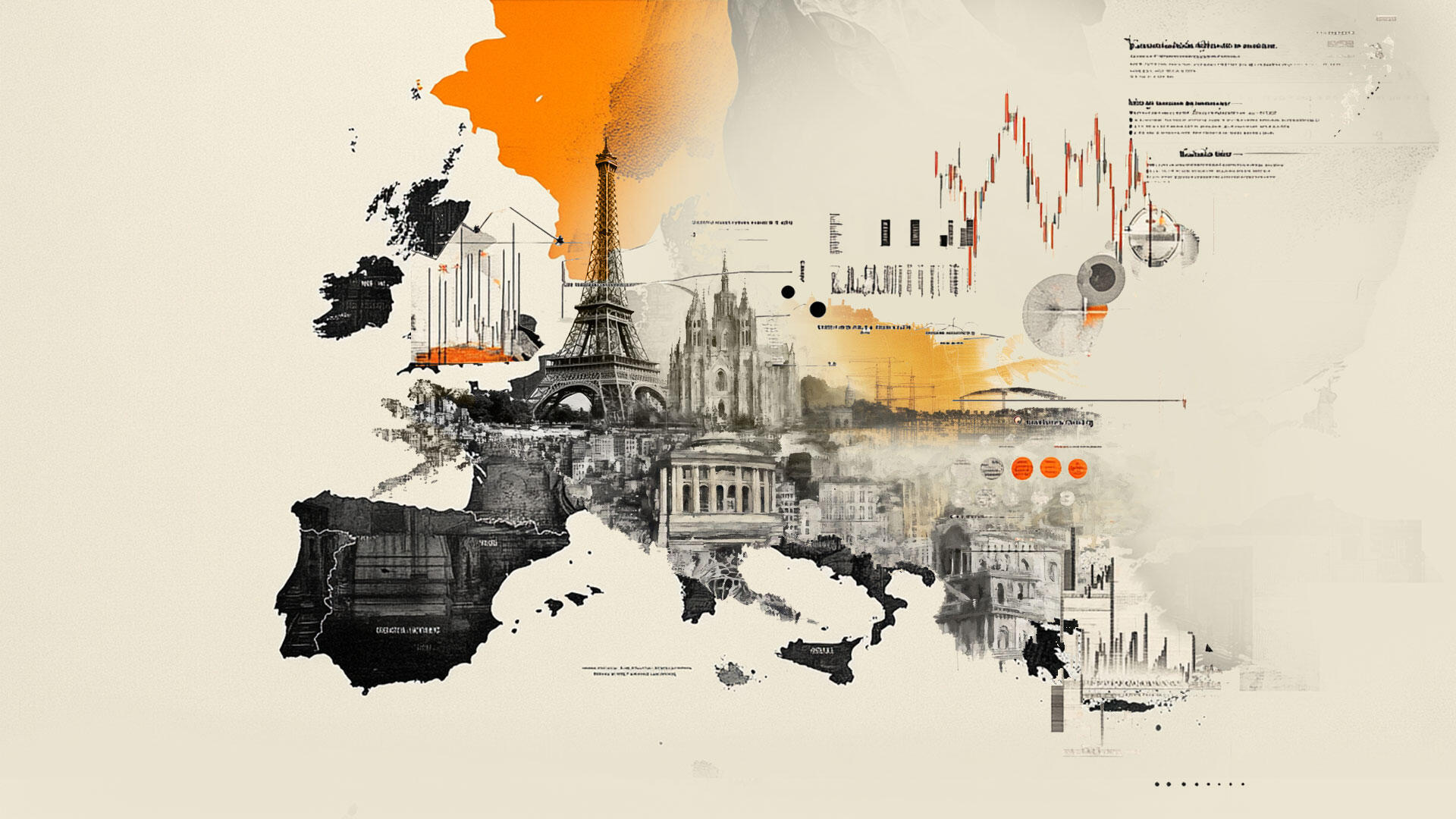
Economic activity weakened further in May with the composite PMI falling to 48.5 from 48.8 in April. Services ticked up marginally but remained the main drag, with its PMI still at 47.7. The impact was especially severe in France, which saw services PMI falling to 44.3 - the lowest since 2020. Manufacturing proved more resilient, with the PMI easing only slightly to 51.6, as firms continue working through pre-war order backlogs. However, this resilience appears fragile and partly reflects longer delivery times "artificially" supporting the headline index (see chart to the right), while softer new orders and weaker employment point to deteriorating underlying conditions. As higher energy prices erode household real incomes and dampen consumer demand, we expect the manufacturing PMI to weaken in the coming months. Reflecting the weaker economic data, we have revised our euro area GDP forecast and now expect growth to slow to 0.7% y/y in 2026, down from 1.2% in our previous projection (see: Research Euro Area: Lower growth and higher inflation, 4 June).
Employment growth in the euro area remained subdued at 0.1% q/q in Q1 2026, confirming that labour market momentum has almost stalled. Despite the unemployment rate remaining low at 6.3% in April, labour demand has clearly moderated compared to 2021-2022. The EU Commission's business survey points to fewer firms facing labour shortages and lower employment expectations. This is feeding through to wages, with negotiated wage growth falling to 2.5% y/y in Q1 and broader wage indicators, including the ECB's wage tracker, pointing to further deceleration. Overall, weaker labour demand is reducing workers' bargaining power, which should keep second-round effects modest.
Euro area HICP inflation rose to 3.2% y/y in May from 3.0% in April, with the increase almost entirely driven by higher energy prices. Core inflation edged up to 2.5% y/y from 2.2%, as services inflation accelerated to 3.5% y/y on the back of a very strong 0.4% m/m s.a. increase. The pickup in services inflation lacks a clear driver, though calendar effects, including bank holidays and the early Easter, may partly explain the move. With food, energy and goods inflation remaining subdued, we tentatively attribute the strong services reading to idiosyncratic factors rather than a broader momentum shift, though we await the detailed breakdown on 17 June for a firm conclusion.
We expect the ECB to hike policy rates by 25bp on 11 June, as ECB GC members have communicated a strong willingness to keep inflation expectations anchored (see ECB preview, 4 June). However, we only expect one additional 25bp hike in Q3 and then a reversal in 2027. Crucially, the fiscal backdrop is far less supportive than during the 2022 energy crisis, limiting amplifications of inflation by fiscal policy. New national energy support measures amount to only EUR14.5 billion so far this year, compared with EUR192.3 billion in 2022. While German fiscal policy remains expansionary and defence spending is rising, consolidation efforts in France and several Southern European countries leave the aggregate euro area fiscal stance broadly neutral.
Author

Danske Research Team
Danske Bank A/S
Research is part of Danske Bank Markets and operate as Danske Bank's research department. The department monitors financial markets and economic trends of relevance to Danske Bank Markets and its clients.