Canadian data preview

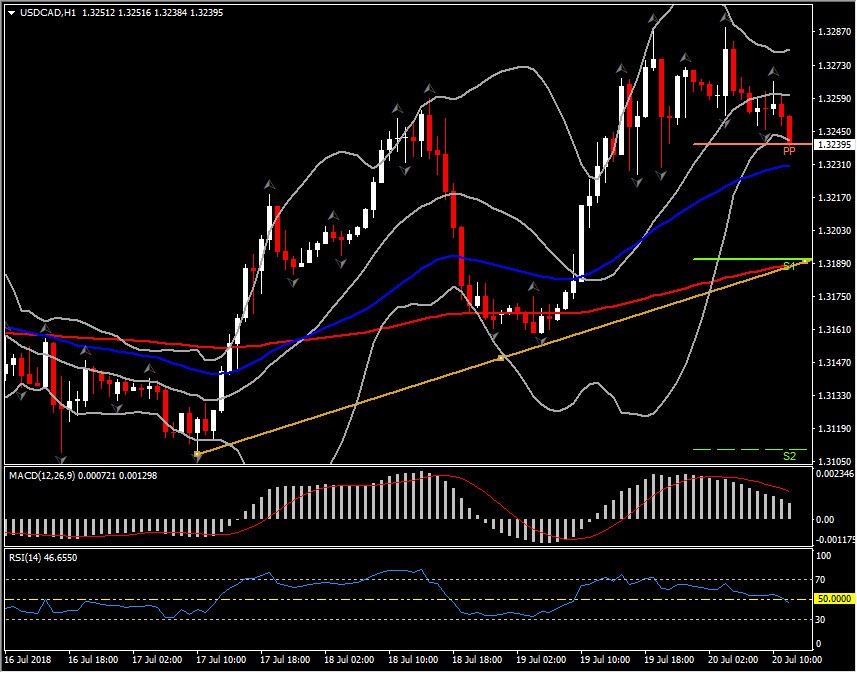
USDCAD, H1
CPI is due today at 12:30GMT and it is expected to dip 0.1% (m/m, nsa) in May after the 0.1% rise in May. The CPI is projected to grow at a 2.2% y/y pace in June, matching the growth rate in May and April. Gasoline prices fell about 2% in June (m/m, nsa), which drives our projection for the 0.1% dip in total CPI during June. Additional factors include auto prices, which have seen substantial declines over the past three months and could continue to decline in June.
Meanwhile, Retail Sales are expected to rebound 1.0% in May after the 1.3% drop in April. The ex-autos sales aggregate is projected to rise 0.5% in May after the 0.1% dip in April. The culprit behind the total sales decline in April was motor vehicle and parts dealers, which saw a 4.3% drop in April. Statistics Canada blamed poor weather as a suspect in the sales tumble during April, noting that Ontario, which was the source of most of the decline in motor and parts dealers, saw cooler than usual conditions in April, with freezing rain featuring in the middle of the month. We expect a rebound in May. CPI’s gasoline price index grew 3.3% in May after the 6.8% drop in April. Hence, gasoline station sales should provide a boost to total and ex-autos sales retail sales.
The BoC has maintained that an unwinding of temporary factors is boosting CPI. They note that it is important to look at core CPI. Hence the core CPI measures is expected to hold at 1.9%, which is consistent with the BoC’s view on inflation. Also, the BoC’s Q2 outlook survey revealed that inflation expectations remain inside the BoC’s 1-3% control range, albeit with a drift to the upper half of the band.
The main consideration is that they can tolerate some heat on the CPI numbers given the economy is finally in expansion mode. Better growth opens up more capacity (via investment and increased labour force participation), allowing them to tolerate faster inflation growth than they usually would.
Currently on the anticipation of the data, the Canadian dollar is getting stronger with USDCAD moving lower. It is trading at the 1.3240 from the 1.3288 high this morning. Support levels hold at 1.3240, 1.3186 and 1.3106. Resistance levels come at 1.3300, 1.3350 and 1.3360.
Daily Support is set at the upside trendline, at 1.3200, while Resistance come at 2 days high at 1.3290.
Author

Having completed her five-year-long studies in the UK, Andria Pichidi has been awarded a BSc in Mathematics and Physics from the University of Bath and a MSc degree in Mathematics, while she holds a postgraduate diploma (PGdip) in

















