Canada Employment Preview: Too much pressure on the BOC
- The Bank of Canada hiked its key interest rate to 0.5% in March.
- The employment sector is expected to have recovered from January’s setback.
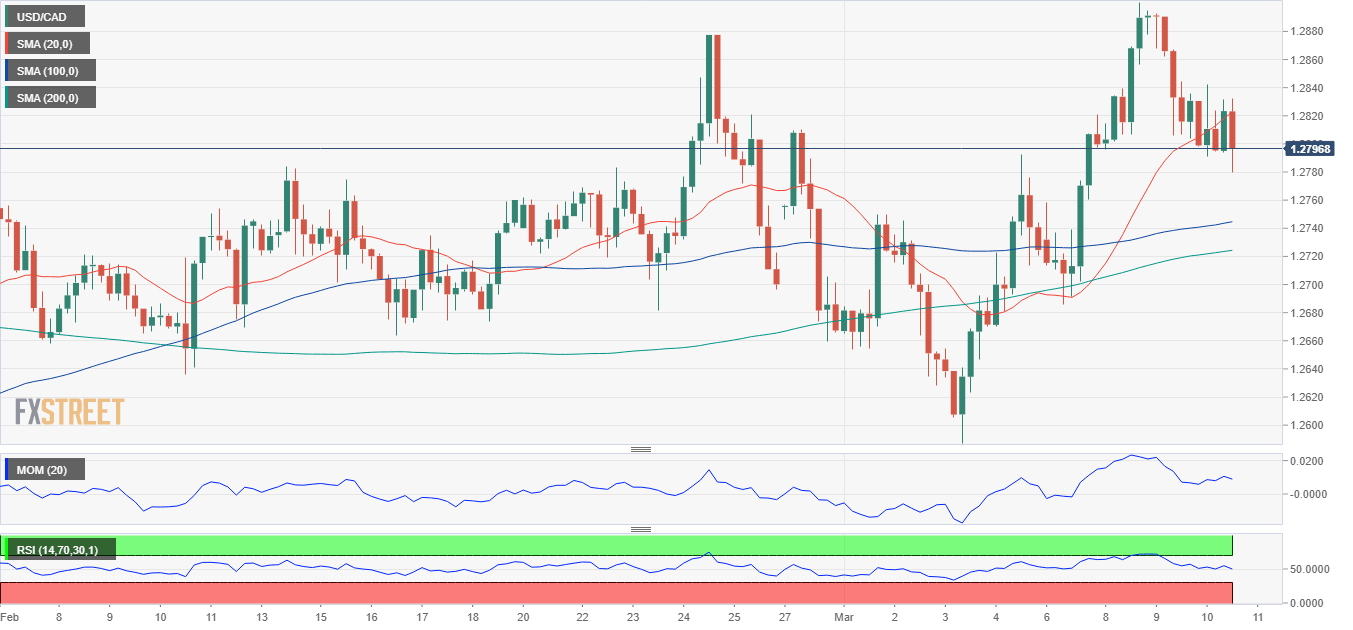
- USD/CAD is in a long-term consolidative phase but could rally once above 1.2900.


Canada will release February employment figures on Friday, March 11. The country is expected to have added 160K new jobs in the month after the -200.1K setback suffered in January amid the outbreak of the coronavirus Omicron variant. The Unemployment Rate is foreseen down to 6.2% from 6.5%, while the Participation Rate is expected to tick marginally higher to 65.1%.
Bank of Canada's focus is on inflation
The Bank of Canada was among the first to pull the trigger. Early in March, the central bank hiked its key interest rate again and sent it to 0.5%, aiming to tame inflation, although warning that high prices will remain a regular part of life for months to come. The Consumer Price Index in the country hit 5.1% in January, according to official estimates, exceeding the 5% estimated by the central bank, meaning more hikes are in the docket.
Beyond raising rates, the central bank “is continuing its reinvestment phase, keeping its overall holdings of Government of Canada bonds on its balance sheet roughly constant until such time as it becomes appropriate to allow the size of its balance sheet to decline,” according to the BOC official statement.
Meanwhile, the Russian invasion of Ukraine has become a new source of concern for policymakers. Crude oil prices reached multi-year highs, resulting in skyrocketing energy prices and hence, additional price pressures. The latest round of peace talks ended without an agreement, and the situation is set to escalate. International sanctions on Moscow add to global businesses' uncertainty and would probably result in steeper bottlenecks, as a result of which inflation will likely continue to increase.
In such a scenario, a healthy Canadian employment report would be critical to take some pressure off central bankers. An upbeat reading would likely help the CAD to temporarily appreciate vs its major rivals, although it would fall short of setting a trend. The ongoing conflict in Eastern Europe will remain the main market driver.
USD/CAD technical outlook
The USD/CAD is in a long-term consolidative phase, confined to a roughly 300 pip range for the last six weeks. Crude oil swings have had a limited long-term impact on the currency for now, which rather moves accordingly to sentiment.
The employment report has to be quite a shocker to interrupt sentiment-related trading and spur some action one way or the other. A critical resistance level is 1.2900, where the pair topped this week. Beyond that level, 1.2963, this year’s high, is the next probable bullish target.
On the other hand, 1.2870 is a relevant support area, as there are multiple intraday highs/lows around it ever since late January. A break below it should favor a bearish extension towards the 1.2800 figure.
Premium
You have reached your limit of 3 free articles for this month.
Start your subscription and get access to all our original articles.
Author
Valeria Bednarik
FXStreet
Valeria Bednarik was born and lives in Buenos Aires, Argentina. Her passion for math and numbers pushed her into studying economics in her younger years.