Bubble Blind Central Bankers
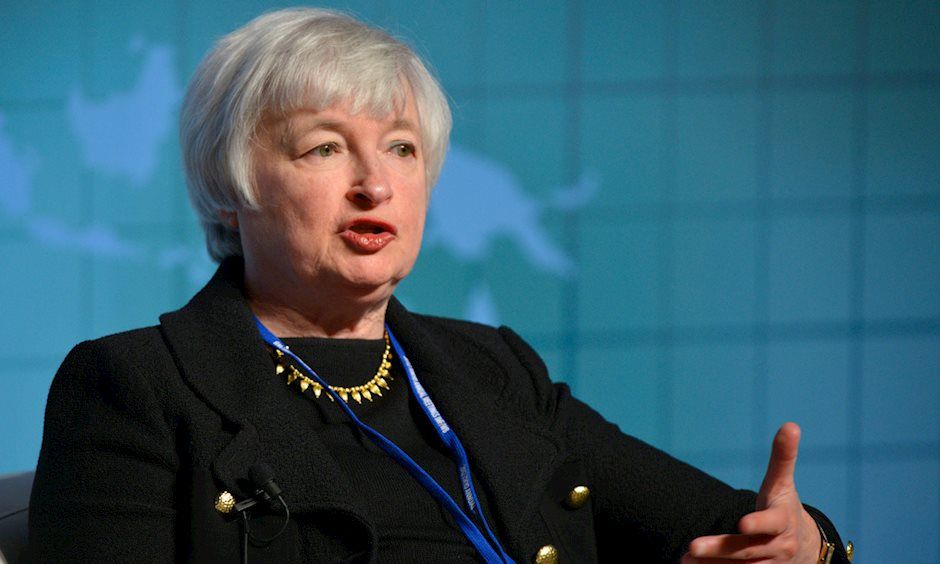

Fed Head Janet Yellen is keeping alive the tradition of her predecessors, Messrs. Greenspan and Bernanke, by showing she is equally as blind-sighted to the bubbles central banks are blowing in the bond and equity markets. During her September press conference, Ms. Yellen stubbornly clung to the misconception that it is only possible to tell if a bubble exists after it bursts. And because of this delusion, in Yellen’s eyes ninety-six months of a virtual Zero Interest Rate Policy (ZIRP) is merely, and I quote, “a modest degree of accommodation.” Her blinders are so opaque that she claims to see, “no signs of leverage building up.” And her feckless ability to spot market imbalances even resulted in this doozy of a Yellen quote: “In general, I would not say that asset valuations are out of line with historical norms.”
Can it really be the case that the women who holds a dictatorship on the cost of money, which is the most important price signal in an economy, is unaware that the stock market is at a level that is virtually the most overvalued in history? The Median PE, Price to sales and Total market cap to GDP ratios all show that the equity bubble is about as far detached from economic reality than at any other time in history. For example, the market cap of equities in relation to the size of the economy is over 70 percent points higher than the level experienced from 1975-1990.
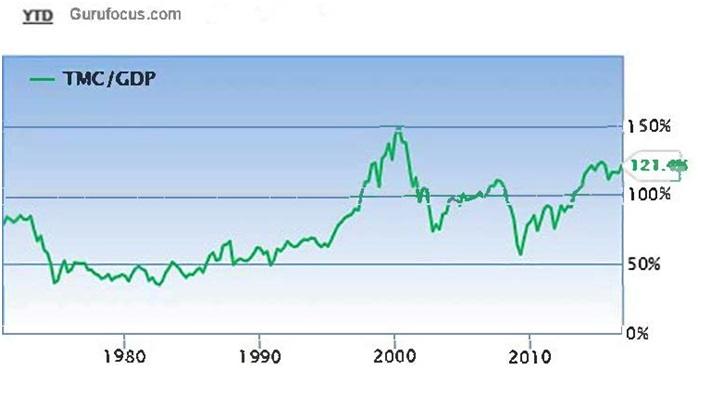
We have indeed climbed up to the very thin air historically speaking on the 25 times trailing earnings on the S&P 500. And the air here is especially rare given the fact that earnings have fallen six quarters in a row. According to Fact Set, earnings will drop by 2.3% year over year; and that is despite the dollar falling 4% and crude oil rising 20% so far in 2016.
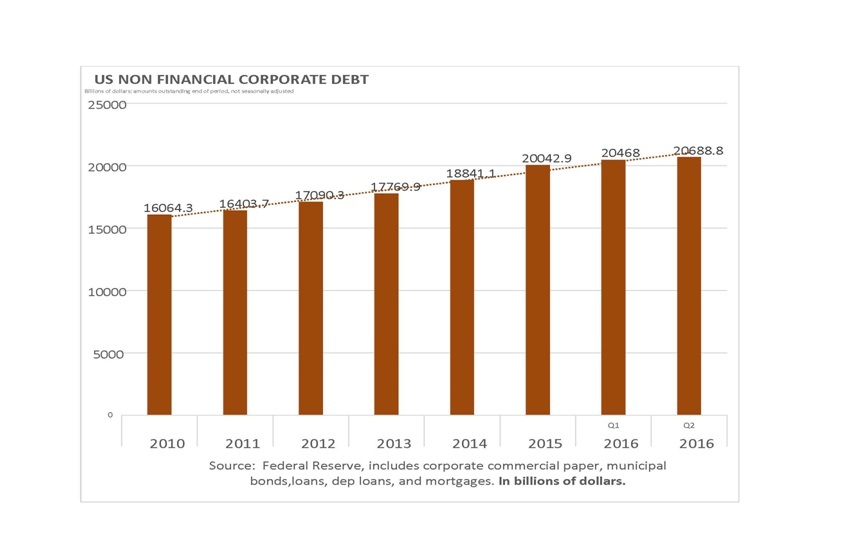
Furthermore, Yellen’s reckless money printing has led to a humongous rise in corporate debt. And to see this bubble all she has to do is view the Fed’s own data.
And this corporate debt bubble isn’t limited to the United States, according to the UN Conference on Trade Development, corporate debt in Emerging Markets (EM) has swelled to $25 trillion. This is 104% of EM GDP, up from 57% at the end of 2008.
Household debt is also surging in the U.S., up to a record $14.3 trillion. And this impulse to take on debt at record low interest rates has spread across the globe. According to Institute for International Finance (IFF); China, Saudi Arabia, Thailand, and Korea led the way with the largest build-up in household debt per adult since 2010.
Indeed according to Deal logic, global debt issuance is up 5.02 trillion dollars so far in the first three-quarters of 2016; this would put it on course to rival the all-time high of $6.6 trillion hit in 2006. Central bank largess has caused government, household and corporate debt to surge across the globe; but according to Ms. Yellen there is nothing to see here.
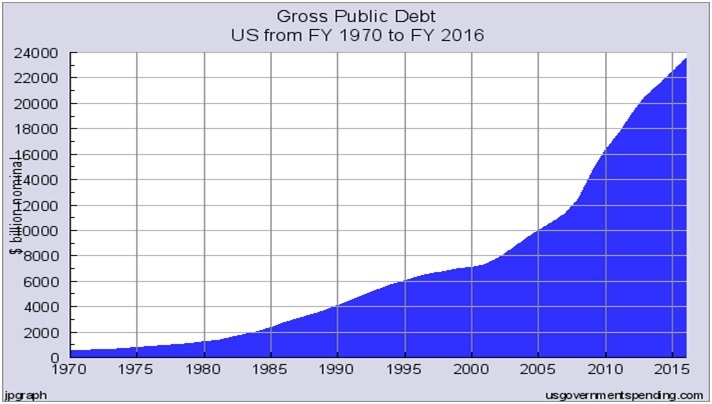
However, Ms. Yellen need not pour through the staid analysis prepared by the IFF or the UN Conference to see if central bankers have caused a debt pile with trillions of dollars’ worth of free money. She only needs to muse the over-indebtedness of our over-leveraged Federal Government to see the bubble in bonds she has helped spawn.
And if none of those points convince her, perhaps the former MIT and Yale Fellow should find it troublesome that close to $13 trillion of global sovereign and corporate debt trades at negative yields. Thirteen trillion in negative yields screams bubble! Its time Yellen took off her blinders and her senses.
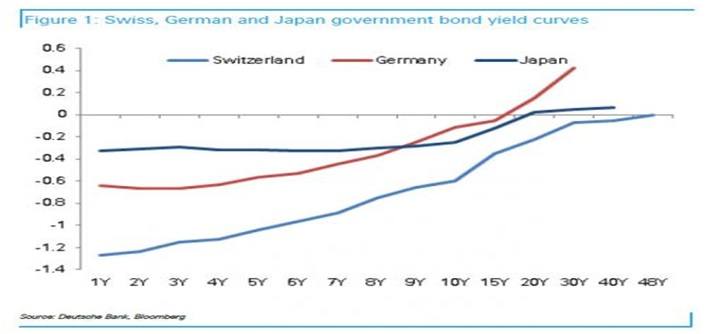
For the first time in the history of economics, corporations and governments are getting paid to lend money. This is the direct result of the 96 months of nearly free money from the Fed and the combined $15 trillion increase in central bank balance sheets since 2007. And this rate of central bank money printing is still growing at a rate of $200 billion each month.
The consequences of these actions has produced, for the first time ever, record bond, stock and home prices that all exist concurrently. Therefore, one has to conclude Ms. Yellen is either bubble blind, or deliberately trying to cover up the massive distortions in asset prices that central banks have created. Perhaps this is because she is viscerally aware that there is no escaping these bubbles without destroying the phony economic recovery, which has been predicated on the Fed’s wealth effect. Incredibly, she recently has gone so far as intimating that the direct purchase of corporate equity and debt could be an appropriate course of action for the Fed to take during the next downturn.
But for now, Ms. Yellen appears ready to resume the aborted rate hike cycle it began last December. However, any such increase in interest rates will expedite the flattening of the yield curve and usher in the next brutal recession, along with the third 50% haircut in equity prices since 2000. And then our perpetually bubble-blind Fed will get that opportunity to purchase a humongous amount of securities in order to reflate the bubble once again—which the Fed still won’t admit its culpability, let alone be able to recognize.
Author
Michael Pento
Pento Portfolio Strategies
Mr. Michael Pento is the President of Pento Portfolio Strategies and serves as Senior Market Analyst for Baltimore-based research firm Agora Financial. Pento Portfolio Strategies provides strategic advice and research for institutional clients.

















