BOJ Preview: One day, it will surprise us all, but not today
- With the rate differential widening, there is little room for USD/JPY slides.
- The Bank of Japan is widely anticipated to maintain its monetary policy unchanged.
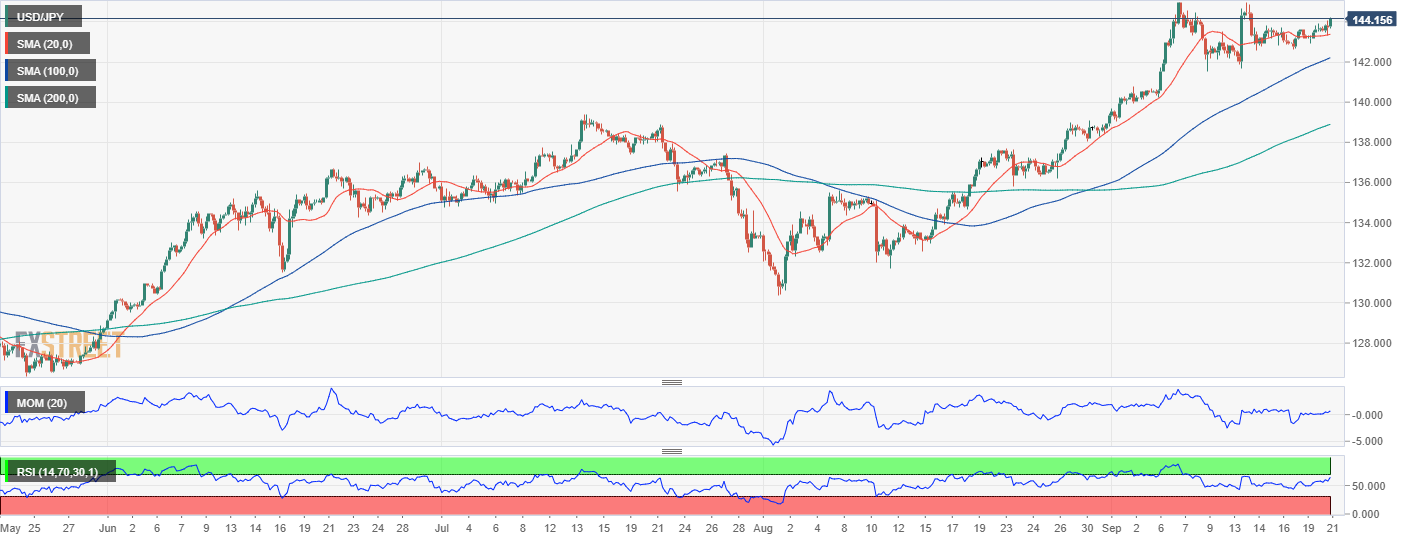
- USD/JPY is in a consolidative phase near a two-decade high of 144.98.

Following the US Federal Reserve’s policy announcement, it will be the turn of the Bank of Japan to decide on its monetary policy. Against the tide, the BOJ is widely anticipated to maintain the status quo, leaving rates at record lows of -0.1% and the yield curve control policy on hold. The latter means the central bank will continue unlimited bond purchases to keep the yield on the 10-year government bond around 0%. Finally, the central bank is expected to confirm the end of its special coronavirus financing program in September, as previously announced.
The Japanese central bank´s strategy to maintain inflation at 2% stopped working five months ago. According to official figures, the annual inflation rate rose by 3% in August from 2.6% in the previous month. The Consumer Price Index rose for twelve consecutive months, and while it remains far below that of its major counterparts, the global pressure points to a further upside.
As Japan is a net energy importer, the Russian conflict is also causing an increased trade deficit in the country. As a result of this situation, the Japanese yen plunged to a two-decade low against its American rival. However, there are null chances the BOJ will suddenly change course and decide on quantitative tightening.
Formal intervention in the making?
There is, however, one caveat. Bank of Japan Governor Haruhiko Kuroda has reportedly conducted a foreign exchange check, which somehow opens the door for formal intervention. The central bank meeting could be the perfect time to announce a measure in that direction
The imbalance with all other central banks is likely to keep USD/JPY on its way up, although an unexpected tightening could result in the pair plummeting hundreds of pips. Nevertheless, and as long as the rate differential keeps widening, the pair will likely continue to reach record highs.
USD/JPY possible reactions
The USD/JPY pair has been consolidating gains after reaching 144.98 on September 7, without technical signs of long-term bullish exhaustion. Should policymakers hint at some form of tightening, there’s still little room for the JPY to add. Market players would need action to react to the event rather than promises.
The base of the latest range is the 141.50 price zone, a potential bearish target should Japanese policymakers drop the yield curve control or unexpectedly hike rates. A break below the level could trigger large stops and result in USD/JPY nearing the 140.00 figure.
Formal intervention could also take its toll on USD/JPY, although the potential slump will depend on the measures announced. The impact of the latter could be short-lived.
On the other hand, an on-hold decision could take the pair beyond the aforementioned two-decade high.
Author

Valeria Bednarik
FXStreet
Valeria Bednarik was born and lives in Buenos Aires, Argentina. Her passion for math and numbers pushed her into studying economics in her younger years.