Bitcoin enters the real world and the taxman is waiting
- Bitcoin gains in the US are subject to standard tax treatment.
- Profits are treated as income, rate depends on time held.
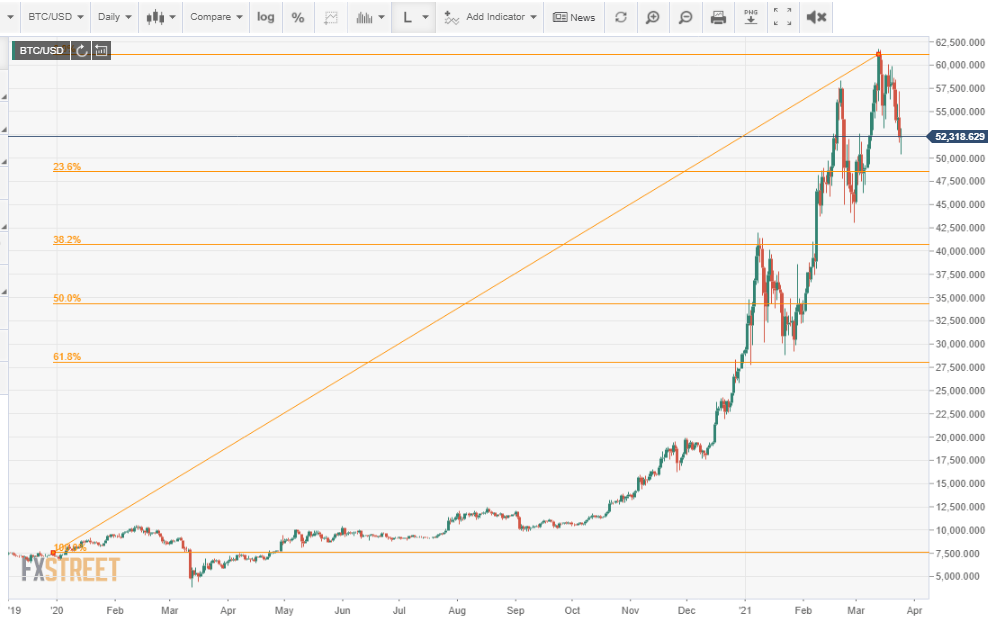
- Bitcoin has soared 80% in 2021, 629% since January 1, 2020.
- Tesla accepts Bitcoin for purchase, but trading profits are taxed at sale.
- Tax considerations about to enter the crypto currency trading world.

The extraordinary is about to become mundane.
Elon Musk announced in a tweet on Tuesday that Tesla will soon accept Bitcoin payment for its range of electric vehicles.
With its astonishing appreciation, 80% this year, 629% since last January, as little as $6100 invested in the crypto currency 15 months ago could buy a $38,000 Tesla today.
However, when the libertarian ideal of a government-free fiat currency meets the goods of the real world, the taxman arranges the introduction.
Bitcoin and US taxes
The US Internal Revenue Service (IRS) considers bitcoin and other traded instruments much as they do equities, they are property whose tax status is determined by cost and selling price.
The tax rate, whether as regular income or capital gains, is decided by the length of time the property had been held. If you have owned bitcoin for less than a year from purchase to sale, the profit is a short-term gain and taxed as regular income at a Federal rate from 0% to 37% depending on total income.
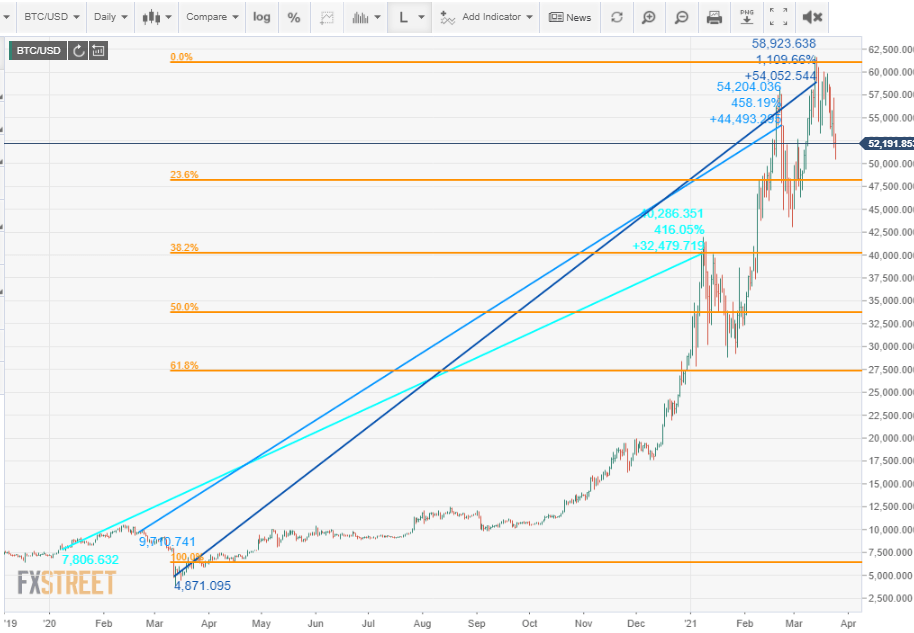
For instance, if you invested the above $6100 in bitcoin at the opening price of $6691 on March 26, 2020 and sold it at the March 25, 2021 open of $52,282, your 681% profit of $41,541 could send as much as $15,370 in taxes to Washington. The profit from the sale would be considered the same as if you earned it in wages.
The same $6100 in bitcoin bought on March 24, 2020, with the $43,710 in appreciation would provide a maximum of $8,742 to the IRS under the current highest capital-gains rate of 20%.
There are many other factors than enter into tax consideration at the federal, state and local level in the phenomenally complex US tax code. Trading profits could easily push an individual into a higher bracket. Tax considerations are a routine part of investment decisions.
With most people choosing to invest in regulated exchanges for their crypto currency trading, there is no hiding the potential profits and taxes from the government.
Bitcoin and tax trading
Tax driven trading decisions are a brand new factor for crypto currencies.
On January 1 2020, bitcoin opened at $7,166. On the last day of that year it closed at $28,984, having gained 304%.
The first day that these profits were eligible for the lower, capital-gains tax treatment, January 1, 2021, the closing price of $29,408 showed no impact of any sales. The price continued to rise to $40,664 on January 8.
For the next three weeks selling and volatility took over with bitcoin closing at $30,427 on January 27.
The same pattern was repeated twice more. From January 28 to February 21 the price rose from $30,427 to $57,488, then sank to $45,241 on February 28. Another cycle higher followed to the record close of $61,175 on March 13 and then lower again to the finish on March 25.
The pattern of bitcoin trading this year is typical of short-term profit-taking bouts in a rising market. Could it also have been abetted by tax concerns on the great profits of the prior year?
The great surge in bitcoin is a little over one year old from the open on March 13, 2020 at $4844, to the close on March 13 of this year at $61,175.
The start of the sell-off of the last two weeks coincides with the switch in tax treatment from short-term to long-term gains, a potential differential of 17% in federal tax.
Is this proof that the great libertarian financial rebellion is subsiding into mundane tax considerations?
We will answer with another question.
Is there any reason to assume that the owners of such vast profits would not want to use them in the real world?
In the real world, profits mean taxes.
Bitcoin one-year-and-a-day profits
Author

Joseph Trevisani
FXStreet
Joseph Trevisani began his thirty-year career in the financial markets at Credit Suisse in New York and Singapore where he worked for 12 years as an interbank currency trader and trading desk manager.

















