Australian Employment Preview: End of JobKeeper wage subsidy impedes labor market recovery
- Australia’s unemployment rate to hold steady at 5.6% in April.
- The jobs report to reflect the impact of the end of the JobKeeper wage subsidy.
- RBA unlikely to act despite the wage growth. Employment, inflation goals still distant.
- Upside surprise to the employment data could lift AUD/USD towards 0.7850.

The Australian labor market recovery is likely to come to a standstill in April, reflecting the effect of the end of the government’s pandemic support program for businesses. The South Pacific Island nation’s relative success in combating the covid crisis and Reserve Bank of Australia’s (RBA) accommodative monetary policy, however, has led to a considerable improvement in the employment sector.
The Australian Bureau of Statistics (ABS) will release the April employment report at 0130GMT on Thursday. The Federal Government’s fiscal support and the vaccination success could revive Australia’s labor market recovery.
Unemployment rate steadies amid slower pace of hiring
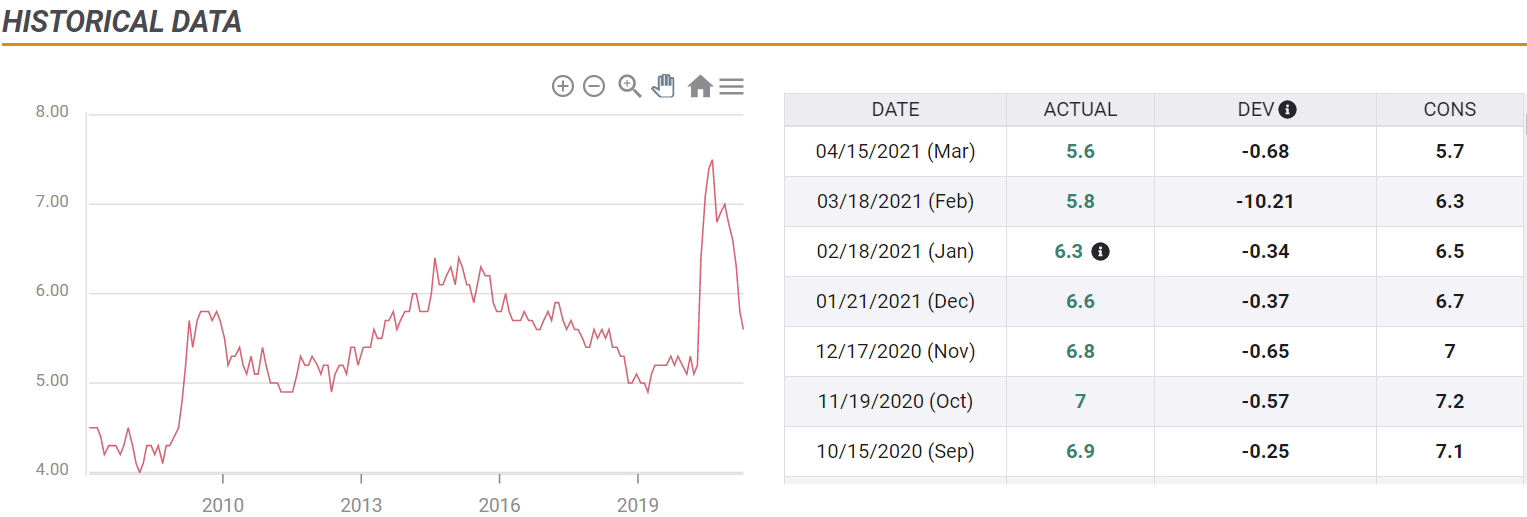
The OZ economy is likely to see 15K jobs addition in April after creating 70.7K employment opportunities in March. The participation rate is expected to hold steady at 66.3%. The Unemployment Rate is expected to remains unchanged at 5.6% after dropping 0.2% in the previous while sitting at the lowest levels since March 2020.
Wage growth, jobs surprise unlikely to move the RBA
Despite the impressive post-pandemic economic rebound, as reflected by the recent series of upbeat macro indicators, the RBA is unlikely to alter its monetary policy settings.
However, the RBA April meeting’s minutes revealed that the board members “will decide in July whether to roll over to Nov 2024 bond, extend bond buying.”
This could be likely in light of assessing the progress in the labor market, as the end of the JobKeeper wage subsidy scheme takes its toll on the sector. Industry experts believed that the JobKeeper program helped Australia's unemployment rate to drop sharply from the peak of the pandemic in July 2020, when it spiked to 7.5%.
Meanwhile, the RBA has been very clear that it is unlikely to hike rates until its dual mandate of higher employment and inflation are met. Therefore, the wage growth seen in the Q1 of this year and a solid in rise in employment in mid-April is likely to be seen as a one-off, considering the seasonality factor around Easter.
However, markets continue to anticipate the labor market recovery to strength further out, courtesy of the Federal Government's 2021 Budget. Much of the budget is aimed at creating jobs in order to bring Australia's unemployment rate below 5%.
Treasurer Josh Frydenberg said recently, “the third Budget would create 250,000 jobs by the end of 2022-23,” adding that "Jobs are coming back."
AUD/USD probable scenarios
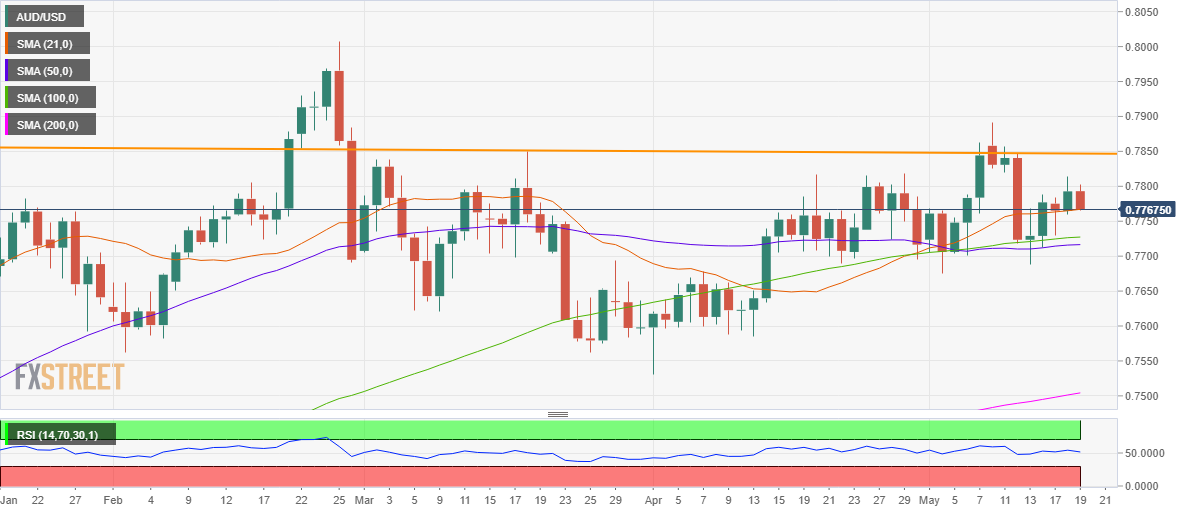
AUD/USD has stalled its recovery from last week’s low of 0.7687 ahead of Thursday’s employment report.
An upside surprise in the jobs data is needed to recall the aussie buyers, which could drive AUD/USD back above 0.7800. Further up, the critical horizontal trendline resistance near 0.7850 could be challenged. On disappointing figures, the aussie is likely to put solid support around 0.7715 at risk. That level is the confluence of the 50 and 100-day simple moving averages. The 14-day Relative Strength Index (RSI) still defends the midline, keeping the bullish potential intact.
However, the aussie’s reaction to the employment report could be also influenced by the persisting market mood, especially in light of the release of the FOMC April meeting’s minutes on Wednesday.
Daily chart
Author

Dhwani Mehta
FXStreet
Residing in Mumbai (India), Dhwani is a Senior Analyst and Manager of the Asian session at FXStreet. She has over 10 years of experience in analyzing and covering the global financial markets, with specialization in Forex and commodities markets.