Aussie, Kiwi Sold Off As China GDP Raises Tightening Fear

%20V2_XtraSmall.jpg)
Better than expected China GDP could accelerate pace of deleveraging, short AUD/USD?
China reported a much better than expected growth number for second quarter, but many investors are confused why both Chinese stocks and Aussie sold off after such a solid data. We think it is due to the expectation of the second largest economy having more room to tighten its policy in second half of the year. This drives Aussie and Kiwi lower, and this trend may sustain in coming months.
China growth in 2017, its first acceleration since 2010
China’s economy expanded 6.9% in the second quarter, the same as the previous three months. Growth in first half of year is still comfortably above the government’s target as unexpected strength in the real estate market kept growth accelerated. After 6.9% growth in the first quarter, the economy is on track for its first year-on-year acceleration since 2010. Last year’s annual growth was 6.7%. In March, China’s parliament approved a full-year growth target of “around 6.5%”. For now, the target has almost been achieved.
After the strong start to this year, many forecasted China’s growth would slow, as government tightened monetary policy and property sector lost momentum. However, the slowdown has been milder than expected.
Property sector remains one of the key contributors to nation’s growth in first six months of the year. House prices have continued to rise strongly this year, reducing inventories of finished homes and prompting increased investment in new construction. Property investment grew 8.5% in the first half from a year earlier, faster than last year’s 6.9% growth.
For now, wide range of global investors expected local governments to impose more restrictions on home purchases and mortgage lending. Those curbs were expected to damp construction, sending ripples through an economy where such activity drives demand for factory outputs of steel, base metals and cement. Lower commodity prices would drive commodity currencies such as Aussie and Kiwi lower.
Global recovery also gives a lift to Chinese growth this year. Foreign trade has also provided an unexpected boost to growth this year when Fed accelerates its pace of tightening. After contracting 7.7% on an annual basis last year, Chinese exports grew 8.5% in the first half, reflecting strong demand from the U.S. and Europe.
Weekend’s “National Financial Work Conference” in China calls for more debts deleveraging in second half
China President Xi instructed China’s state-owned enterprises (SOEs) to lower their debt levels but stopped short of announcing the creation of a new financial super-regulator to rein in mounting risks in the sector over the weekend at National Financial Work Conference, which is held only once every five years. According to the Bank for International Settlements, China’s overall debt level is at about 260% of gross domestic product and climbing. Non-financial companies account for about two-thirds of the total debt load, with the problem especially acute at state-owned industrial groups.
He highlighted that deleveraging at SOEs are of the utmost important, and added the country’s financial officials must also get a grip on so-called “zombie enterprises” kept alive by infusions of cheap credit.
President Xi’s instruction on further deleveraging echoes the outcome of second quarter GDP. Policymakers are likely to provide lesser pro-growth measures in the remaining of the year.
Our Picks
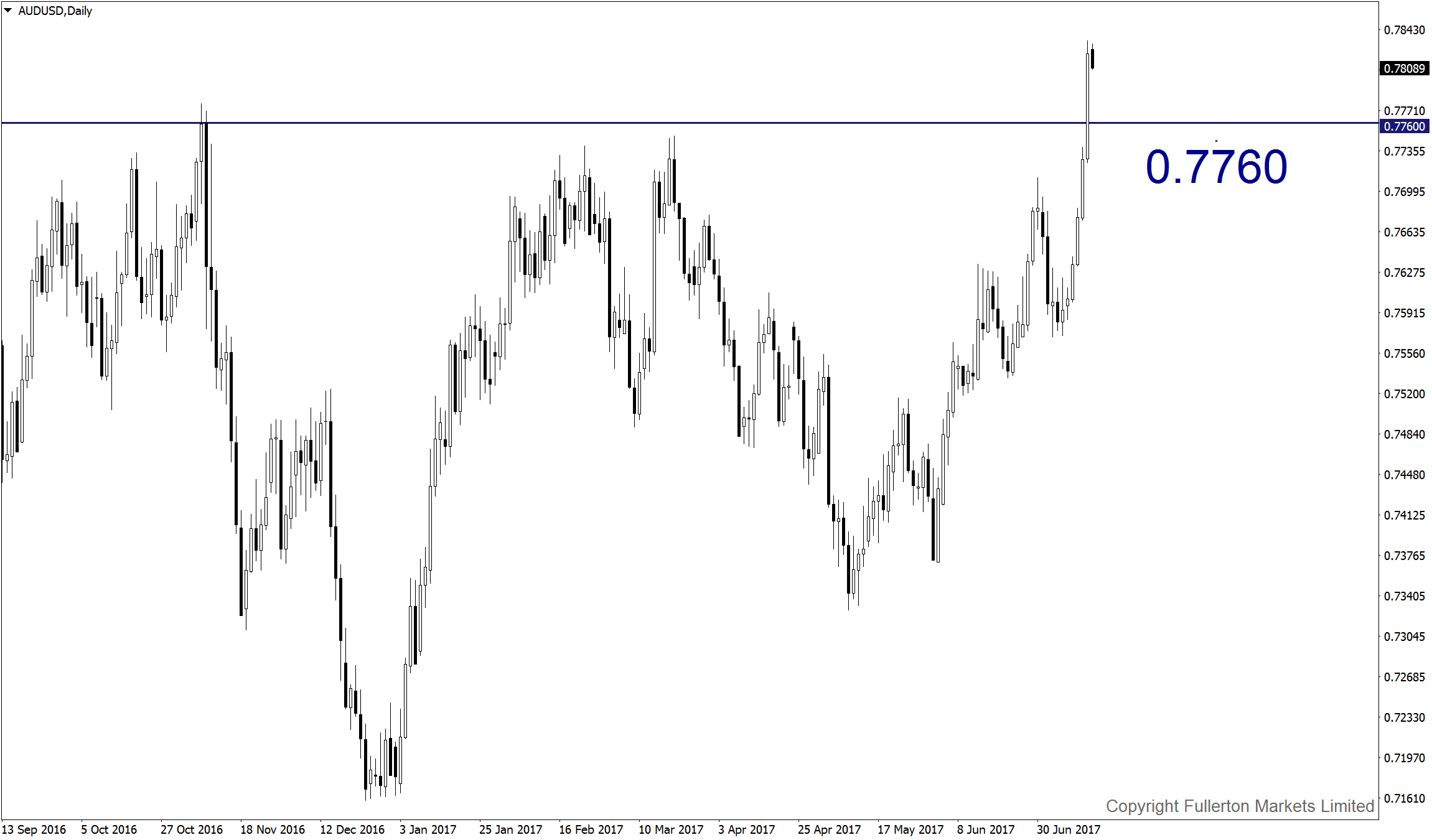
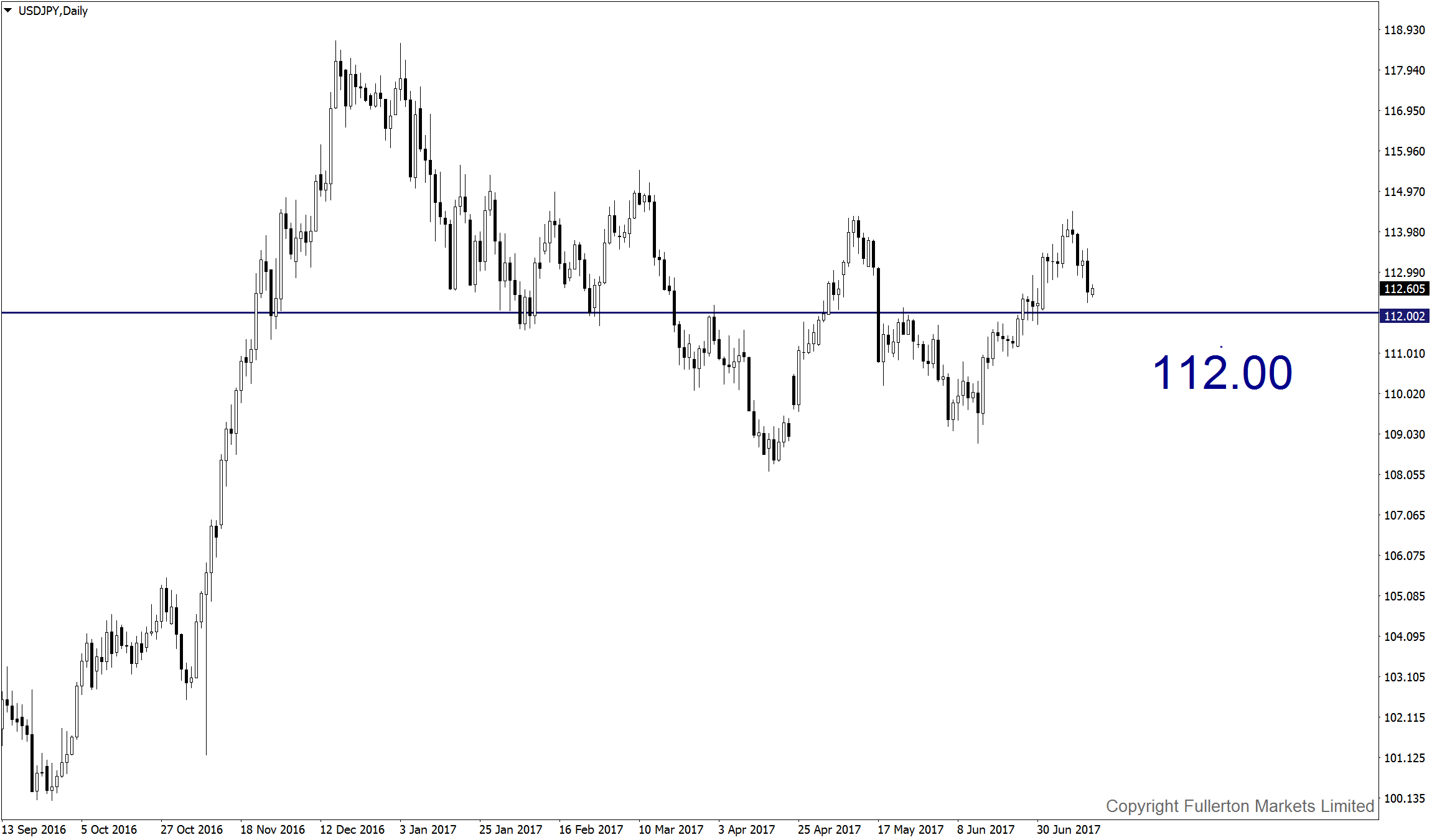
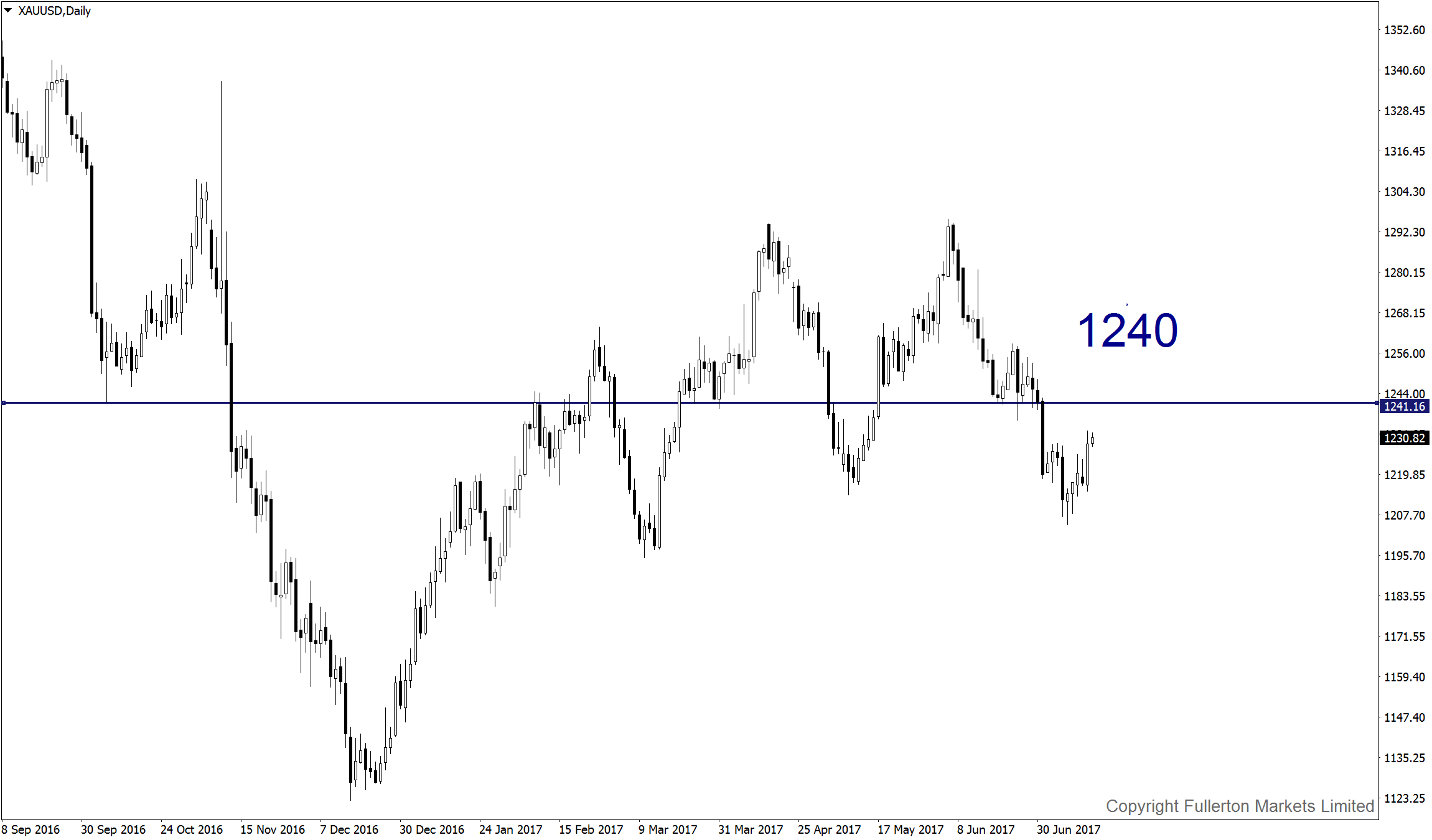
XAU/USD (Gold) – Slightly bullish. Price continues to eye on level 1240 in near term.
Top News This Week (GMT+8 time zone)
New Zealand: CPI q/q. Tuesday 18th July, 6.45am.
We expect figures to come in at 0.5% (previous figure was 1.0%).
UK: CPI y/y. Tuesday 18th July, 4.30pm.
We expect figures to come in at 3.0% (previous figure was 2.9%).
Europe: Minimum Bid Rate. Thursday 20th July, 7.45pm.
We expect figures to remain unchanged at 0.0% (previous figure was 0.0%).
Fullerton Markets Research Team
Your Committed Trading Partner
Author
Wayne Ko Heng Whye
Fullerton Markets Ltd
As Head of Research & Education in Fullerton Markets, Wayne provides thought-provoking analysis and trading ideas to thousands of clients worldwide.