AUD/USD Price Forecast: The 0.6700 region holds the downside…for now
- AUD/USD resumed its downtrend and confronted the 0.6700 region.
- The US Dollar extended its current recovery to nine-month highs.
- The labour market report will be the salient event Down Under this week.

Following two consecutive daily advances, AUD/USD faced renewed selling pressure at the beginning of the week. That said, spot once again put the 0.6700 support level to the test, an area that still managed to hold the downside.
The resurgence of the downward bias in the Aussie Dollar occurred in response to another bullish day in the US Dollar (USD), while rising scepticism about China’s latest stimulus measures collaborated with the sour mood among traders.
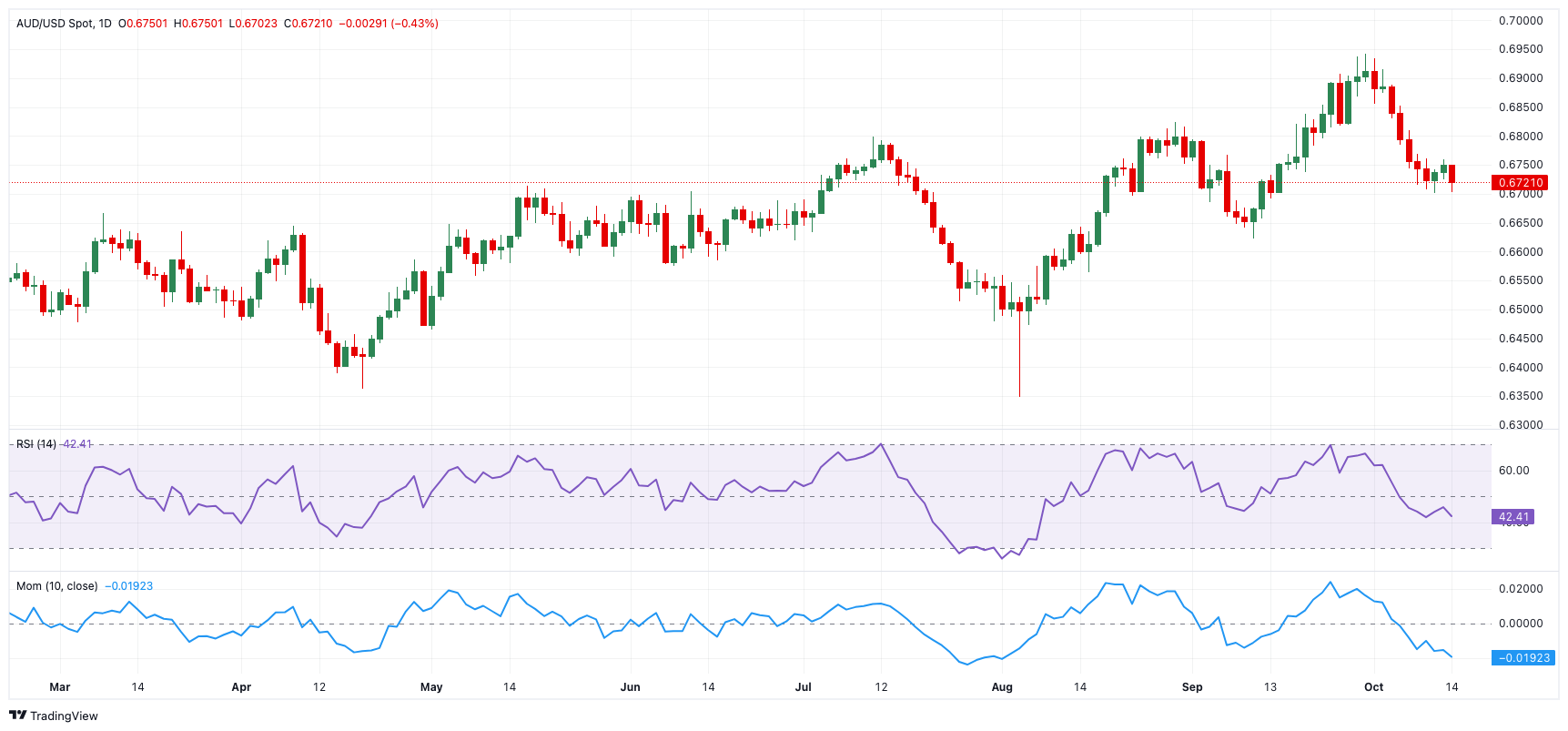
So far, the pair briefly tested the vicinity of 0.6700, a critical contention zone that appears reinforced by the temporary 100-day Simple Moving Average (SMA).
Additionally, the daily retracement in copper and iron ore prices also contributed to the Australian Dollar’s pullback, even as doubts linger over the effectiveness of China's new stimulus plan.
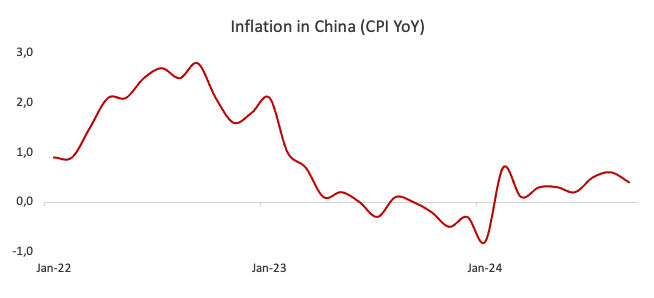
Adding to the challenges, China's deflationary pressures worsened in September, with official data revealing further economic strain. Over the weekend, a press conference left investors uncertain about the size and scope of potential stimulus measures aimed at boosting the country’s economy.
On the monetary policy front, the Reserve Bank of Australia (RBA) left its cash rate unchanged at 4.35% during its September meeting. While the RBA acknowledged inflation risks, Governor Michele Bullock emphasized that a rate hike is not a primary consideration at the moment.
The release of the RBA’s meeting Minutes indicated a shift towards a more dovish outlook, dropping the guidance from August, which had suggested rates would remain stable in the short term.
However, in later remarks, RBA Deputy Governor Andrew Hauser clarified that interpreting this as a clear dovish turn might be premature, emphasizing that the central bank’s fight against inflation is "far from over."
Current market sentiment suggests a 55% chance of a 25-basis-point rate cut by year-end. The RBA is expected to be one of the last G10 central banks to cut rates, likely responding to slower economic growth and cooling inflation pressures.
Despite the expectation of future Federal Reserve rate cuts, AUD/USD could extend its rebound later this year. Nonetheless, uncertainties surrounding China’s economic outlook and its stimulus measures remain a significant headwind.
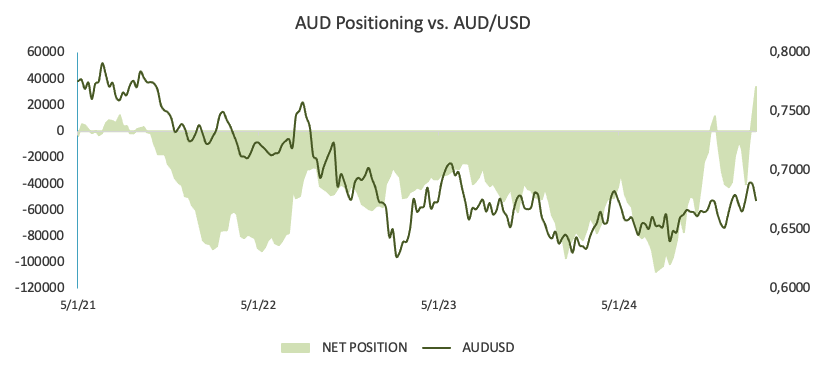
On the positioning front, the latest CFTC Positioning Report showed non-commercial (speculative) net longs edging higher and reaching levels last seen in mid-December 2017 around 33.4K contracts in the week ending October 8.
AUD/USD daily chart
AUD/USD short-term technical outlook
Extra losses may cause the AUD/USD to retest its October low of 0.6699 (October 10), ahead of the September low of 0.6622 (September 11), which is still supported by the key 200-day SMA.
On the bright side, the first obstacle occurs at the 2024 top of 0.6942 (September 30), which precedes the significant 0.7000 milestone.
The four-hour chart indicates a revival of the consolidative attitude. Having said that, the initial support is 0.6699, followed by 0.6622. On the upside, the 200-SMA at 0.6777 comes first ahead of the 100-SMA at 0.6822 and 0.6809. The RSI rose past 42.
Author

Pablo Piovano
FXStreet
Born and bred in Argentina, Pablo has been carrying on with his passion for FX markets and trading since his first college years.