|

AUD/USD Forecast: Turning bearish ahead of Australian employment data

AUD/USD Current Price: 0.6445

  • Australia expected to have lost over half a million jobs in April.
  • AUD/USD at daily lows although still above the 0.6400 level.
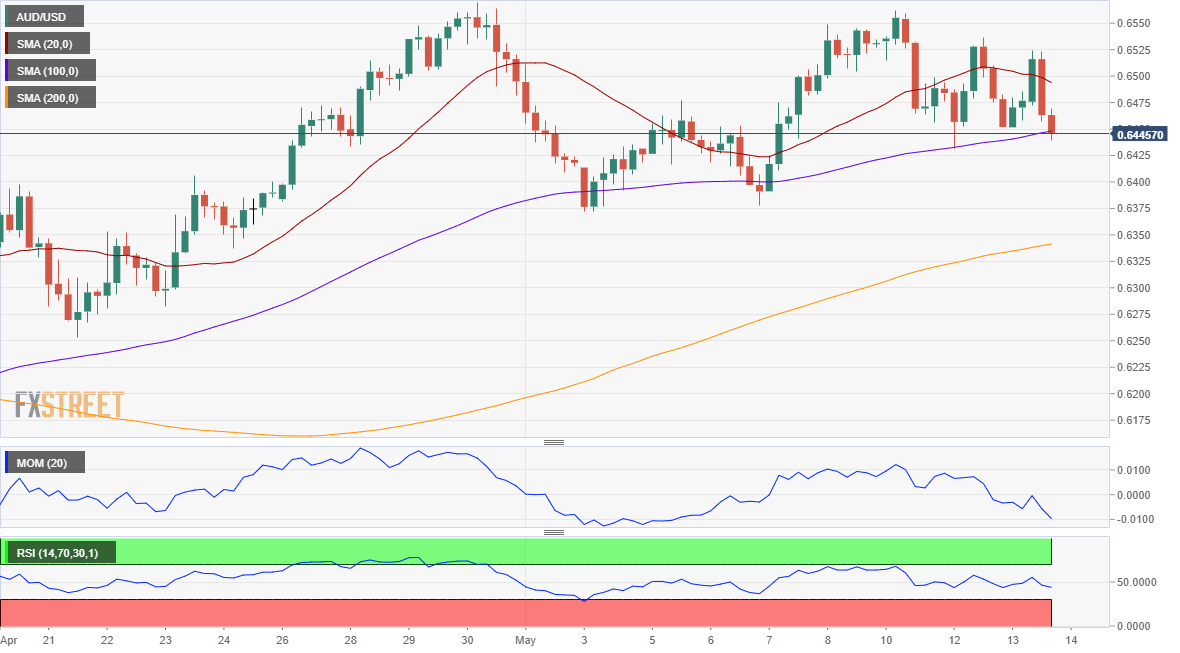
The AUD/USD pair was unable to retain its early gains, ending a third consecutive day in the red at around 0.6440. Australian data released at the beginning of the day was most encouraging, as the Westpac Consumer Confidence Index for May came in at 16.4%,  much better than the previous -17.7%. Also, wages’ growth matched the market’s expectations in the first quarter of the year, up by 0.5% in the three months to March and by 2.1% when compared to a year earlier.

Australia will release April employment data this Thursday. The country is expected to have lost 575,000 job positions in the month, a result of the coronavirus-related lockdown. The unemployment rate is seen soaring to 8.3% from 5.2% in the previous month. The country will also publish Consumer Inflation Expectations for May, previously at 4.6%.

AUD/USD short-term technical outlook

The AUD/USD pair has spent the last hours consolidating losses and seems poised to extend its decline. In the 4-hour chart, the pair continues to find support around a bullish 100 SMA, although the 20 SMA is gaining bearish strength above the current level. Technical indicators, in the meantime, stand within negative levels lacking clear directional strength. Dismal employment data has been already priced in, although a much worse-than-expected report could be the catalyst for a bearish move.

Support levels: 0.6405 0.6370 0.6325

Resistance levels: 0.6475 0.6510 0.6550

View Live Chart for the AUD/USD

Author

Valeria Bednarik

Valeria Bednarik was born and lives in Buenos Aires, Argentina. Her passion for math and numbers pushed her into studying economics in her younger years.


More from Valeria Bednarik
Share:

Editor's Picks

GBP/USD stays below 1.3400 after soft UK CPI data

GBP/USD struggles to gain traction and stays below 1.3400 in the second half of the day on Wednesday. The UK annual Consumer Price Index (CPI) inflation cooled to 2.6% in June against the market forecast of 2.7%, making it difficult for the British Pound gather recovery momentum. Meanwhile, investors keep a close eye on headlines coming out of the Middle East.

EUR/USD stabilizes near 1.1400 as markets focus on geopolitics

EUR/USD trades in a narrow channel at around 1.1400 on Wednesday. In the absence of high-impact data releases, escalating geopolitical tensions in the Middle East caps the pair's upside. On Thursday, the European Central Bank (ECB) will announce monetary policy decisions.

Gold extends rally as Middle East concerns intensify

Gold extends gains for the fourth consecutive day, standing comfortably above $4,100, unfazed by the risk-off market amid rising tensions in Iran and higher Oil prices. The pair has rallied nearly 2.5% so far this week and is on track for its best weekly performance in more than three months.

XRP consolidates as inflows and volume climb
Ripple (XRP) retains a slightly bullish outlook on Wednesday despite logging a minor correction from the supply range near $1.15. The remittance token is down 0.5% on the day, reflecting a broader cryptocurrency market drawdown, primarily driven by persistent geopolitical tensions between the United States (US) and Iran in the Middle East.
US – Fed preview: A divided hold
The first month after Kevin Warsh's debut at the FOMC's June meeting has brought mixed signals on the inflation front. On one hand, the re-escalation of the war in Iran has lifted energy prices higher again. Yet on the other hand, Warsh's hawkish comments have already lifted real rates, supported broad USD and tightened financial conditions while realized inflation surprised to the downside in June.
US Dollar mid-year outlook: Exceptional currency, exceptional risks?
The US Dollar enters the second half of 2026 in a markedly different position from a year ago. The King currency has recovered, reflecting persistent US inflation, changing expectations for Fed policy, geopolitical tensions and renewed demand for defensive assets.