AUD/USD breaks multiyear trendline but coast isn’t clear yet


The Australian dollar is often treated as a proxy for global risk appetite and Asian growth. When AUD strengthens, it usually reflects improving sentiment around equities, commodities, and China-linked demand.
That relationship still holds. But at the moment, AUD/USD is being pulled by both technical optimism and macro uncertainty, which makes this breakout fragile rather than decisive.
Macro backdrop: Rate parity, not advantage
Australia’s cash rate sits at 3.60%. The US federal funds rate sits in a 3.50–3.75% target range.
In practical terms, that puts both currencies near rate parity. There is no meaningful carry advantage supporting AUD strength. Any sustained move higher must come from expectations of future divergence, not current yields.
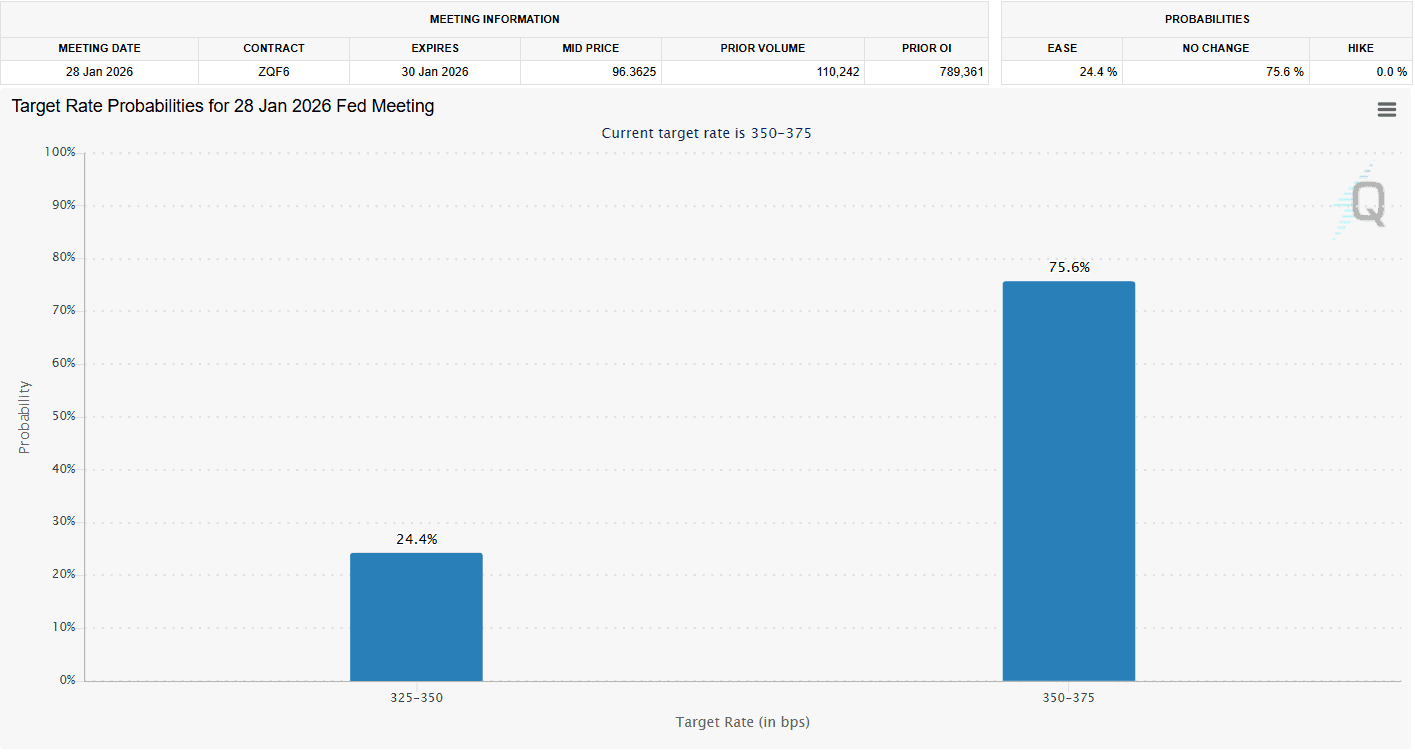
The Federal Reserve recently delivered a 25 bp cut, but it was widely viewed as a hawkish cut. Forward guidance suggested limited easing ahead, with markets pricing a high probability of a rate hold at the January meeting.
This matters because it caps downside pressure on the USD unless incoming data forces a repricing.
Key data this week
US inflation
Wednesday, 18 December | 20:30 MYT (08:30 ET)
CPI MoM: Measures the monthly change in consumer prices. Useful, but volatile.
Core CPI MoM (Most Important): Strips out food and energy and shows current inflation momentum. This is the release most likely to shift near-term Fed expectations and move the USD.
CPI YoY: Tracks inflation over the past 12 months. Important for long-term trend context, but slower moving.
Core CPI YoY: The Fed’s preferred inflation gauge for assessing persistence, but typically less market-moving than the MoM print unless it diverges sharply from expectations.
Market impact: A soft core CPI MoM would support risk assets and pressure the USD. A hot print would challenge rate-hold pricing and likely strengthen the do.
Westpac Consumer Confidence
Tuesday, 17 December | 23:30 MYT (11:30 AEDT)
Measures changes in Australian consumer sentiment and spending confidence. The prior reading surged 12.8%, marking a sharp rebound in confidence.
Market impact: Unless the data shows a dramatic deterioration or another outsized jump, its influence on AUD/USD is likely to be limited compared to US inflation. It can add directional bias, but is unlikely to drive trend on its own.
The big picture — AUD/USD weekly chart
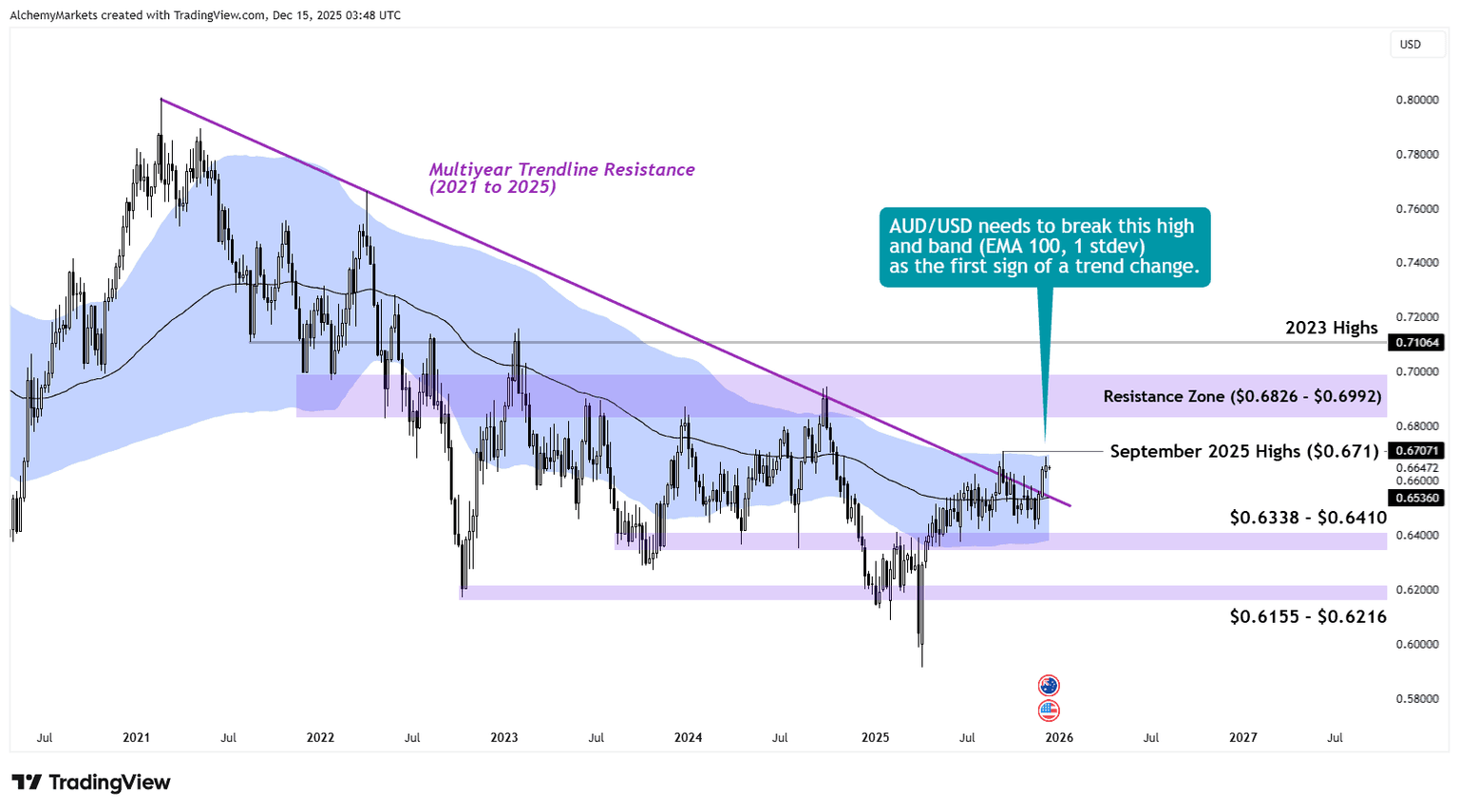
AUD/USD has broken a descending trendline that has capped prices since 2021.
On paper, this is a bullish structural development. However, a similar breakout occurred in September and failed, with price snapping back toward the weekly 100 EMA. That context matters.
Using Bollinger Bands built around the weekly 100 EMA with one standard deviation, price is still trading within the band structure rather than expanding decisively above it. Sustainable trends tend to show acceptance outside the bands, not just brief probes.
Price is also reacting near a prior weekly high around $0.671. This level is the line in the sand. A break and hold above it would significantly strengthen the bullish case.
Levels to watch — AUD/USD daily chart
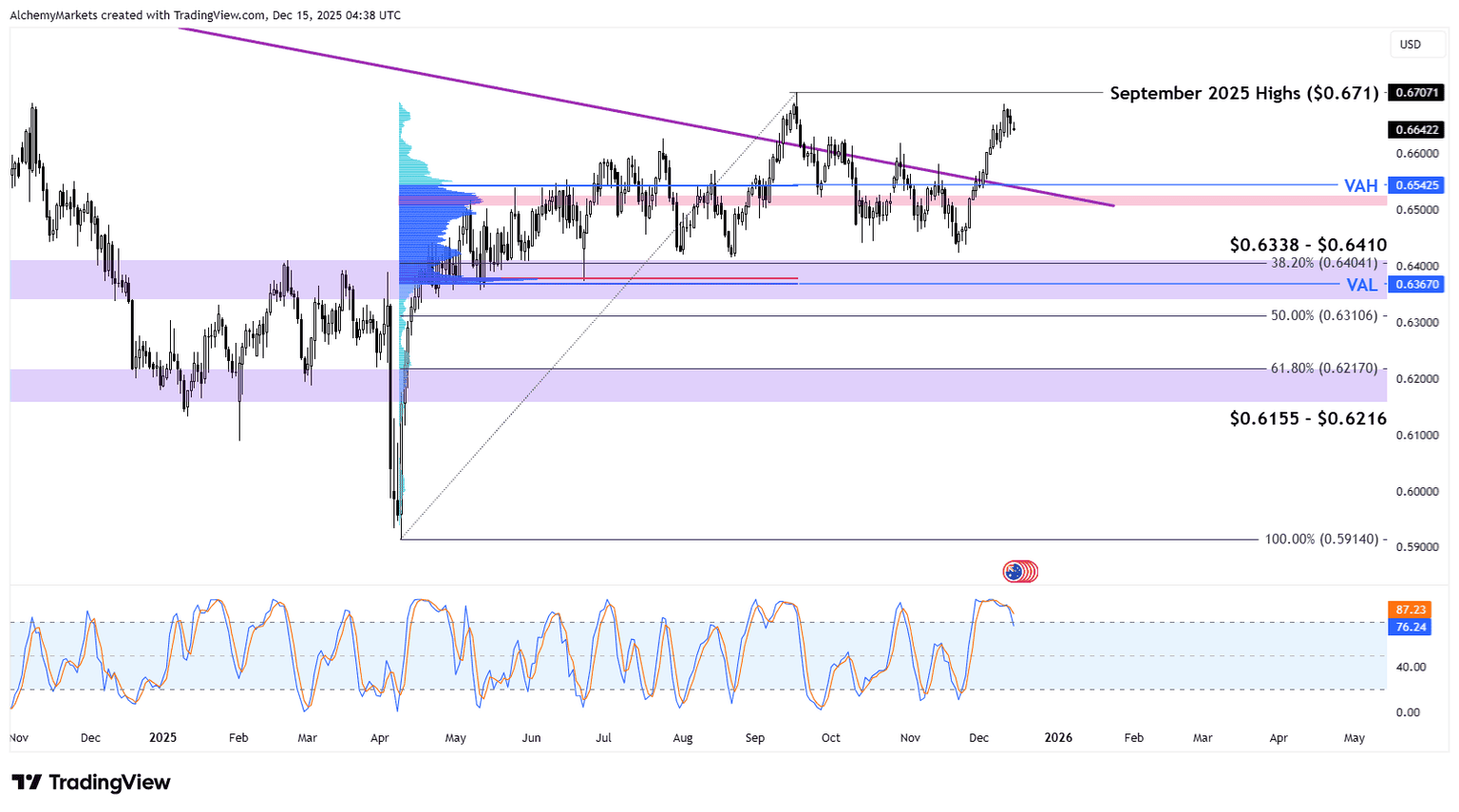
On the daily timeframe, price has been grinding higher but momentum is stretched. Two consecutive daily down candles have formed after an extended push, and Stochastic RSI is overbought.
That opens the door to a controlled pullback.
Key levels to watch:
- 0.65 — A clean psychological level aligned with high volume. A shallow retracement and bounce here would be constructive.
- 0.64 to 0.6367 — This zone includes the 38.2% Fibonacci retracement, a clear support resistance area, and the Value Area Low of the rally from April’s lows.
A move into this zone would still be healthy within the broader uptrend.
- 0.62 — The 61.8% retracement sits here. A move this deep would likely imply a longer consolidation phase and push the bullish thesis into 2026.
At this stage, there is no technical requirement for price to retrace that far.
Bottom line
AUD/USD has done something technically important by breaking a four year trendline. But without follow through above key weekly resistance and with macro drivers still finely balanced, the breakout remains unproven.
The trend may be changing. The market just has not confirmed it yet.
Author
Zorrays Junaid
Alchemy Markets
Zorrays Junaid has extensive combined experience in the financial markets as a portfolio manager and trading coach. More recently, he is an Analyst with Alchemy Markets, and has contributed to DailyFX and Elliott Wave Forecast in the past.