Assessing Hillary’s Recount Odds
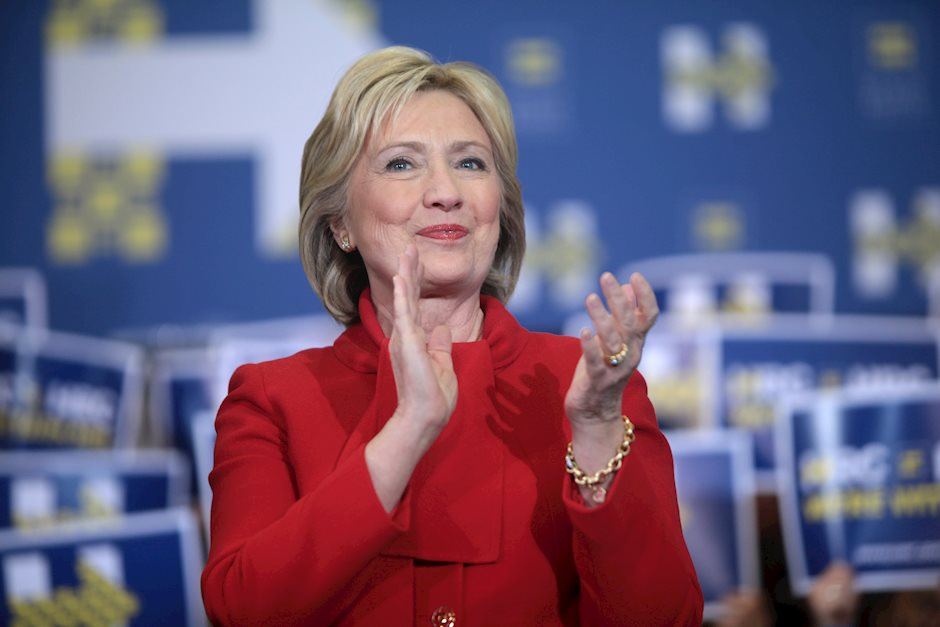

Salil Mehta, founder of Statistical Ideas comments on Hillary’s recount odds in his post Losers Who Won’t Lose.
Mehta says “Based on statistical randomness of re-assessing voter intent, the chance of Hillary emerging as the victor is far less than 10%.”
I believe Mehta overstates Hillary’s odds (and I bet he agrees with my analysis).
First let’s see what Mehta has to say (emphasis his) …
The only viable path for a Hillary Clinton victory at this stage is to astoundingly uncover a wide-spread (across three states) fraud. And that’s equally unlikely, since the basis for the voting aberrations occurred in less populated counties and anyway the three states employ three different voting mechanisms, so the fraud would have had to somehow jointly occur through different transmission vehicles (paper voting, and electronic voting) and we would require a speedy judicial resolution for states such as Pennsylvania that sidestepped back-up recordings from their direct voting equipment.
We should note the following statistical facts about the electoral vote in the three recount states:
-
10 votes, Wisconsin (Trump leads by 0.9 percentage points)
-
20 votes, Pennsylvania (Trump leads by 1.1 percentage points)
-
16 votes, Michigan (Trump leads by 0.2 percentage points)
Given that Mr. Trump won by 74 electoral votes, Ms. Clinton would need to flip all three states noted above, in order to liquidate this deficit (i.e., >74/2 = >37 votes). The leads described above however, among 4.4 million voters from these three states, is highly statistically significant on a state-level (and certainly when all three states are combined). It would be remarkably unlikely (>5σ event) that we would arbitrarily second-guess every one of these millions of voters’ intents and, convert any (certainly let alone all) of these three states.
Hillary must be cognizant of this improbability, and so instead is foolishly piggy-backing off of the second most reasonable recount rationale: not that errors in intent occurred, but rather straight-fraud on such a scale that would flip most of these states. While tempting for Democrat supporters, this fraud scenario is of course dubious and a humiliating ploy at this stage. Because for it to work, we would need to suppose that such fraud occurred in three different ways at once:
-
Michigan is a paper-ballot state (no equipment hacking possible) so electronic fraud is virtually unlikely to come about
-
Wisconsin does have paper back-ups recorded though the counties that are most heterogeneous, are lesser-populated and not so wildly-off probabilistically
-
Pennsylvania has similar issues to Wisconsin, except they haven’t recorded all of their votes in an auditable back-up so rife judicial hurdles must be overcome
The bottom line is everything must go right here, in all three state recounts (between proving fraud and getting mathematical support from wide-spread “voter intent errors”), in order to better align towards a Donald Trump downfall. And even if this all occurred, accounting for all of these statistical adjustments, the probability of a Hillary Clinton triumph is still quite low.
Mish Analysis
Mehta stated, and I certainly agree “Based on statistical randomness of re-assessing voter intent, the chance of Hillary emerging as the victor is far less than 10%.”
Mehta could have gone further.
For the sake of argument, let’s assume a recount chance of success is 10%. That is on the wildly high side buts let’s be generous.
Based on Mehta’s accurate assessment of election procedures, Michigan, Wisconsin, and Pennsylvania are independent results (they had dissimilar procedures).
If we assign a 10% chance of success to each states, the odds of a trifecta overturn are essentially 0.10 * 0.10 * 0.10. That chance is 0.001, which one tenth of 1%.
But the odds are not 10% across the board. Based on the number of votes needed, the odds of overturning Michigan are far better than overturning Wisconsin. In turn, the odds of overturning Wisconsin are less than overturning Pennsylvania.
Let’s be generous. Assume the odds of overturning Michigan are 10% and the odds of overturning Wisconsin and Pennsylvania are 2% each.
In this case the overall odds of success are 0.10 * 0.02 * 0.02. That chance is 0.00004 or 0.004%.
Are the odds that good?
The overturn case depends on fraud. But there’s an additional catch. The fraud has to be in favor of Trump.
Is it more likely dead people voted in Madison and Milwaukee than say a place most have never heard of like Occonto? Assuming the former, if this actually came down to looking at voter registrations, the odds of fraud would appear to be greater in the areas that voted for Hilllary.
Nonetheless, let’s assume a big “fat tail” is in play. Let’s assume the fraud is all in favor of Trump, and let’s also multiply Hillary’s chances 100 times.
Doing so yields a chance of success of 0.40%.
So we are not just talking about less than 10%, but less than 1%, and that is giving the overturn odds every conceivable twist of fate.
Data Mining
Barry Ritholtz quoted Salil Mehta in his article Beware of Data Mining.
In an e-mail exchange, he [Mehta] observed:
“There is an increased craving to slice and dice the recent election data, particularly given that the major pollsters have been shamed as they all immensely errored in projecting this year’s election’s victor. All gave President-elect Trump <15% a faux probability of winning. The risk of now retorting with data-mining this single election result is that they often miss an analysis of the predictive errors in this unique match-up (e.g., record high undecideds on Election eve), don’t take into account budding geospatial patterns to validate evidence, and in most case none of this should deceptively be promoted as an election forecasting model.”
I said exactly the same thing for months on end, totally ignored by Nate Silver, mainstream media, Barry Ritholtz, and damn near everyone else, except Mehta.
Silver made three colossal mistakes to which he has still not admitted.
Silver’s Mistakes
-
Silver ignored social attitudes and anger
-
Silver over-relied on history
-
Silver took short term polls and projected them way too far into the future
Nate silver never responded to a single email no matter how polite I was. In contrast, Mehta responded to every one of my emails.
Mish Mistakes
I made my own mistakes. Following the first debate, I was totally disgusted with Trump’s performance and was pretty sure he would lose.
After FBI director James Comey reopened the case against Hillary, I reassessed.
Curiously, my early attitude forecasts were spot on.
Flashback May 23, 2016: Grim Election Map for Trump? Fox Analyst vs. RCP vs. Mish
Juan Williams, political analyst for Fox News Channel says Electoral Map Looks Grim for Trump.
I believe the map looks grim for Hillary.
Clearly one of us is wrong, so let’s compare maps and analysis.
RCP Map Analysis 2016-05-23
What a bunch of hooey. Let’s start with an RCP Tossup Map.
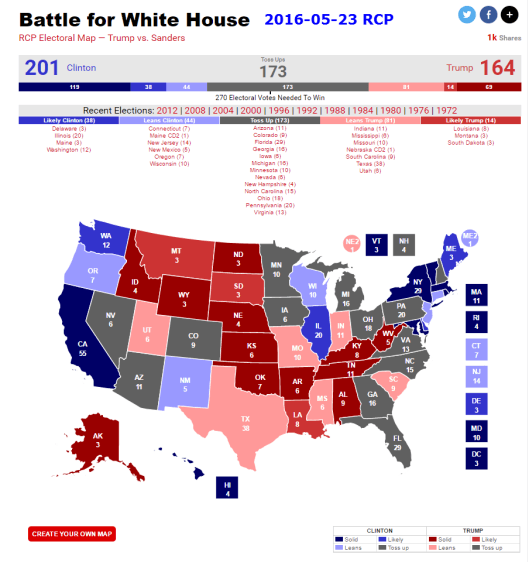
It’s absurd to start with a map of “Romney states”.
Williams’ comment “If Trump holds all the Romney states and carries Virginia, Pennsylvania and Florida” is even more ridiculous.
Mish Map Analysis 2016-05-23
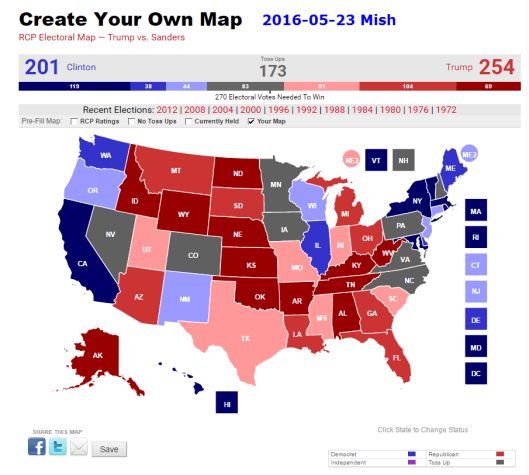
I believe Trump will win the rust belt states of Michigan, Indiana, and Ohio. If so, Hillary will need a clean sweep of about every remaining state to win.
In the above map, if Trump wins Michigan as I project, all he needs to do is win North Carolina.
Suppose Trump does not win Michigan. Instead, give him North Carolina. In that case, either Virginia or Pennsylvania would put Trump over the top.
If Trump wins Pennsylvania and Ohio (not unlikely actually) I believe it’s pretty clear he will win.
In fact, if Trump carries those states, it’s likely he picks up other swing states moving towards an electoral landslide.
I purposely did not presume a miracle for Trump. I gave him leeway tradeoffs consistent with some things likely to break his way.
A Trump landslide is not impossible.
Landslide Map
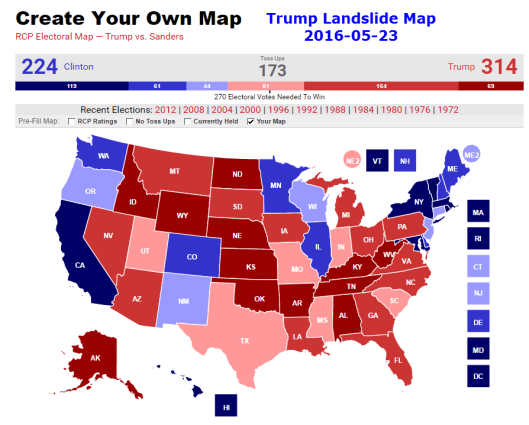
A landslide by either party is not my prediction, but it’s quite possible Trump could pull one off, and perhaps even lose the popular vote by a little bit.
My May assessment was nearly perfect. I cannot brag too much because I changed my assessment following the first debate.
I thank Mehta for listening to and responding to my analysis every step of the way.
Did Michael Moore Call the Election?
Much credit is given to Michael Moore for calling the election.
I don’t believe Moore did so. Nor do I believe most of those who claim to have called it.
Moore is a media manipulator. His motive for calling the election for Trump is very clear: It was a purposeful attempt to get out the vote, for Hillary.
I am equally suspicious of those who were sure Trump would win all along.
Comey may very well have swung the election to Trump, bailing out those who stuck with Trump thick and thin.
Credit Where Credit is Due
The one person I am willing to give credit to is professor Allan Lichtman who says “polls stink”. Lichtman Predicted Last 9 U.S. Elections, Including Trump’s Win.
Lichtman has no election biases that I can detect. However, CNN reports Professor predicted Trump win, says he will be impeached.
That headline could be misleading. Here is the statement “There’s a very good chance that Donald Trump could face impeachment,” Allan Lichtman told Erin Burnett on OutFront.
A very good chance could mean 25%. It could mean anything from 10% to 90%. There is a difference between “very good” and likely.
I rate the odds of impeachment as “not very good”. To place a number, let’s say 2%.
Salil, care to comment?
Author
Mike “Mish” Shedlock's
Sitka Pacific Capital Management,Llc

















