Another stock market selloff could drive more bullion buying


Investors got a look at first quarter GDP, and it wasn’t pretty. The U.S. economy contracted by 4.8%, even worse than the 3.3% decline anticipated by economists.
In addition to that bad news, 4 million more Americans filed for unemployment last week. More than 30 million people have lost jobs over the past 6 weeks, and the situation is only getting worse.
The S&P 500 lost 2.8% on Friday.
Perhaps equity investors are beginning to wonder if share prices, which have moved relentlessly higher in recent weeks, accurately reflect the dismal economic data.
Warren Buffett certainly is. The famed investor announced his company, Berkshire Hathaway, had sold all of its holdings in four U.S. Airlines and sounded a generally bearish tone in his annual letter to shareholders.
A new wave of selling and turmoil in the stock markets could drive a new wave of demand in the physical gold and silver. It is something for gold bugs to watch closely.
Physical inventories remain tight, and premiums are already high. A new rush of buying will only exacerbate the scarcity problem in coins, bars, and rounds.
Silver is historically cheap relative to gold. The gold/silver ratio – the gold price divided by the silver price – reached all-time highs in March. Today the number of ounces of silver it takes to buy one ounce of gold is at 113 – very close to those highs.
Metals investors are wondering whether or not opportunity is knocking.
The fact is that silver has looked like a bargain relative to gold for a long while.
The gold/silver ratio consistently fluctuated between 70 and 90 over recent years. Even those levels were high relative to the historical average.
Unfortunately markets these days are far more likely than ever to punish people for making perfectly rational investment decisions.
The gold/silver ratio in the high 80s at the beginning of 2020 implied silver was the greater bargain, but investors who bought silver instead of gold lost ground when pandemic panic hit.
Many who would have considered silver a “no-brainer” versus gold at current prices are now second guessing. They wonder if something has changed.
Is silver going to trade primarily as an industrial metal? Is gold the only real safe haven asset or effective hedge against dollar devaluation?
While it is possible that investment trends and psychology have shifted permanently, we highly doubt it. Silver is underperforming in the paper markets only and those markets are disconnected from reality.
Investment demand for physical silver has never been higher. This is true both in the retail bullion markets and in the futures markets where there has been a huge spike in the number of contract holders standing for delivery.
Meanwhile, the inventory of actual bars in COMEX vaults relative to the number of paper ounces being traded just keeps dwindling.
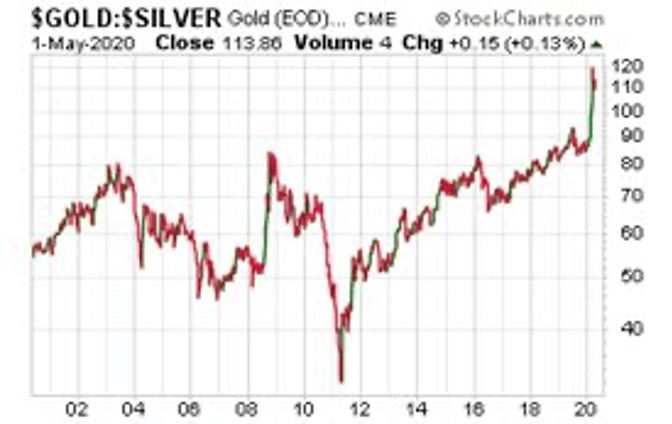
There is plenty of demand for silver as a safe-haven – you just can’t tell by looking at the paper price. Consider that while the ratio of paper gold to paper silver is 113:1, the ratio is far lower when it comes to actual coins such as the American Eagle. The price of one gold American Eagle is equivalent to that of only 77 silver American Eagles.
Seasoned precious metals investors continue to favor silver here, even if they have been penalized for making that choice in recent years.
Despite the poor showing of silver in the broken paper markets, silver’s fundamentals will surely improve as the economy gradually reopens and industrial demand recovers.
And if the recent bull run in gold is the start of something much bigger, silver is very likely to outperform before that run is over.
To receive free commentary and analysis on the gold and silver markets, click here to be added to the Money Metals news service.
Author
Clint Siegner
Money Metals Exchange
Clint Siegner is a Director at Money Metals Exchange, the national precious metals company named 2015 "Dealer of the Year" in the United States by an independent global ratings group.