And it’s rare that it was a Powell speech that drove markets

Analysts and traders alike are aghast that nearly everything is politics these days. We have the APEC meeting later this month where Trump and Xi were supposed to become buddies and make deals, but now the Washington experts say if there is a meeting, no deals will come out of it. Then there’s China’s Communist Party “plenum” next week (Oct 20) at which a 5-year plan is revealed, with hope running high the government will goose domestic consumption, a hope that has been dashed multiple times since the great real estate collapse.
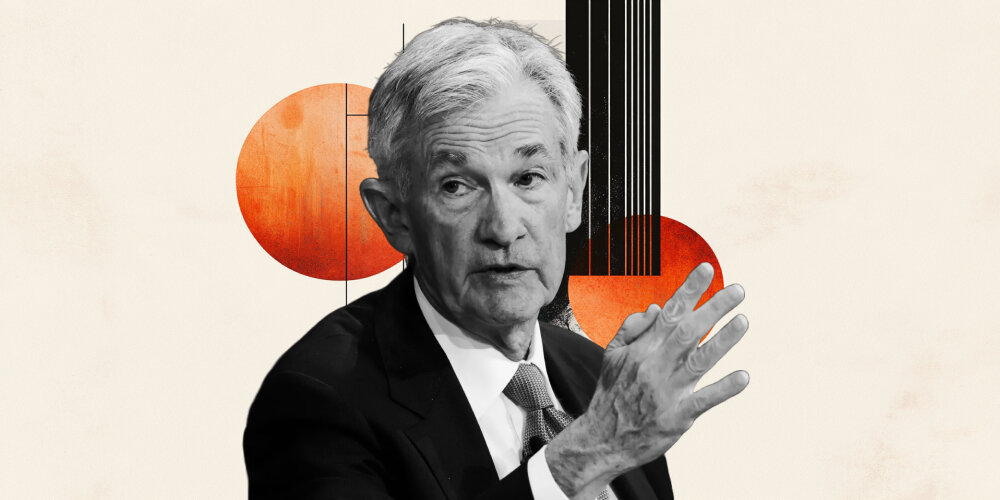
And it’s rare that it was a Powell speech that drove markets. His focus on the low-hiring, low firing labor market plus slowing or ending QT means the betting markets are back to two rate cuts this year. This accounts, maybe, for some of the dollar’s lackluster performance.
Behind the curtains, away from the spotlight on the US stock market, Dolan at Reuters points out a storm is brewing. One point: “For U.S. small businesses, anxieties that seemed to dissipate over the summer are back on the rise. The National Federation of Independent Business monthly survey showed sentiment falling in September for the first time in three months and the poll's "Uncertainty Index" jumped seven points to 100 - the fourth-highest reading in over 51 years.
“The share of business owners expecting better conditions over the next six months plunged 11 points to 23%, with prices rising and orders waning.
“A point highlighted by the NFIB itself is overall GDP growth and broad stock indexes are being flattered by the torrent of investment flowing into artificial intelligence and AI infrastructure - overshadowing what's really going on Main Street.”
There is other evidence, like global trade growth going into reverse and even oil prices down on expectations of upcoming lower demand, mostly on the drop in trade and general slowdown pretty much everywhere.
At what point does sentiment like this start to dent Wall Street? The track record is not promising.
Forecast: The dollar lost ground in its recovery mini-trend on Mr. Powell hinting that it will be two rate cuts before year end plus a pullback on QT, which means leaving QE in place longer. The flight into Treasuries seems to have abated for the moment, although the 10-year dipping below 4% yesterday, however fleetingly, was interesting.
If the move persists, we see resistance at the old support line around 1.1690 in the euro. Alternatively, if the worst-case scenario continues to develop, the next milestone is the previous low at 1.1401 from July 30. That’s a nearly 300-point range.
We can make an argument for either outcome. Euro weakness arises from weak economic data and political uncertainty, mostly in France these days. Dollar weakness comes from the rate outlook and an out-of-control president.
Tidbit: Bloomberg and others are touting a shiny new thing named “the debasement trade.” Here is a summary: “Investors are seeking to protect themselves from threats posed by runaway budget deficits through a phenomenon known as the "debasement trade", pulling away from sovereign debt and currencies.
“The debasement trade is benefiting precious metals, such as gold and silver, and cryptocurrencies, such as Bitcoin, as they are seen as a refuge from the impacts of government policy.
Some strategists believe the debasement trade still has some way to run, while others think it's a "momentum trade" that will eventually shake out, with doubts about whether currencies and bonds are replaceable with alternative assets.”
Well, yes and no. The evidence lies in the price of gold. This is not motivated by protection solely against inflation. It’s a vote against everything governments are doing, especially in the US but also Europe, UK and Japan. A lot of it has to do with wildly out of line fiscal deficits that will come home to roost. So in the end, yes, inflation, which is the core of currency debasement.
But no, in the sense that currencies have historically been highly correlated with economic growth and also inflation. The US is getting away with expected (but so far lowish) inflation because of excellent growth rates. When the dust settles, the currency that will be debased the least compared to the others is the one with the higher growth. After all, everyone still needs actual money. You cannot pay your mortgage with gold or buy bread and milk with bitcoin. You can use silver only in the form of a sovereign coin.
What’s really behind debasement is loss of trust in government. Money is trust as much as the classic store of value, transaction medium and accounting method. As a store of value, it may be on the way to being worth a lot less, but with inflation at 3% in the US and a lot less in Europe, it’s the loss of trust that is driving. And see below—inflation is on its way.
Two Bloomberg columnists take issue with the debasement thesis, pointing out that not all hard assets are going up, like real estate. If interest rates are artificially low, it should thrive. Next, Treasuries have good earnings, just not as good as stocks. And equity names far from the Top Seven are participating.
They blame politics. The US government is closed and the parties are not even talking. “France can hardly keep its government going. More radical parties are surging in the UK, Germany, and almost everywhere. It’s hard to be excited about the stability of rich, developed countries.” And let’s face it, we don’t have a clue about what, exactly, AI is going to do to the world economy.
“And so, given the state of politics and the extreme AI uncertainty, you can understand why people might want something timeless (gold) or something that will pay off right now (all of the meme stocks). The market isn’t exactly a picture of health. But it’s also not obvious that debasement is the best way to characterize how the market is trading.”
Fun idea: now that governments agree crypto is here is to stay and the Trump grifters are lining their pockets, is the drop in crypto prices an extension of loss of trust in government?
This is an excerpt from “The Rockefeller Morning Briefing,” which is far larger (about 10 pages). The Briefing has been published every day for over 25 years and represents experienced analysis and insight. The report offers deep background and is not intended to guide FX trading. Rockefeller produces other reports (in spot and futures) for trading purposes.
To get a two-week trial of the full reports plus traders advice for only $3.95. Click here!
This is an excerpt from “The Rockefeller Morning Briefing,” which is far larger (about 10 pages). The Briefing has been published every day for over 25 years and represents experienced analysis and insight. The report offers deep background and is not intended to guide FX trading. Rockefeller produces other reports (in spot and futures) for trading purposes.
To get a two-week trial of the full reports plus traders advice for only $3.95. Click here!
Author
Barbara Rockefeller
Rockefeller Treasury Services, Inc.
Experience Before founding Rockefeller Treasury, Barbara worked at Citibank and other banks as a risk manager, new product developer (Cititrend), FX trader, advisor and loan officer. Miss Rockefeller is engaged to perform FX-relat