Aluminum prices soar


Aluminum prices are trading at their highest levels in three years, with LME futures (and other exchanges) currently hovering around US$2,880–2,920 per ton, a threshold not seen since 2022.
The recent rally has been driven by production constraints, particularly in China, where the government has kept primary output caps near their limit, restricting supply expansion.
At the same time, so-called “green demand” — fueled by renewable energy, construction, electric vehicles, and the broader global energy transition — continues to push structural demand higher, reinforcing price support.

There is growing consensus around a structural supply deficit heading into 2025. Production capacity at primary smelters remains limited, and new
facilities take years to come online due to long lead times. Finally, demand — even if structurally rising — can be volatile. Key consuming sectors such as construction and automotive depend on macroeconomic cycles, investment conditions, and global growth. A broad economic slowdown could weaken demand for industrial metals.
Current situation: The price just exploded +2.22% today to $2,908. The price has risen just over 7% in the last two weeks, confirming the breakout from the multi-year base. Previous resistance is now acting as support on the retest (perfect “role reversal”).
Next measurable targets (if breakout holds): Measured move of the base: ~$3,600–3,800 Previous all-time high zone: ~$3,850–3,950 Psychological $4,000 is very much in play medium-term.
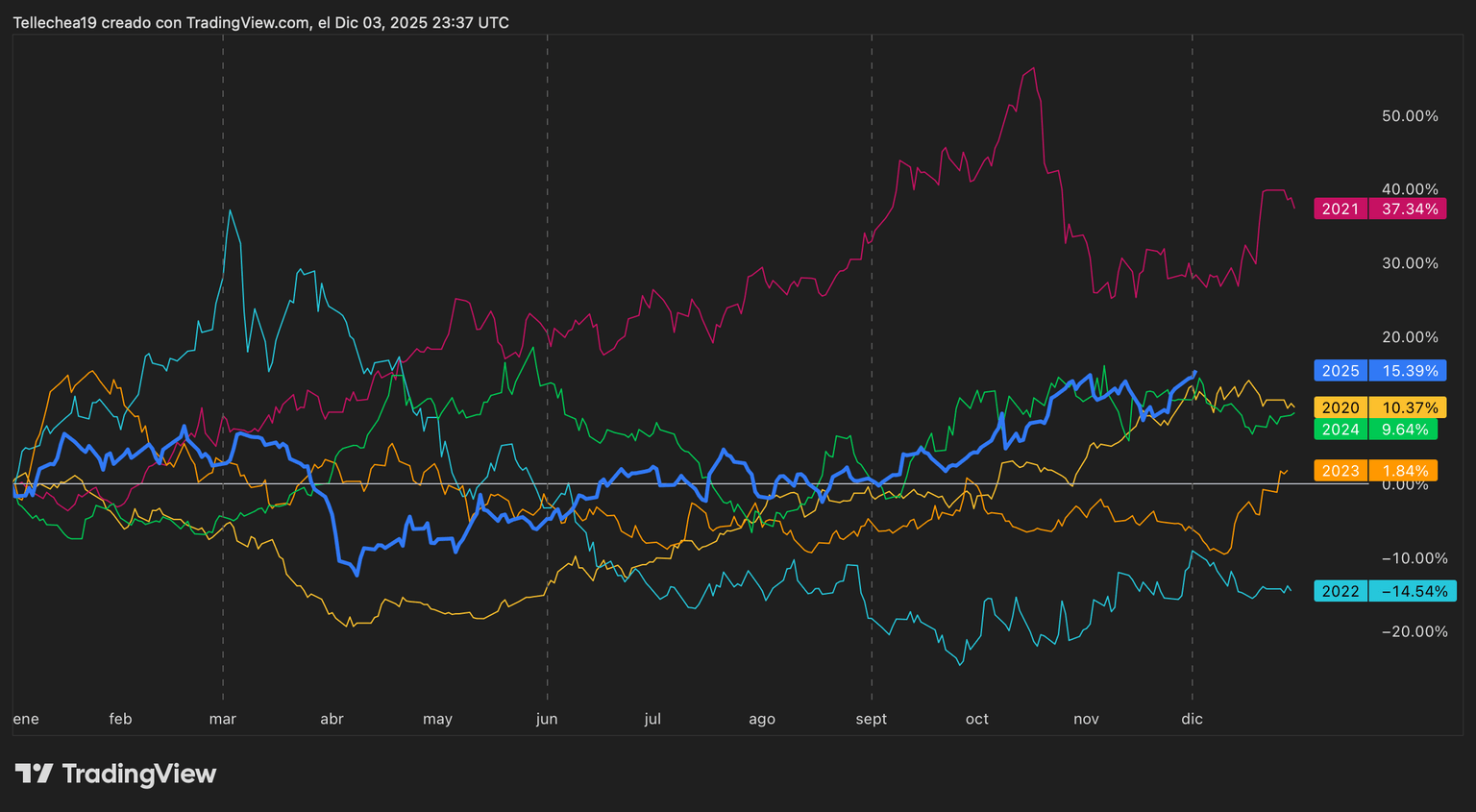
The above chart shows the year-to-date performance of COMEX and LME aluminum futures for each calendar year since 2020. The current blue line’s late acceleration mirrors 2020/2021 patterns but from a higher base. After dipping to $2,784 in late November (4-week low), the Dec 3 close at $2,891 (+1%) signals breakout potential above the 2023–2025 range. If it sustains (e.g., holds $2,800+), YTD could close 12–15% higher—best since 2021. Forecasts vary, but some see averages hitting $2,450–$2,500 by Oct 2025 end, implying modest further upside.
Alcoa strengthens in sync with Aluminum’s breakout
The recent strength in aluminum futures is not only visible in the metal itself but also in companies highly exposed to the aluminum cycle. A clear example is Alcoa (AA), which is trading around $44 and approaching the resistance zone between $44–$47, a level that has acted as a recurring ceiling since 2023. This gain of just over 20% in the past two weeks, synchronized with the breakout in aluminum, reinforces the view that the metal’s current move is not occurring in isolation but is part of a broader shift in character across the industrial metals complex.
Alcoa spent nearly three years fluctuating sideways below this same resistance zone, within a range defined by weak demand, temporary supply excess, and compressed margins. The recent rally suggests an accumulation phase consistent with the thesis of a structural supply deficit that is beginning to materialize in aluminum prices.
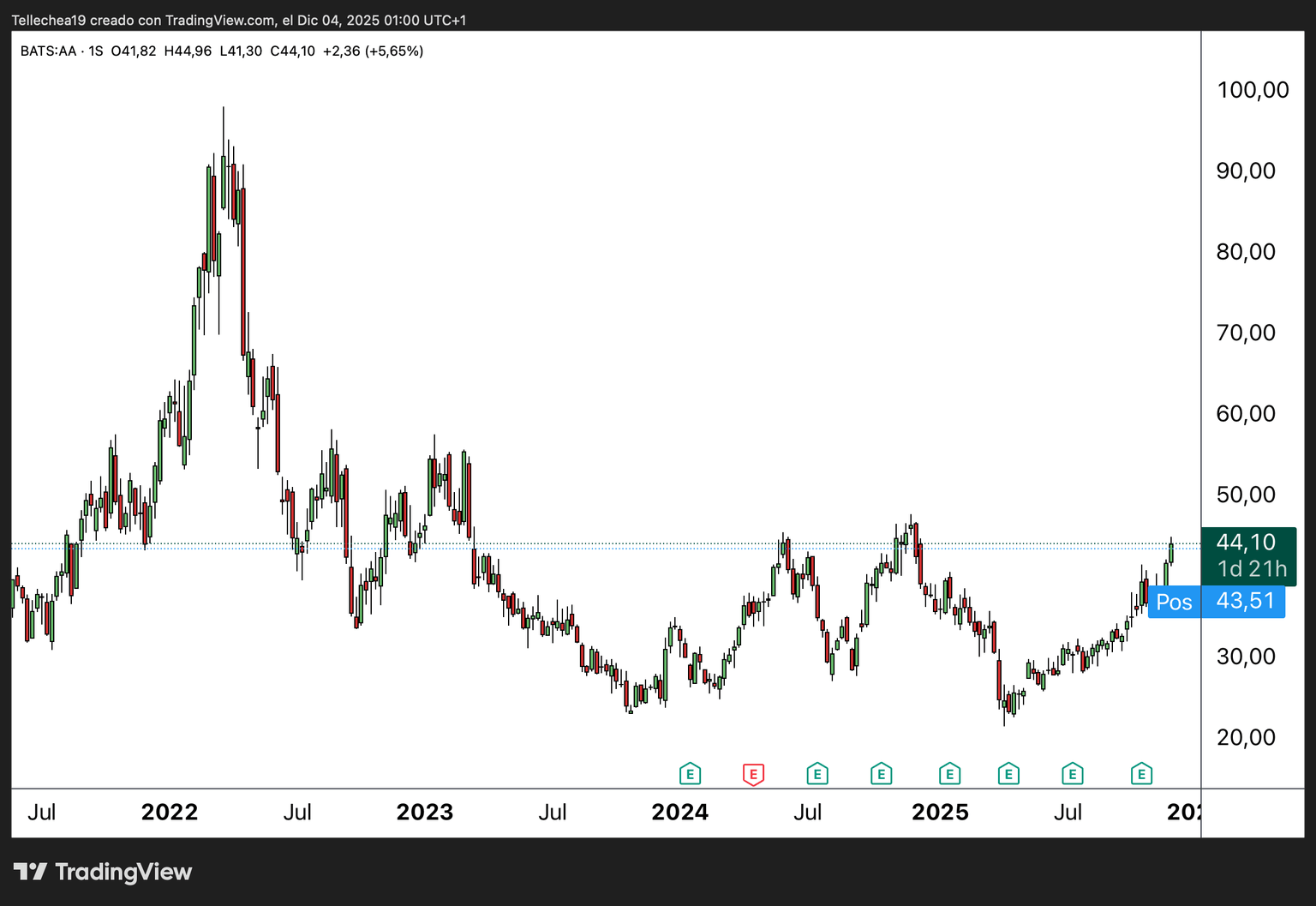
$44–45 is the line in the sand right now. A sustained break and close above it on a weekly/monthly timeframe would be bullish and potentially mark the end of the 2022–2025 bear-market consolidation. Until then, caution is warranted because this level has capped the stock repeatedly for over three years.
Aluminum futures break out – But Alcoa is still lagging
In this chart, the candlesticks represent aluminum futures, while the blue line tracks the share price of Alcoa (AA). The relationship between the two is typically tight, given that Alcoa is one of the primary producers most sensitive to movements in aluminum prices.
Aluminum futures have already completed and confirmed the breakout from their three-year base. Alcoa, on the other hand, has not yet achieved its own breakout.
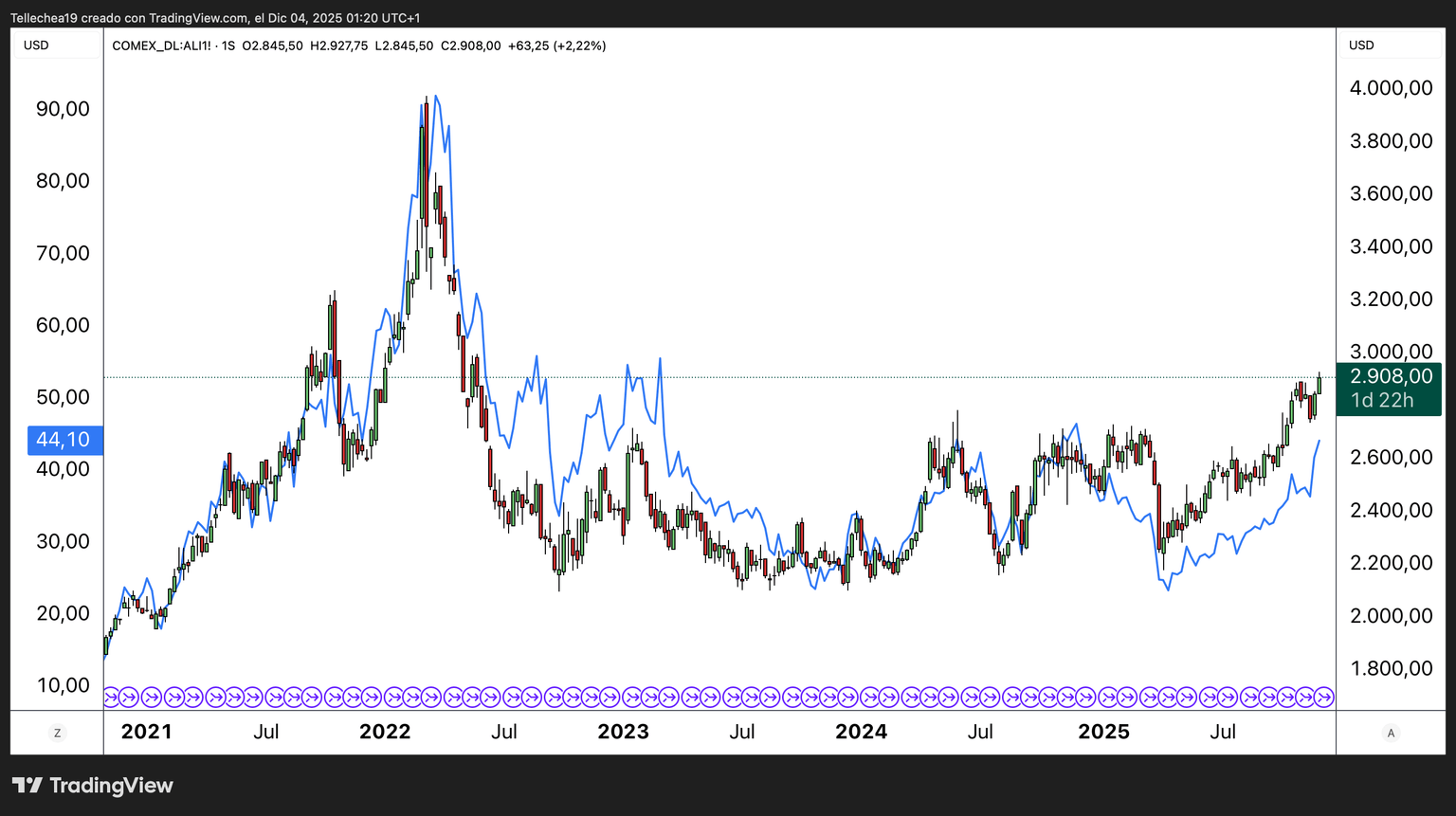
Is Alcoa lagging? Could it join the metal’s move? Intermarket evidence suggests that it might. Several signals support this view:
- The leader is clear: aluminum broke out first and is already in a confirmed uptrend.
- Alcoa has historically reacted with a lag, especially after long consolidations or multi-year bases.
- The stock’s recent behavior — higher lows since 2024 and strong acceleration in November–December — points to accumulation.
The 44–47 USD zone is the “technical equivalent” of the breakout in the metal; a breakout above this level would synchronize both assets.
Unlock exclusive gold and silver trading signals and updates that most investors don’t see. Join our free newsletter now!
Author
CMT Association Research Team
CMT Association
The CMT Association is a global credentialing body that has served the financial industry for nearly 50 years.

















