ADP Jobs Preview: Three reasons to expect the data to drive the dollar higher
- ADP releases its private-sector labor report after a hiatus, raising expectations for high accuracy.
- White House comments about cooler job growth lower expectations.
- Economists project a modest increase of only 200,000 positions, also lowering the bar for an upside surprise.

"Some pain" is what Federal Reserve Chair Jerome Powell has promised the American people, a price needed to pay for bringing down inflation – a high bar to stop raising rates and supporting the dollar. And is not even among the reasons to expect ADP's private-sector jobs report to boost the buck.
Here are three reasons to expect a big bounce from this release, a critical Nonfarm Payrolls preview.
1) Fresh formula means stronger reaction
ADP is the largest payrolls provider in the US, and its estimates of employment changes have always been eyed by market participants. Since the pandemic broke out, however, the correlation between the firm's figures and official private-sector jobs figures have been weak. They occasionally even missed the border trend and came to be seen as a contrarian indicator.
Earlier this summer, the company did some soul-searching and took a two-month hiatus to revise the ways it calculates labor market changes. The data is now based on the company's own data rather than using models that include macro data coming from outside, such as older official statistics. ADP says its new methods are more transparent, real-time and high-frequency. It held a videoconference to explain the changes and observers were impressed.
These changes raise expectations for a more accurate report, making it more significant as a hint toward Friday's Nonfarm Payrolls – and as a market mover. It would need to show a loss of jobs to provide any evidence of "pain" – and that is not coming.
2) White House tip-off
White House spokeswoman Karine Jean-Pierre said on Monday that they expect jobs data to "cool off." It seems like officials are doing some "damage control." Ahead of the June inflation report, the WH noted that data does not reflect falling gasoline prices – and indeed, that figure came above estimates.
Is recent history repeating itself? Even if President Joe Biden did not receive official Nonfarm Payrolls data four days in advance, markets have lowered expectations, even below economists' consensus, taken before Jean-Pierre made her comments.
A lower bar is easier to pass, raising the chances of a dollar-positive surprise.
3) Already low expectations
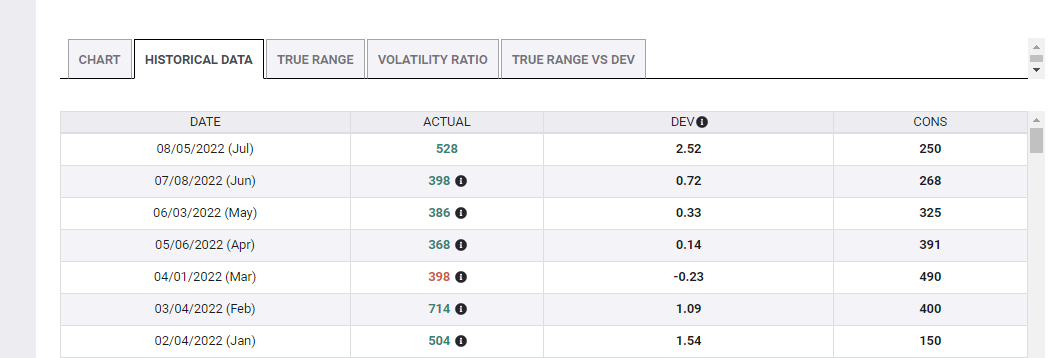
The economic calendar indicates an increase of only 200,000 private-sector jobs in August. That compares with a leap of 528,000 overall positions in July. Has hiring tumbled that much? It seems implausible. Slower hiring makes sense, but not halving, especially without a major crisis. August 2022 was not a pivotal month for US nor global history – the Russia-Ukraine war is in a stalemate and covid is almost forgotten.
It is essential to note that official NFP figures beat estimates in six out of seven months in 2022. There is a good chance that economists are being pessimistic about ADP's data as well.
Source: FXStreet
Final thoughts
The closely watched ADP report comes amid a higher bar for the Fed to stop tightening, repeatedly low expectations from economists, and then downbeat comments from the White House. Such low expectations signal a higher chance of a positive surprise supporting the dollar.
It is essential to note that ADP's data is released on the last day of the month, and last-minute adjustments by portfolio managers tend to result in higher volatility. Nevertheless, the broader upside dollar trend should continue – with a nudge from the figures.
Author

Yohay Elam
FXStreet
Yohay is in Forex since 2008 when he founded Forex Crunch, a blog crafted in his free time that turned into a fully-fledged currency website later sold to Finixio.