A win for England: First half growth on positive track, keeps pound buoyant

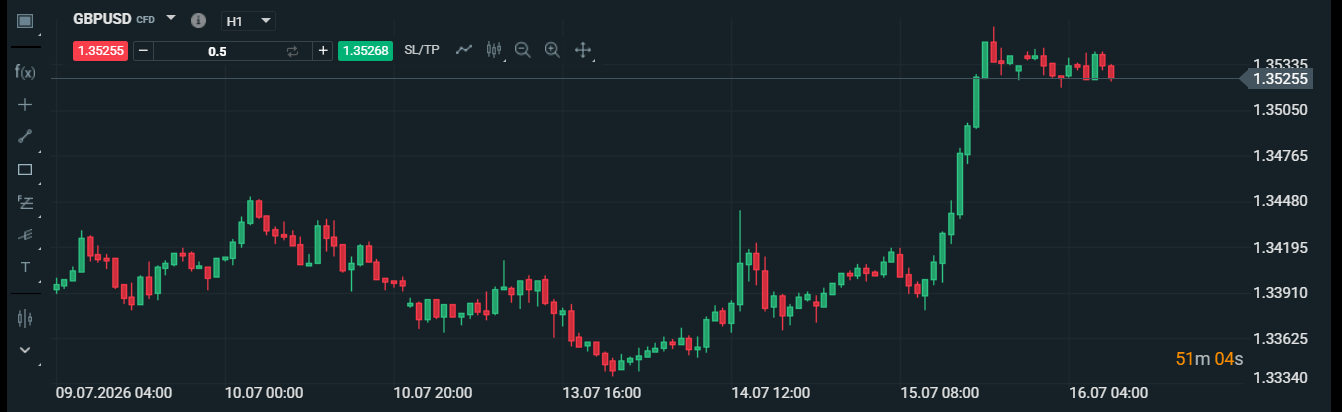
The pound is edging lower on Thursday, after Wednesday’s stunning rally on the back of reports that current home secretary Shabana Mahmood is set to become Chancellor next week. This is easing fears that the hard left of the Labour party will have control at the Treasury. GBP/USD is higher by nearly 1% this week, although it is pulling back from the $1.3550 level this morning.
Politics at play in UK asset prices once again
Politics play an integral part in UK asset prices, especially the pound and Gilt yields, due to our rising debt burden, huge borrowing and unstainable welfare bill, this is why the market is experiencing a relief rally on the back of Mahmood’s appointment. It tells us two things about Andy Burnham’s government: firstly, the market trusts Mahmood to take a sensible approach to economic policy, and to tackle the hard questions of welfare spending, secondly, Burnham is willing to have those to the right of the Labour party in his cabinet in key economic roles, which is why Gilts also rallied on Wednesday and yields are down slightly on Thursday.
Although there has been no formal announcement that Mahmod will be chancellor, reports suggest that Burnham consulted the City on the appointment, which is a wise thing to do when you rely on investors to buy British debt to keep the economy running.
GDP on track for good first half
Regarding the economy, growth rose by a measly 0.1% for May, however, the rate of growth on a three-month basis was a robust 0.7%, which gives hope for the UK economy that it had a strong first half performance. The question is, will it fall apart in the second half?
Growth in May was driven by computer programming, advertising, and pharmaceutical activity. These are high value sectors of the economy, so the fact that they are growing is a sign of underlying economic strength in the UK economy and a vote of confidence in our economic outlook.
However, there are challenges ahead. The flare up in tensions in the Middle East pose a new threat to the economy and to Gilts, and even though Andy Burnham appears to have made a good decision regarding his pick for Chancelor, he is still appeasing the heard left in the Labour party by touting the possibility of future tax hikes when he spoke to Gary Linekar on his podcast.
The hope is that Burnham does not burden the economy with further speculation about tax hikes in the upcoming budget, but his recent actions suggest that he is trying to appease the public with sensible chancellor choice, and his Labour party with not so sensible tax hike plans.
Overall, Burnham will become PM next week, and UK asset prices are in recovery mode, even though England won’t be in the final of the World Cup.
Oil prices scaled back as traders book profits
Elsewhere, the oil price is retreating slightly on Thursday, even though a fresh wave of strikes between Iran and the US threaten the Strait of Hormuz and energy supply chains. Brent crude is back below $85 per barrel as traders booked profits after Brent rallied 11% this week. For now, the oil price and Middle East tensions are not the key driver of market sentiment. Instead, the sustainability of the chip stock rally is the main question facing markets as we move into the second half of the week.
Are we at the peak of the AI trade?
The South Korean Kospi slumped 6% today, after a sharp sell off in US tech stocks on Wednesday. The sell-off was led by SK Hynix, which slumped 11%, and is now lower by more than a fifth in the past month. Chip stocks are the most volatile sector of the global stock market right now, for example SanDisk, the memory chip maker, fell 8% on Wednesday, and overnight it suffered more losses and is lower by a further 4%.
SpaceX falls back down to Earth
There are also concerns for SpaceX, which fell below its IPO price on Wednesday and fell below $135 at one point. However, it did stabilize overnight, and rose by 0.3%, which suggests that it could avoid another selloff on Thursday. It still has a huge valuation of $1.8 trillion, but the recent price action suggests that market exuberance around chip stocks and the SpaceX IPO is starting to moderate.
There is a concern that as the lock up period for SpaceX shares expires in the coming months, more shares will flood the market and could depress the share price even further. By early December, 40% of tradable shares of the company could be available to trade in the market. There is also a Q2 earnings report that is due, most likely in early August. This will give traders hard financial facts to use when trading the stock, so if the numbers are not impressive, the stock price could take another lurch lower.
In Europe, stock indices have opened lower, Nasdaq and S&P 500 futures are also pointing lower, and the tone could be set by another sell off in chip stocks. In recent weeks, any sell off in chip stocks has been short-lived and investors have been willing to buy the dip. Will they be as keen do to so as we lead up to key event risk and tech earnings reports at the end of this month? The US tech sector is down 5% in the past month, with big gains for healthcare, energy and financials. Investors want to know if this rotation will continue, and if we are at the peak of the AI trade.
GBP/USD likes what it hears from Andy Burnham’s cabinet picks
Source: XTB
Author

Kathleen Brooks
XTB UK
Kathleen has nearly 15 years’ experience working with some of the leading retail trading and investment companies in the City of London.