A reprieve in ISM services, will it last?


Service-providers are by no means immune to tariffs, even if the impact is less direct than for manufacturers. The ISM Services Index rose slightly in April, but prices paid rose to a two-year-high and business activity slowed.
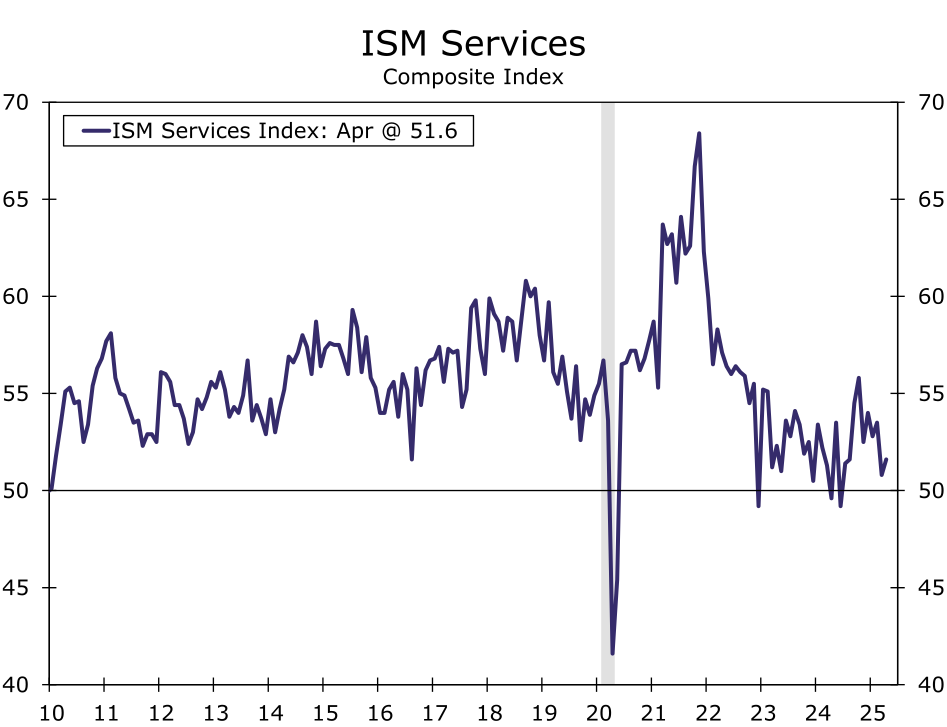
Not as bad as expected
Service sector activity quickened slightly in April with the ISM Services Index coming in at 51.6, up from 50.8 in March. The business activity index at 53.7 is still expanding, but at a slower pace than March when it registered a reading of 55.9.
The other components that feed into the headline came in slightly higher than they did last month. New orders rose slightly to 52.3. Employment was still in contraction, but is now contracting at a more modest pace, and Supplier Deliveries came in at 51.3, up from 50.6 last month.
Earlier in this cycle, an interesting dynamic was that the service sector continued to expand even in the face of higher interest rates which challenged the manufacturing sector. This dichotomy stood out in the ISM surveys with manufacturing remaining below 50 throughout all of 2023 and 2024, a time period during which the services ISM remained above 50 for all but two months.
It is early yet in terms of measuring the impact of the trade war, but the initial reaction demonstrates that the tariff rollout has created a few more headaches for manufacturers. Clients often ask which industries will be first to show disruption from trade and which ones might have more time before feeling the tariff impact. Our response is that it will depend quite a bit on individual company exposure to imports and company-level decisions when it comes to inventory management. But to the extent that industry-wide trends emerge, the ISM surveys can provide some early clues.
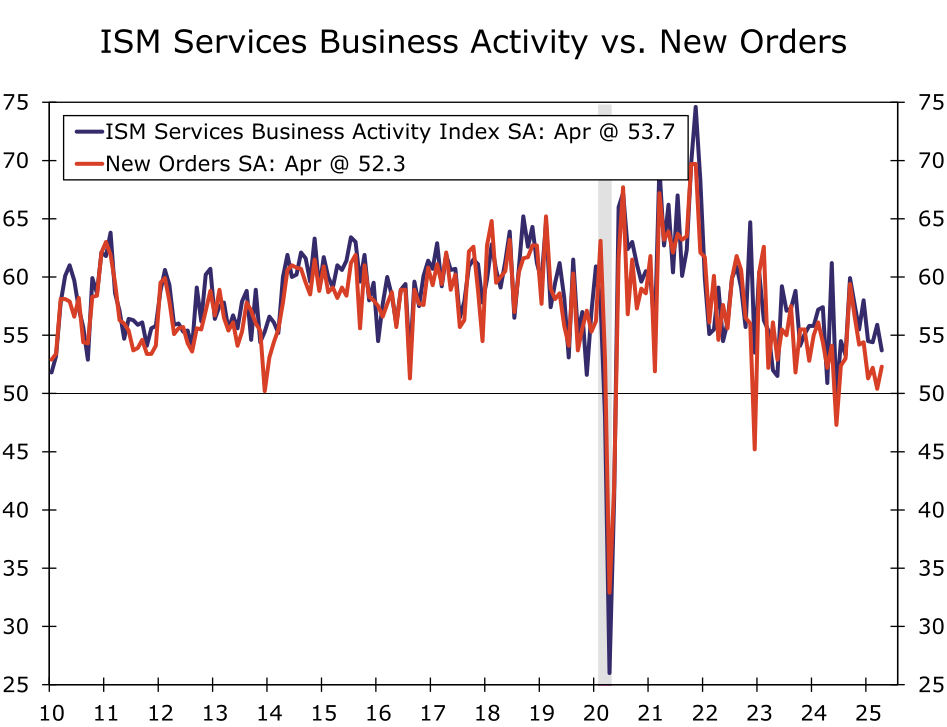
In terms of industry performance, 11 service-sector industries still report growth in April, but six industries are reporting a contraction with farming at the top of the list of those reporting decline and a respondent from that sector placing blame squarely on tariffs.
In a somewhat counterintuitive development, transportation and warehousing is still seeing expansion in activity. We suspect this may reflect a last-ditch effort to move supplies and products ahead of the tariffs. On that basis, the expansion in this sector may be short-lived.
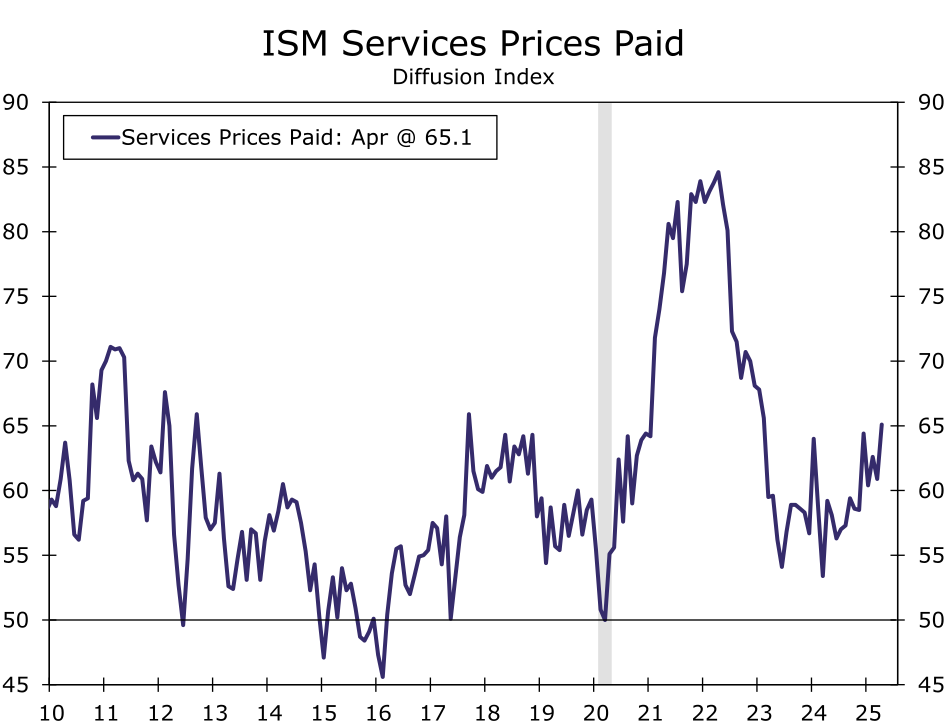
While the Services ISM signals current activity is holding up, the tariff impact was evident in growing wait times and higher costs. The prices paid index hit its highest reading since early 2023 in April with 17 of the 18 industries included in the survey reporting higher prices paid during the month. At 65.1 the prices-paid component is near the top-end of the prior expansions range.
Service-providers are by no means immune to tariffs, even if the impact is less direct than for manufacturers. That said, tariffs are not the only source of concern. The administration's policies on grants, funding and public-health policy were also mentioned by purchasing managers. This is leading some to halt hiring, with the release noting “hiring freeze due to uncertainty of government grants.”
We have argued that a stable labor market remains key for the economic outlook as the potential determining factor for sustaining consumers through whatever tariff-related disruptions are lurking in the months ahead. The employment component rose 2.8 points to 49.0. While that is still consistent with net layoffs in the services sector, it's an improvement from the month prior. Last week we learned total employment expanded at a decent clip in April. The labor market is holding up, but for how long remains a key question for growth this year.
Author
Wells Fargo Research Team
Wells Fargo