A math geek earnings more than $1 billion in trading profits in a year

I will be taking my annual two-week vacation this Sunday. I plan on writing the occasional letter, but I am going to try my best to invest quality time with the family and be more present than I have been over the last 18 months.
If today’s letter is all over the place, don’t hold it against me. I have so many ideas running in my head, and I want to try and tie them all together. It will either work, or it will seem like I am on more crack than Kurt Cobain.
S2N Spotlight
I wanted to start with the power and merits of entrepreneurship and how it is the hallmark of capitalism. I will then show where it gets into murky water.
There is a great example in a textbook called Universal Economics by Armen Alchien and William Allen, but they use a pretty depressing example, so this is Mike’s version.
Imagine a corporate office where employees are given free perks—say, each person gets 20 coffees and 20 protein bars every month. At first, people just consume what they’re given.
But pretty quickly, someone notices an inefficiency. Some staff barely touch the coffee, while others run out early—that is me. A colleague spots the opportunity: he offers 10 bars for 10 coffees to one person who doesn’t care much about coffee. Then he turns around and offers 8 coffees for 10 bars to someone desperate for coffee.
Here’s the outcome:
- The first person is happier with more bars and fewer unwanted coffees.
- The second person is happier with more coffee and fewer bars.
- The middleman keeps 2 coffees as pure profit (bliss).
This illustrates capitalism at work by spotting misalignments in value, orchestrating trades, and creating profit from inefficiencies.
This is where I fit Alex Gerko into the story. I have been following this math geek for several years, and he was one of the reasons Vlad and I set up our high-frequency market-making business. XTX, Gerko’s firm, doesn’t create anything; it simply swaps “coffee for granola bars” quicker and more cleverly than most others.
That was just a little side road to the main story. He was also about a billion times better at it than us.
Capitalism works better than any other system, but it comes with an invoice. Its very success creates power bases that are able to interfere and influence the system. There is also that other pesky nugget of government overreach that tends to make government and power bases strange bedfellows. Epstein Island is not what I have in mind, but that is no doubt a part of it.
This chart has gone viral on the net. I am not sure who produced it, so I cannot cite a source. This is one of those charts that needs little explanation.
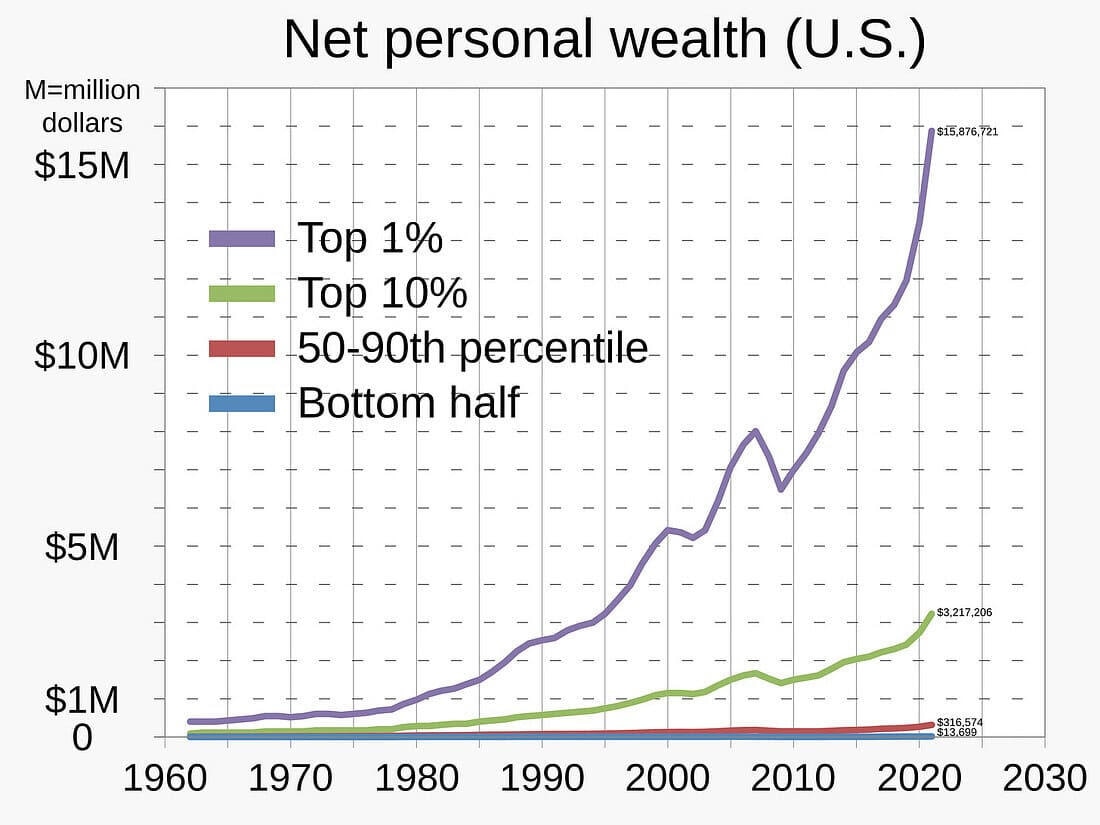
I remember studying the Gini coefficient in the late 80’s at university. Growing up in South Africa, where inequality was so prevalent, I didn’t understand the corrosive nature of the divide.
Over time, as I’ve become a better observer of society and a student of economic history, I’ve come to realise a simple truth: when the gap between the haves and have-nots grows too wide, the resulting anger doesn’t produce solutions—it produces destruction. We’re seeing it now. Civil society is more polarised, less civil, and increasingly defined by distrust.
The root driver is inflation. It begins with asset inflation—the “everything bubble”—which made homes and investments drift further out of reach for ordinary people. Governments and central banks found cover in the fact that consumer prices lagged behind. But when essential goods finally surged and everyday life became less affordable, despair hardened into anger.
And here’s where I lose patience: central banks and governments—if there’s even a difference—still pretend they can outsmart the business cycle. That’s nonsense. The more they interfere and promise utopia, the worse the distortions become. Weak businesses should be allowed to fail. Let nature take its course.
Before I end off, not all is bad, and we have come a long way. There’s much to be grateful for. The number of countries considered low-income has halved.
S2N observations
$NVDA ( ▼ 0.09% ) announced their much-anticipated results at the market close. The results were in line with expectations, but the market found future guidance disappointing. When you have so much expectation priced into you as the world’s most valuable company, there is very little room for disappointment.
I came across this announcement the other day. This is the wokest bs I have ever seen.
I have to confess that I tend to get pretty fired up, and you could argue “abusive,” when Claude gets lippy with me. But do me a favour: when you are more worried about the feelings of a machine than you are human beings, you have gone too far.
One last observation. Not all users of AI are finding their abilities better than humans. Here is an MIT study on AI’s performance reading X-rays. In summary, it is a mixed bag. Just like humans have a tendency towards bias. Computers predicted to think like humans tend to also exhibit some bias tendencies.
Please don’t take my observations over the last week about AI the wrong way. This is now the inevitable path towards the future. AI will become a greater and greater part of our daily lives. Productivity will soar with this new tool. But like capitalism, it can become a victim of its own success. We need to stay alert and keep thinking.
Remember, you control the robot; don’t let the robot control you.
S2N screener alert
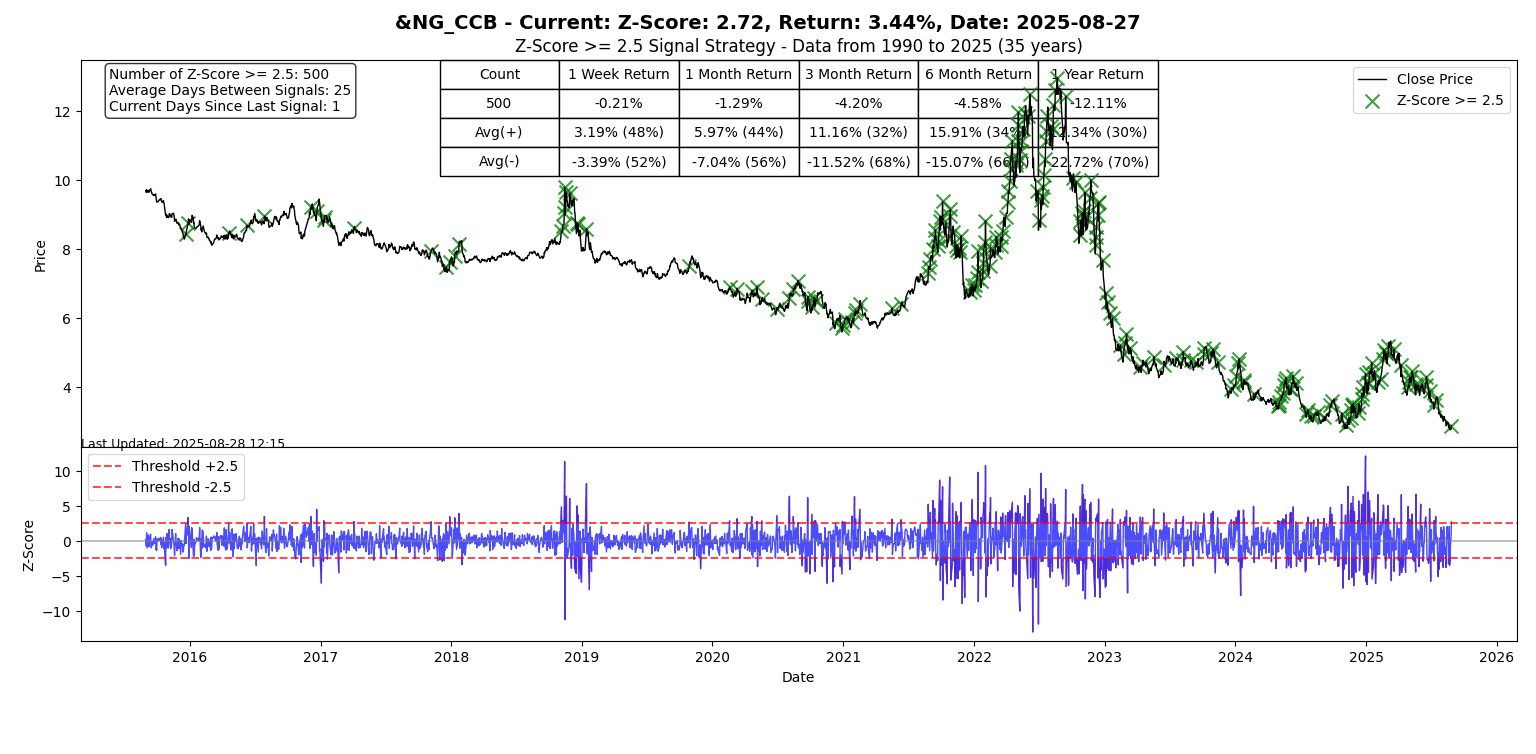
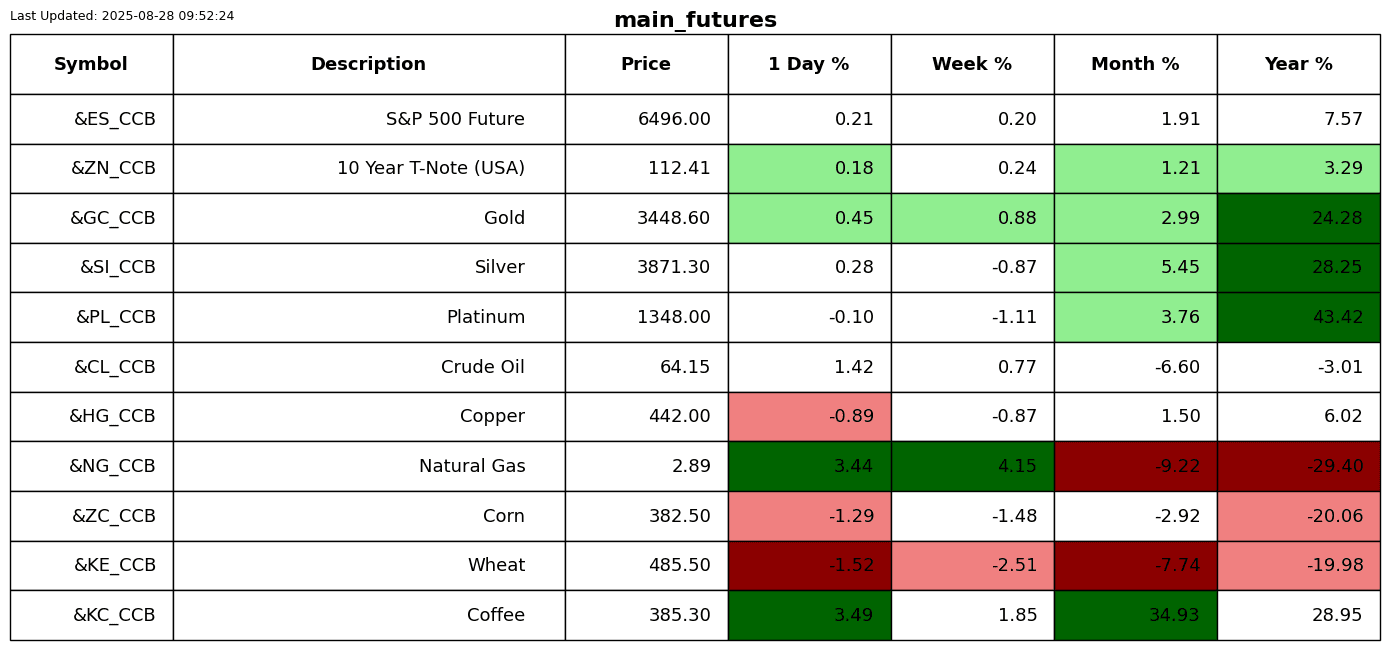
Natural gas has been one of the wildest broncos to ride, but those who have been able to hold onto their shorts would have been well rewarded. It looks like new lows ahead.
S2N Performance Review


S2N chart gallery
S2N news today
Author
Michael Berman, PhD
Signal2Noise (S2N) News
Michael has decades of experience as a professional trader, hedge fund manager and incubator of emerging traders.