One letter could revive Gold's peace trade
Gold has gained on the biggest steps toward a US-Iran deal, because peace pulls Oil down and takes Federal Reserve hikes off the table. US Vice President JD Vance has written to Tehran in the most senior outreach in months, with US strikes possible in November.
The Iran war has hurt Gold, and major steps toward ending it have helped it. The war began on February 28 with Gold above $5,200, and the metal has lost close to a quarter of its value since. Vice President JD Vance has now sent the most senior US outreach to Tehran in months. It's a letter to Mohsen Rezaei, the secretary of Iran's Supreme National Security Council, proposing talks as soon as the week of November 3.
The Wall Street Journal, which first reported the letter, also reported that Washington has told Gulf allies to prepare for a possible brief, heavy round of strikes after the November 3 midterm elections. The letter and the strike plan share a week, and Gold's next big move depends on which of them gets there first.
How a war took a quarter off Gold
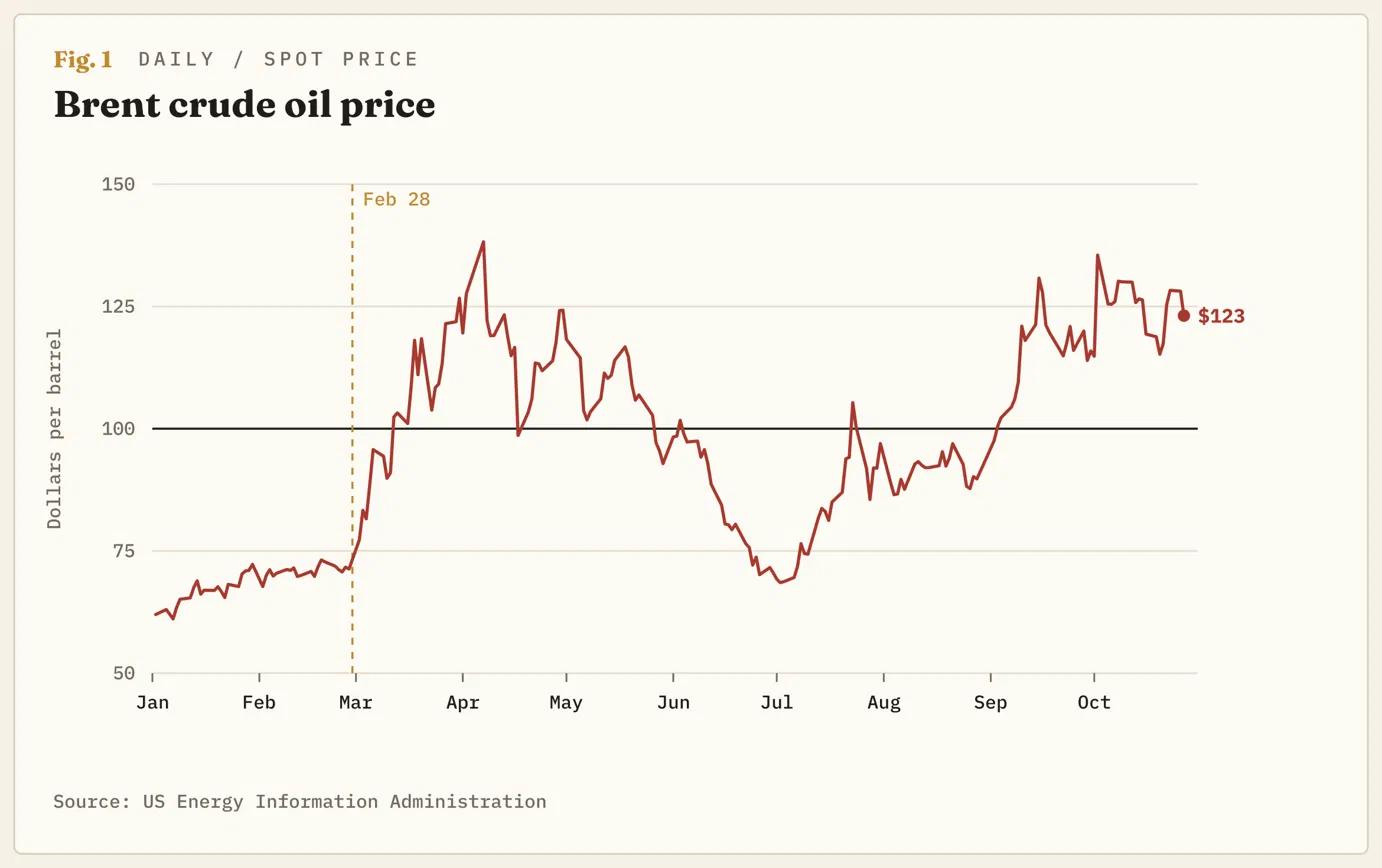
The war shut the Strait of Hormuz. Brent crude was about $71 a barrel the day before it began and has been above $100 on 91 of the 167 trading days since, according to prices from the US Energy Information Administration (EIA). The US Consumer Price Index (CPI) rose 3.7% in the year to September, and the Federal Reserve (Fed) raised its rate to 3.75%-4.00% on September 16, its first hike of this cycle.
That is how an Oil shock reaches a metal nobody burns. Gold pays no interest, so every rise in what cash and bonds pay makes it costlier to hold. Futures give a December 9 hike roughly an 83% chance, according to the CME FedWatch tool, and make three more hikes by June 2027 the most likely path. The 10-year Treasury yield after inflation is 2.67%, and Gold's yield is zero.
Peace headlines have lifted Gold all year
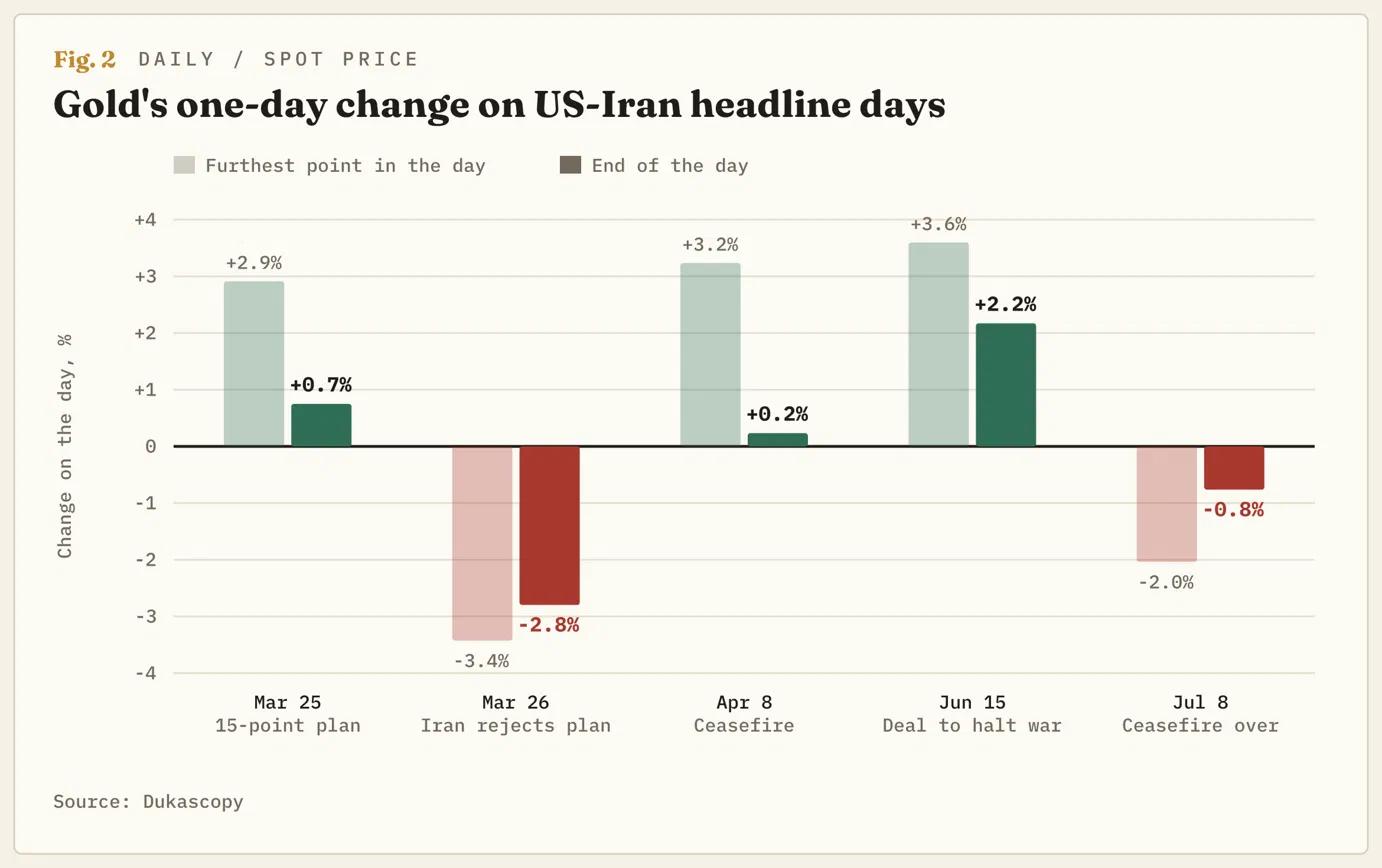
Washington's 15-point plan to end the war was reported on March 24, and the next day Gold rose almost 3% at one point and held at 0.7%. It lost 2.8% on March 26, when Iran rejected the plan. The ceasefire announced on April 7 took almost 12% off Brent in a day, and Gold jumped more than 3% on April 8 before giving most of it back. The agreement to halt the war added 2.2% on June 15.
The pattern can run the other way, too. Gold lost as much as 2% on July 8, when President Donald Trump said the ceasefire was over and Oil jumped. Gold is sold as insurance against war, and in 2026 it has paid out on the ceasefires.
Peace doesn't finish the job on its own. During the summer ceasefire, Brent fell to around $70, and Gold still made its 2026 low near $3,950 at the end of June, because the Fed's June projections had already pencilled in hikes for the inflation the war had produced. The peace trade lifts Gold on the day, and it only lasts if Oil falls far enough for traders to stop pricing a Fed hike.
The letter has a date attached, and so do the strikes
Qatari mediators passed the letter to Rezaei on October 25, according to The New York Times. It proposes a meeting led on the US side by Vice President Vance, as in June's talks in Switzerland, with Iran's nuclear programme on the table from the start. The proposed venues are Qatar or Turkey, and the earliest suggested date is the week of the midterms.
Tehran hasn't replied in public. On Wednesday, a senior Iranian official denied that Qatar had put forward a new proposal and called its ideas unacceptable, while Iran's Foreign Minister Abbas Araghchi said Iran was still giving diplomacy a chance. President Trump has described the letter as about medical supplies, though the Wall Street Journal reported that he sent it to explore restarting talks.
The letter hasn't done much for Gold yet. Brent rose Wednesday, the day the letter was reported, and Gold fell because the two Fed officials who voted for an immediate hike outweighed the outreach.
Four highs since August, each one lower
Gold has given back its entire August rally, and each subsequent high has stopped below the last: near $4,700 in late August, $4,400 in late September, $4,200 in mid-October, and just under $4,100 after the Fed's decision. It broke below $4,100 on October 22 and has held above the summer low since, and the bounce into the Fed got it back to that broken level for a single session.
The daily Stochastic Relative Strength Index (Stoch RSI), a momentum gauge, climbed from the bottom of its range in late September and turned down as the Fed met, so the bounce had run out of push before the two hike votes arrived. Gold is trading below both its 50-day and 200-day averages, and the 50-day, near $4,200, has been under the 200-day since early October. The trigger is the summer low near $3,950.
A meeting date or a strike date
If Rezaei answers and a Vance-led meeting sets a date, Oil is likely to fall first, as it did in April, and the odds of a December hike would follow. That gives Gold room to get back above $4,100, the level it broke on October 22, and toward its 50-day average near $4,200.
If the letter goes unanswered and the strikes go ahead after November 3, Brent is likely to head back toward its October highs, and the December hike would be nearly certain. A daily close below $3,950 would then put Gold at a new low for the year.
The observable is a meeting date, not a letter. If a date is set and Gold still can't climb back over $4,100, the peace trade is gone, and Gold is trading on the Fed alone. The Fed's next meeting is on December 9, and the talks don't have a date yet.
Author

Joshua Gibson
FXStreet
Joshua joins the FXStreet team as an Economics and Finance double major from Vancouver Island University with twelve years' experience as an independent trader focusing on technical analysis.