A contrarian view on the Brexit vote in Commons and the pound

The failure of Prime Minister Theresa May's Brexit deal in the Commons is now priced into the sterling.
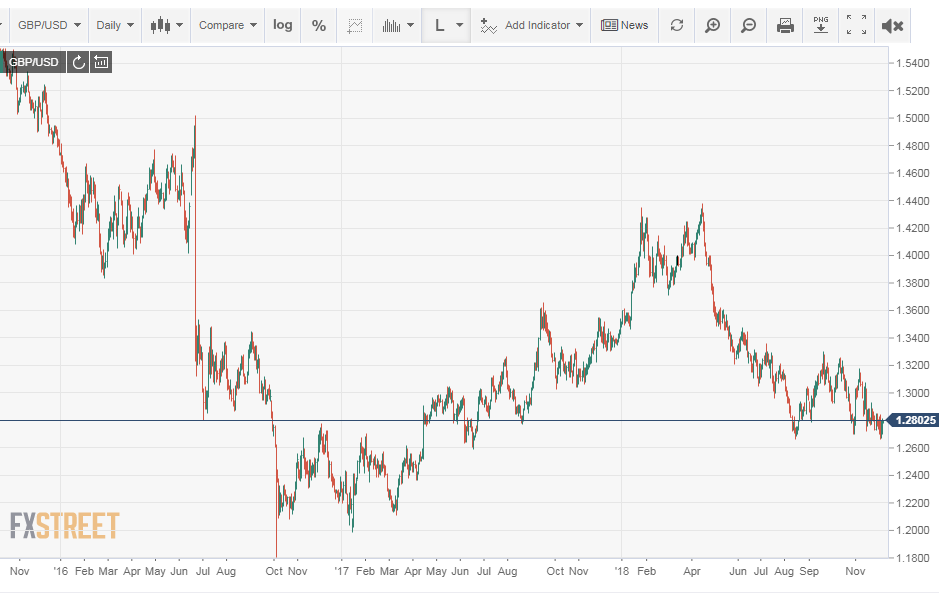
I would have hesitated to say that at the beginning of the week. But the news for the Prime Minister has been terrible all week and the pound is at 1.2802 more than a figure above Tuesday's low of 1.2658 (5:10 pm EST, New York).
Conventional opinion is that the sterling will be sold two or three figures if the Commons rejects Ms May's agreement.
Here is the opposite logic. If the Brexit deal is rejected the possibilities of the alternatives, a second referendum, Parliament’s abandonment of the whole project or the Norway option, rise substantially. This assumes Ms May remains Prime Minister.
The first two would send the sterling higher, at least until polls began to report on the referendum odds. If the Norway option gathered serious consideration it would probably have the same effect, though it is harder to gauge because the details are unknown.
Ms May could attempt to renegotiate the customs union exit clause of the rejected deal with the EU Commission but Michel Barnier among others on EU side has said repeatedly that this is the final deal there will be no more negotiation.
If the choice was between helping Ms May get the agreement through Commons or a no-deal Brexit, the Commission might have had incentive to help to negotiate a unilateral exit from the backstop union. If Britain crashed out of the EU the damage would be equally harsh resulting in a European recession on both sides of the Channel.
Since both May and the Commons have ruled out a no-deal exit, the possibility and the reason for the EU to renegotiate is minimal. That danger to the sterling is not being considered.
It is possible that an inability to gain Parliament approval of the Brexit deal makes it impossible to gain a majority for any course in the Commons. By default, that could send the UK into a no-deal exit as the March 29th exit date is set in British law. In reality that seems the least likely path. About the only thing all sides agree on is that a no-deal exit would be a disaster. The EU would quickly agree to postpone the March 29th exit at the UK request.
As the chances of May's Brexit deal approval sink the odds of the UK remaining in the EU climb. The exit referendum was approved 52%-48%. That might not be difficult to overturn.
If the Brexit deal fails in Parliament on Tuesday the Remain side will see a leap in hope that will support the sterling. If Brexit passes the relative financial and economic stability will also boost the pound.
If Brexit falls in the Commons markets could alternatively choose to focus on the confusion and uncertainty of the next four months as a reason to sell the sterling. I just don’t think they will. Markets will be pleased that the odds of Britain staying in the EU will improve dramatically.
That is more than enough reason to buy the pound.
As this advances we may see speculation on whether Ms May's secret goal was exactly what seems to be happening.
She was after all, a Remainer in thought. Perhaps in deed too
Author

Joseph Trevisani
FXStreet
Joseph Trevisani began his thirty-year career in the financial markets at Credit Suisse in New York and Singapore where he worked for 12 years as an interbank currency trader and trading desk manager.