USD/MXN: Mexican peso posts highest weekly close since October
- Mexican peso rises for the third-week in-a-row against the US dollar.
- USD/MXN outlook remains bearish, finds support at 19.60.

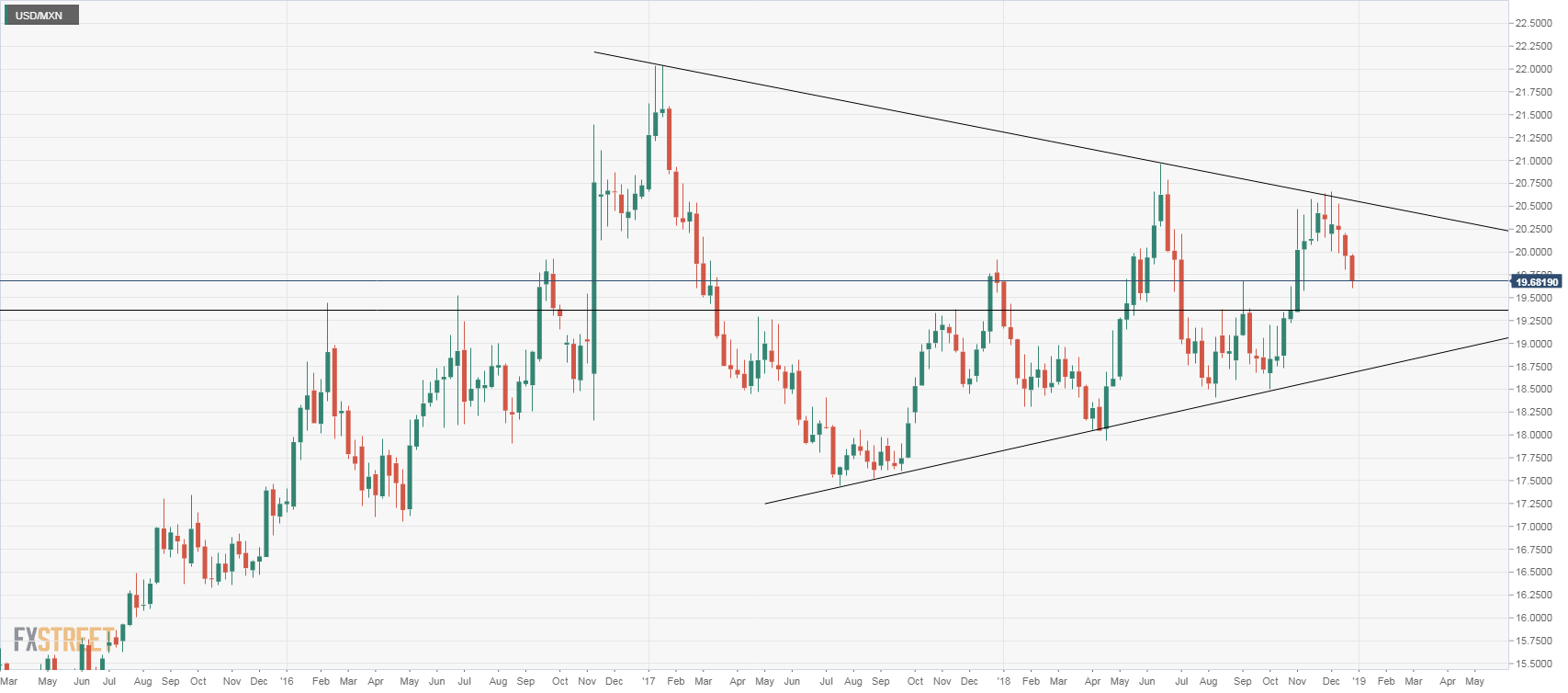
The USD/MXN pair dropped on Friday to 19.60, hitting the lowest level intraday level since November 7. It is about to end the week moving sideways between 19.60 and 19.70, consolidating significant weekly losses.
From the peak it reached back in early December, the pair has fallen 4.5% becoming the MXN, the best performer following the presentation of the Mexican 2018 budget, a rate hike from Banxico and a recovery in Mexican bonds.
During the week, the Mexican peso, as well as other emerging market currencies, remained resilient despite the shard slide in equity price in Wall Street. “In this context, emerging market assets registered a mixed performance: across regions, LatAm underperformed due to oil prices, with the main exceptions of the MXN, which apart from the weak USD also benefited from easing idiosyncratic concerns. Regarding EM assets, equity indices registered a mixed performance, while credit references continued to deteriorate across the board with the EMBI spread at its highest level since 2016”, said BBVA analysts. The Argentinean peso was the exception in the region, falling almost 1% over the week versus the US dollar.
USD/MXN Levels to watch
The current tone from the chart and the momentum favor the downside. From a fundamental perspective, many risks are still there, like Trump’s trade and immigration policies, the Mexican and the global economic outlook, tensions across financial markets and uncertainty about the Andres Manuel Lopez Obrador policies.
The weekly chart shows the pair with a clear bearish bias, retreating after finding resistance at a long-term downtrend line. The slide could continue over the next weeks to the 19.35/40 area that is a strong support area. A break lower would expose 19.00 and an uptrend line at 18.65.
If the US dollar recovers, in the short-term resistance levels, are seen at 20.00 and 20.20. Above, the 20.50/55 is the critical area to watch, a horizontal level and the downtrend line. A break higher would clear the way for a rally to 21.00.
Author

Matías Salord
FXStreet
Matías started in financial markets in 2008, after graduating in Economics. He was trained in chart analysis and then became an educator. He also studied Journalism. He started writing analyses for specialized websites before joining FXStreet.
















