|

USD/JPY Technical Analysis: Quick drop into 113.00 reveals firm support

  • The Dollar-Yen pair is steeply off of this week's early levels, dropping into the 113.00 handle in early Tuesday action after slipping from Monday's range around the 113.50 zone.

USD/JPY, 5-Minute
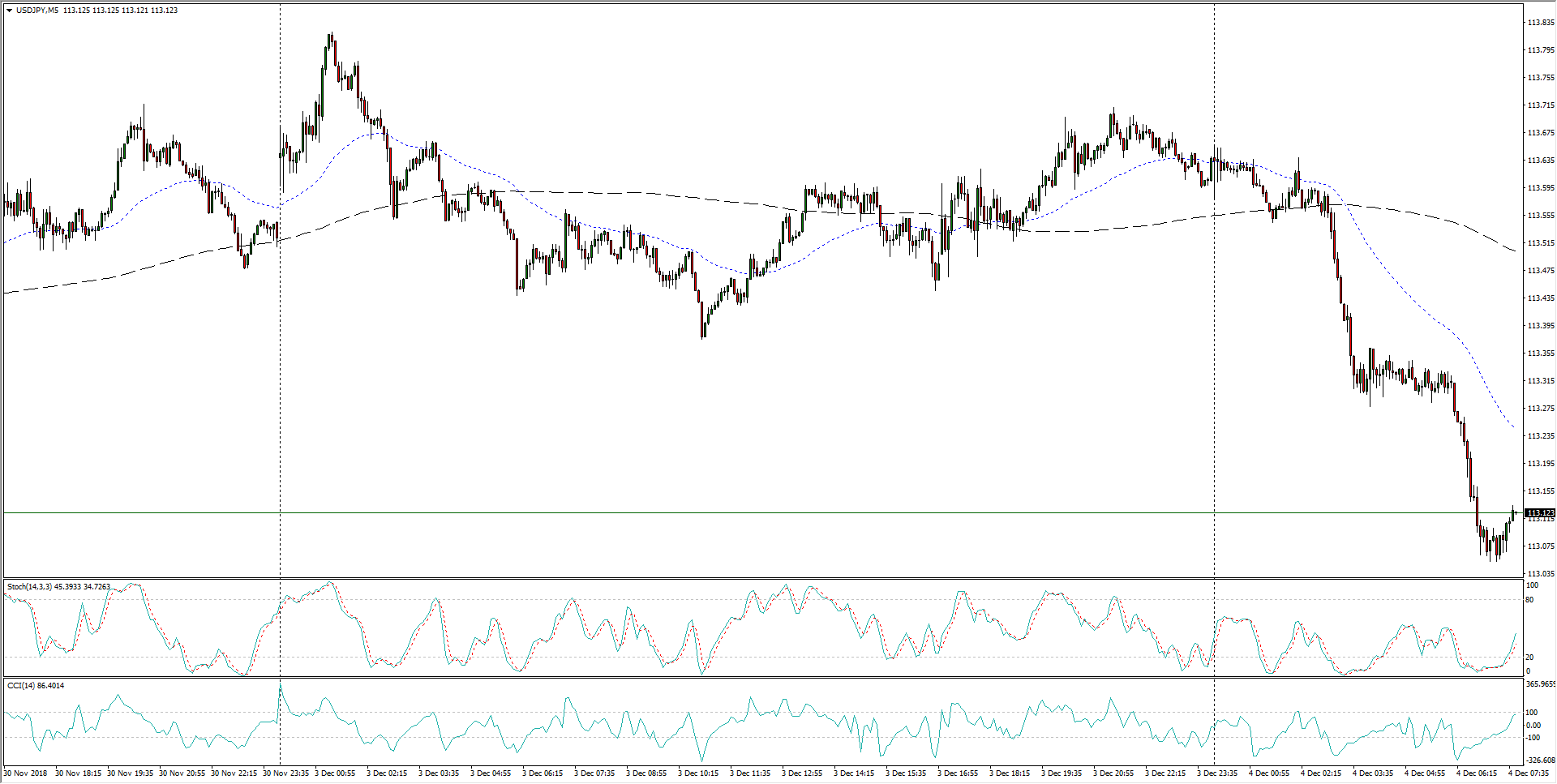
  • The 113.40 region could prove to be a critical near-term level, as a retest of the area could confirm a bearish break of a rough descending triangle, and continued downside pressure remains limited with the 113.00 handle acting as firm resistance-turned-support over the past couple of weeks.

USD/JPY, 30-Minute
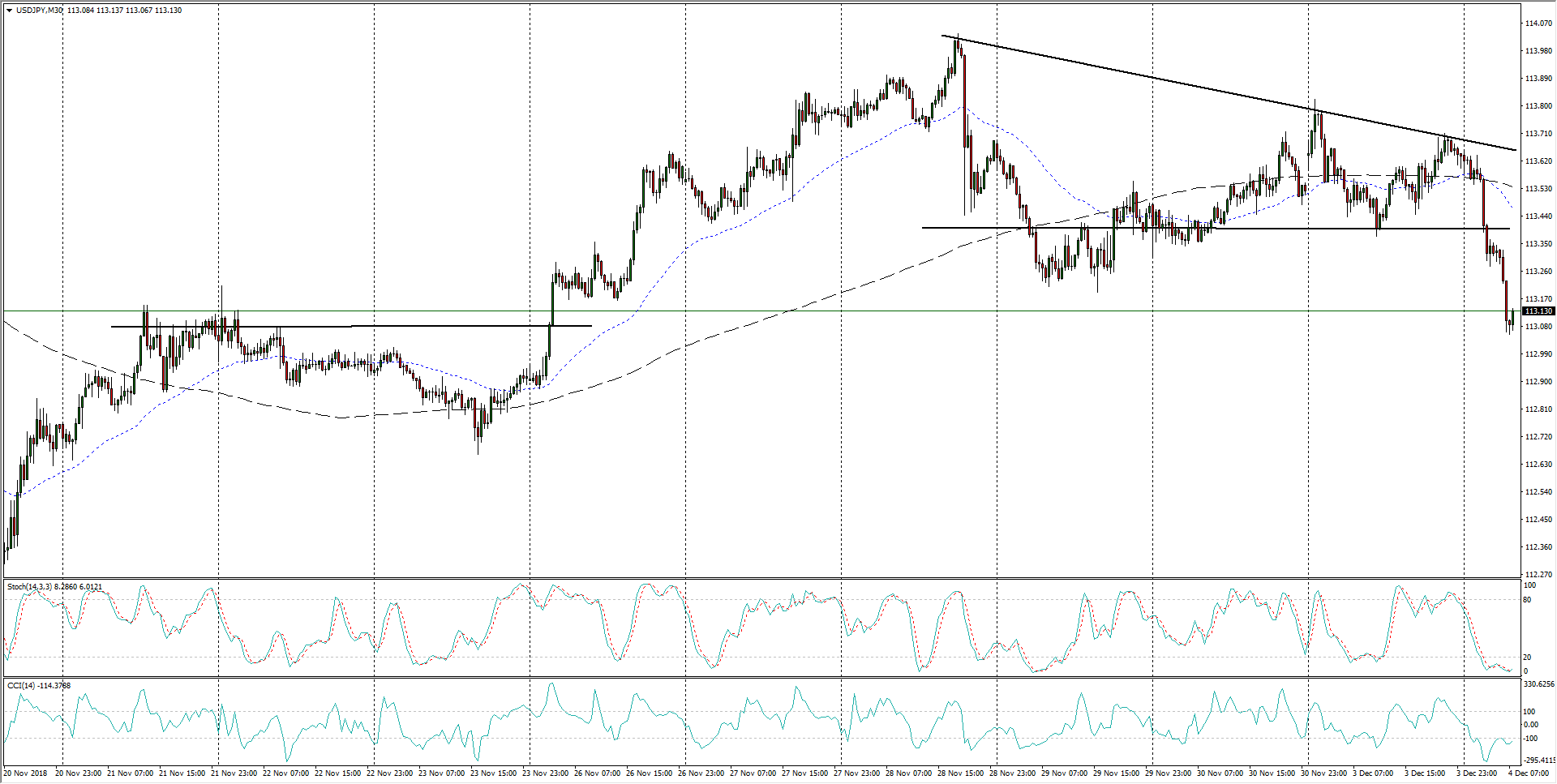
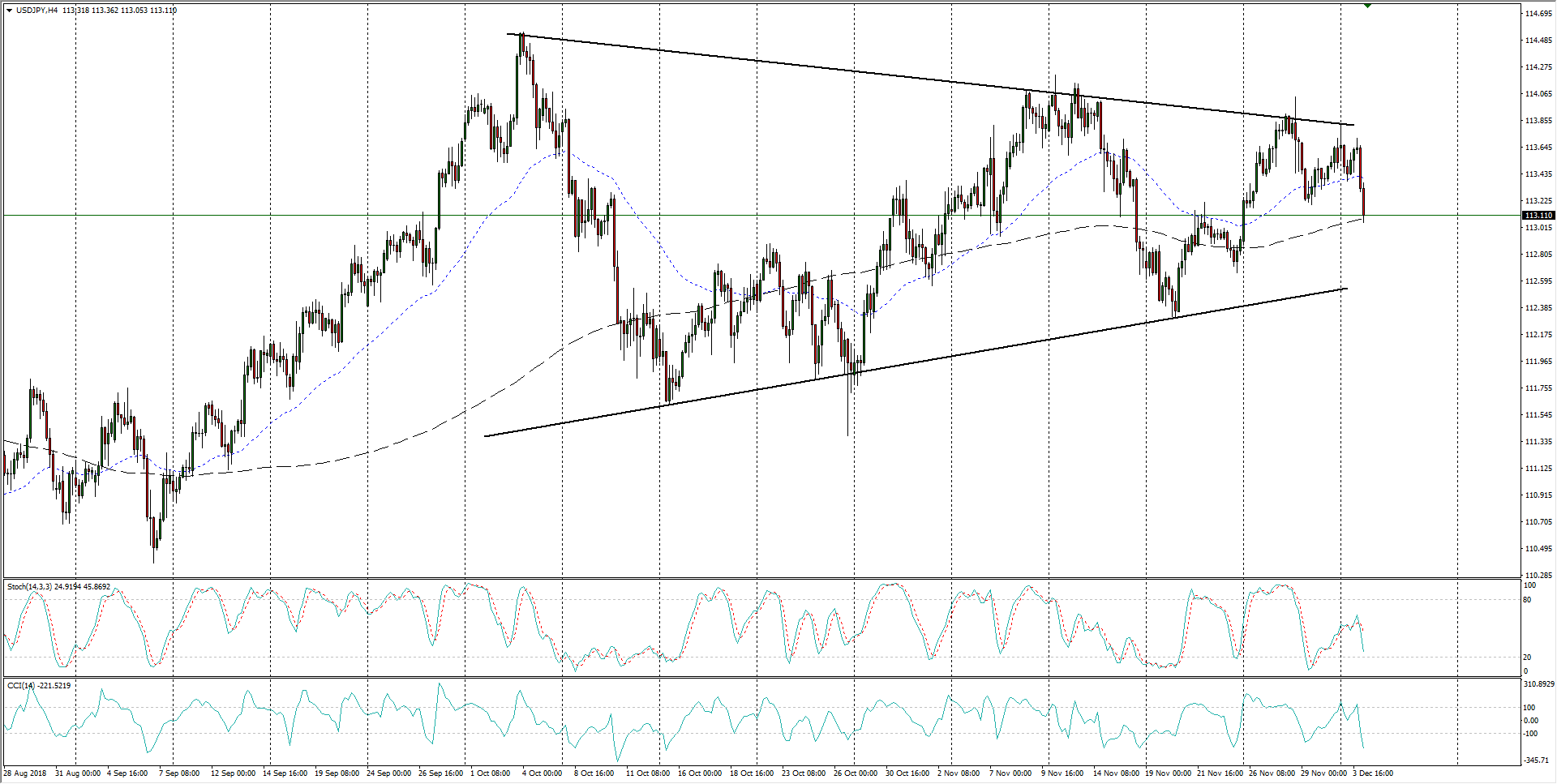
  • In the medium-term, USD/JPY remains trapped within a sideways triangle, and lack of directional bias leaves the pair strung up on the 200-hour moving average, which will continue to act more like a magnet than a support-resistance level until a major trend break is made.

USD/JPY, 4-Hour
USD/JPY

Overview:
    Today Last Price: 113.08
    Today Daily change: -58 pips
    Today Daily change %: -0.510%
    Today Daily Open: 113.66
Trends:
    Previous Daily SMA20: 113.4
    Previous Daily SMA50: 113.08
    Previous Daily SMA100: 112.25
    Previous Daily SMA200: 110.46
Levels:
    Previous Daily High: 113.83
    Previous Daily Low: 113.37
    Previous Weekly High: 114.04
    Previous Weekly Low: 112.88
    Previous Monthly High: 114.25
    Previous Monthly Low: 112.3
    Previous Daily Fibonacci 38.2%: 113.55
    Previous Daily Fibonacci 61.8%: 113.65
    Previous Daily Pivot Point S1: 113.41
    Previous Daily Pivot Point S2: 113.17
    Previous Daily Pivot Point S3: 112.96
    Previous Daily Pivot Point R1: 113.87
    Previous Daily Pivot Point R2: 114.07
    Previous Daily Pivot Point R3: 114.32

Author

Joshua Gibson

Joshua joins the FXStreet team as an Economics and Finance double major from Vancouver Island University with twelve years' experience as an independent trader focusing on technical analysis.


More from Joshua Gibson
Share:

Editor's Picks

EUR/USD weakens to near 1.1900 as traders eye US data

EUR/USD eases to near 1.1900 in Tuesday's European trading hours, snapping the two-day winning streak. Markets turn cautious, lifting the haven demand for the US Dollar ahead of the release of key US economic data, including Retail Sales and ADP Employment Change 4-week average.

GBP/USD stays in the red below 1.3700 on renewed USD demand

GBP/USD trades on a weaker note below 1.3700 in the European session on Tuesday. The pair faces challenges due to renewed US Dollar demand, UK political risks and rising expectations of a March Bank of England rate cut. The immediate focus is now on the US Retail Sales data. 

Gold drifts lower as positive risk tone tempers safe-haven demand; downside seems limited

Gold drifts lower during the Asian session on Tuesday and snaps a two-day winning streak, though it lacks strong follow-through selling and shows some resilience below the $5,000 psychological mark amid mixed cues. The outcome of Japan's snap election on Sunday removes political uncertainty, which, along with signs of easing tensions in the Middle East, remains supportive of the upbeat market mood.

Bitcoin Cash trades lower, risks dead-cat bounce amid bearish signals

Bitcoin Cash trades in the red below $522 at the time of writing on Tuesday, after multiple rejections at key resistance. BCH’s derivatives and on-chain indicators point to growing bearish sentiment and raise the risk of a dead-cat bounce toward lower support levels.

Follow the money, what USD/JPY in Tokyo is really telling you

Over the past two Tokyo sessions, this has not been a rate story. Not even close. Interest rate differentials have been spectators, not drivers. What has moved USD/JPY in local hours has been flow and flow alone.

Bitcoin Cash trades lower, risks dead-cat bounce amid bearish signals

Bitcoin Cash (BCH) trades in the red below $522 at the time of writing on Tuesday, after multiple rejections at key resistance. BCH’s derivatives and on-chain indicators point to growing bearish sentiment and raise the risk of a dead-cat bounce toward lower support levels.