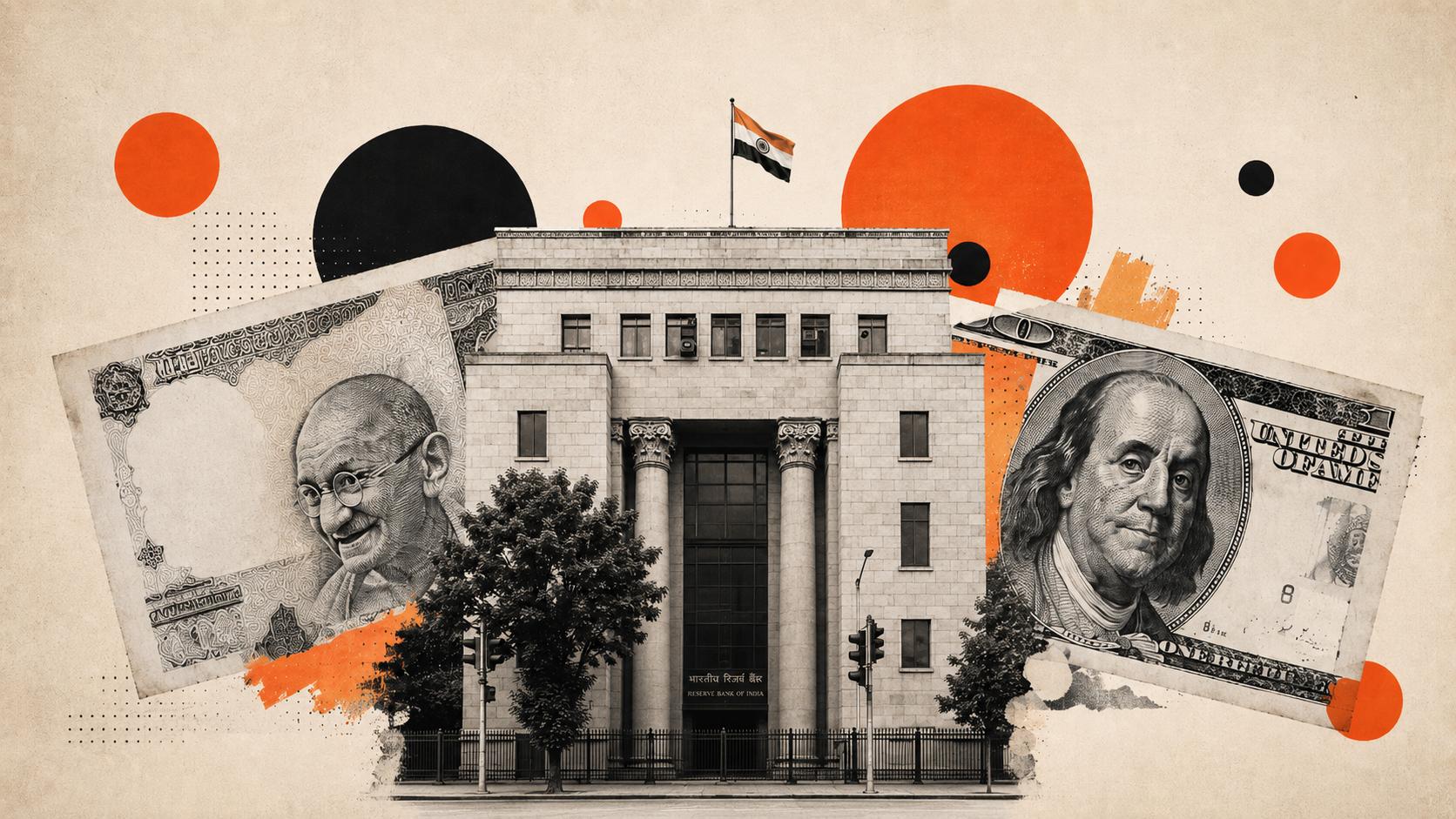
USD/INR jumps ahead of US PMI release
- Indian Rupee loses traction in Thursday’s early European session.
- The Indian HSBC Manufacturing PMI rose to 58.3 in May; Services PMI improved to 61.2 in May.
- The preliminary Indian HSBC PMI and US S&P PMI reports for May will be the spotlights later on Thursday.

The Indian Rupee (INR) loses ground on Thursday. The latest data released on Thursday showed that the HSBC India Manufacturing Purchasing Managers Index (PMI) rose to 58.3 in May from the previous reading of 58.2. This figure came in stronger than the 58.0 expected. Additionally, the Indian Services PMI improved to 61.2 in April from 58.7 in March. The local currency remains weak in an immediate reaction to the upbeat PMI data.
Investors will closely watch the preliminary reading of India’s HSBC Purchasing Managers Index (PMI) for May, which is due later on Thursday. On the US docket, the advanced S&P PMI for May, the Chicago Fed National Activity Index, the weekly Initial Jobless Claims and Existing Home Sales reports will be published.
Indian Rupee weakens amid renewed US Dollar demand
- India’s Commerce and Industry Minister Piyush Goyal said that India and the US may finalise the first phase of the India-US trade deal before July.
- The RBI monthly bulletin released in May stated that the global growth outlook remains fragile despite the US having paused tariffs. The RBI added that heightened policy uncertainty and weak consumer sentiment weighed on the outlook.
- Moody's Ratings said on Wednesday that India is well-positioned to deal with the negative effects of US tariffs and global trade disruptions, as domestic growth drivers and low dependence on exports anchor the economy.
- House Speaker Mike Johnson said that Trump met with House Republicans on Tuesday and failed to convince his party's holdouts to back his sweeping tax bill. Republican hardliners continue to argue the bill does not sufficiently cut spending.
- Several Federal Reserve (Fed) officials indicated in speeches this week that the US central bank is unlikely to lower its key fed funds rate at its two meetings this summer.
- Markets have priced in nearly a 71% chance that the Fed would keep its interest rates steady through its next two meetings, according to the CME FedWatch tool.
USD/INR’s bearish outlook remains in play under the 100-day EMA
The Indian Rupee edges lower on the day. The USD/INR pair maintains a bearish tone on the daily timeframe, with the price remaining capped below the key 100-day Exponential Moving Average (EMA). The 14-day Relative Strength Index (RSI) hovers around the midline. This indicates the neutral momentum in the near term, suggesting that further consolidation or temporary recovery cannot be ruled out.
The low of May 19 at 85.34 acts as an initial support level for USD/INR. Any follow-through selling below this level could see a drop to the 85.00 psychological level, followed by 84.61, the low of May 12.
On the other hand, the crucial resistance level to watch is the 100-day EMA at 85.60. A decisive break above the mentioned level could potentially lift the pair back up to 85.85, the upper boundary of the trend channel.
Indian Rupee FAQs
The Indian Rupee (INR) is one of the most sensitive currencies to external factors. The price of Crude Oil (the country is highly dependent on imported Oil), the value of the US Dollar – most trade is conducted in USD – and the level of foreign investment, are all influential. Direct intervention by the Reserve Bank of India (RBI) in FX markets to keep the exchange rate stable, as well as the level of interest rates set by the RBI, are further major influencing factors on the Rupee.
The Reserve Bank of India (RBI) actively intervenes in forex markets to maintain a stable exchange rate, to help facilitate trade. In addition, the RBI tries to maintain the inflation rate at its 4% target by adjusting interest rates. Higher interest rates usually strengthen the Rupee. This is due to the role of the ‘carry trade’ in which investors borrow in countries with lower interest rates so as to place their money in countries’ offering relatively higher interest rates and profit from the difference.
Macroeconomic factors that influence the value of the Rupee include inflation, interest rates, the economic growth rate (GDP), the balance of trade, and inflows from foreign investment. A higher growth rate can lead to more overseas investment, pushing up demand for the Rupee. A less negative balance of trade will eventually lead to a stronger Rupee. Higher interest rates, especially real rates (interest rates less inflation) are also positive for the Rupee. A risk-on environment can lead to greater inflows of Foreign Direct and Indirect Investment (FDI and FII), which also benefit the Rupee.
Higher inflation, particularly, if it is comparatively higher than India’s peers, is generally negative for the currency as it reflects devaluation through oversupply. Inflation also increases the cost of exports, leading to more Rupees being sold to purchase foreign imports, which is Rupee-negative. At the same time, higher inflation usually leads to the Reserve Bank of India (RBI) raising interest rates and this can be positive for the Rupee, due to increased demand from international investors. The opposite effect is true of lower inflation.
Author

Lallalit Srijandorn
FXStreet
Lallalit Srijandorn is a Parisian at heart. She has lived in France since 2019 and now becomes a digital entrepreneur based in Paris and Bangkok.