The price targets on Target

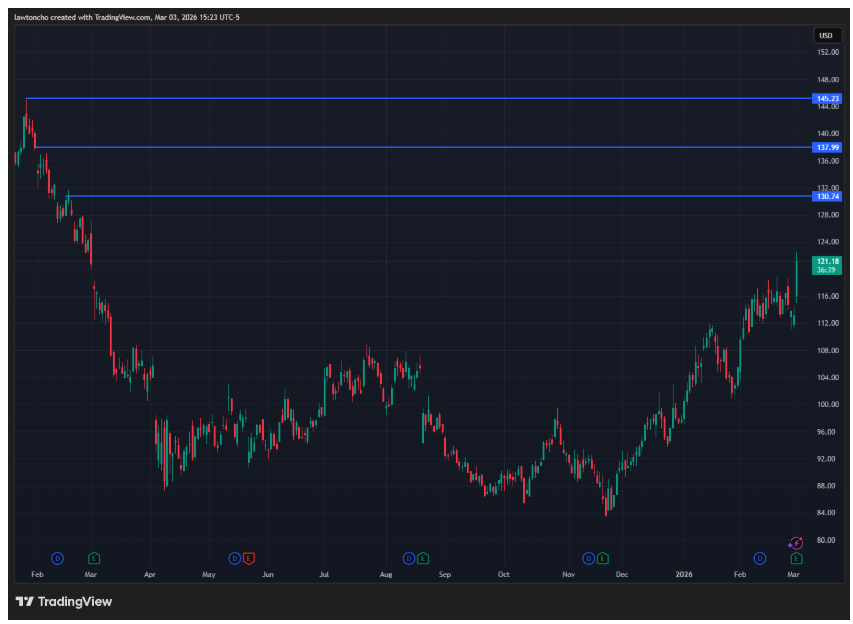
Target (TGT) made a strong move higher yesterday following its latest earnings report, climbing more than 7% from the previous close. When I look at the chart, what stands out to me is not just yesterday’s reaction, but the broader recovery the stock has staged since its November lows. From that low point, TGT has rallied more than 45%, which is no small move for a large-cap retail name. That kind of upside momentum tells me the market has been willing to reprice the stock higher, and the technicals have clearly improved along the way.
From my perspective, when a stock makes this type of sustained move off a major low, the next logical step is to identify where price may encounter friction. If TGT continues to press higher, there are three key areas of resistance that I am personally watching on the chart.
The first level I have marked is the gap fill around $130.75. Gap fills often act as natural areas of supply, and I want to see how price behaves as it approaches and potentially interacts with that level.
The second resistance zone I am monitoring sits near the $138 gap fill region. If momentum remains strong and buyers continue to step in, this area could come into play next.
Finally, I am watching the pivot high around $145. That level represents a prior area where price previously stalled, and in my experience, former pivot highs can act as meaningful resistance when retested.
For those less familiar with the company itself, Target Corporation is a major U.S. retail company known for offering a wide range of products, including apparel, home goods, electronics, and groceries. With a nationwide footprint and a strong brand presence, Target has long been considered a bellwether within the retail sector. Its earnings results and forward performance often draw significant attention from both institutional and retail traders, which is why I keep it on my radar when evaluating opportunities.
As always, no matter how strong a chart may look or how clean the technical levels appear, I believe it is essential to utilize proper risk management strategies when trading stocks. Identifying resistance is one part of the process — managing risk around those levels is what ultimately protects capital over time.
Author

Lawton Ho
Verified Investing
A marketing expert sharing his journey to mastering the charts.