|

Stocks to rally after CPI, but will they reach new highs?

The S&P 500 bounced on Monday, and today it’s going to open much higher after the CPI data. Will the uptrend resume?

The broad stock market index gained 1.43% yesterday, as it went the highest since last Tuesday. Last week on Monday it reversed lower after a better-than-expected ISM Services PMI release, and on Tuesday it was as low as 3,918.39 (going down from its last week’s local high of 4,100.51).

This morning the S&P 500 will likely open 2.7% higher following lower-than-expected Consumer Price Index release. The market will be now waiting for tomorrow’s FOMC release. It still looks like a weeks-long consolidation within an uptrend. However, last week on Tuesday the index broke below its two-month-long upward trend line, as we can see on the daily chart:
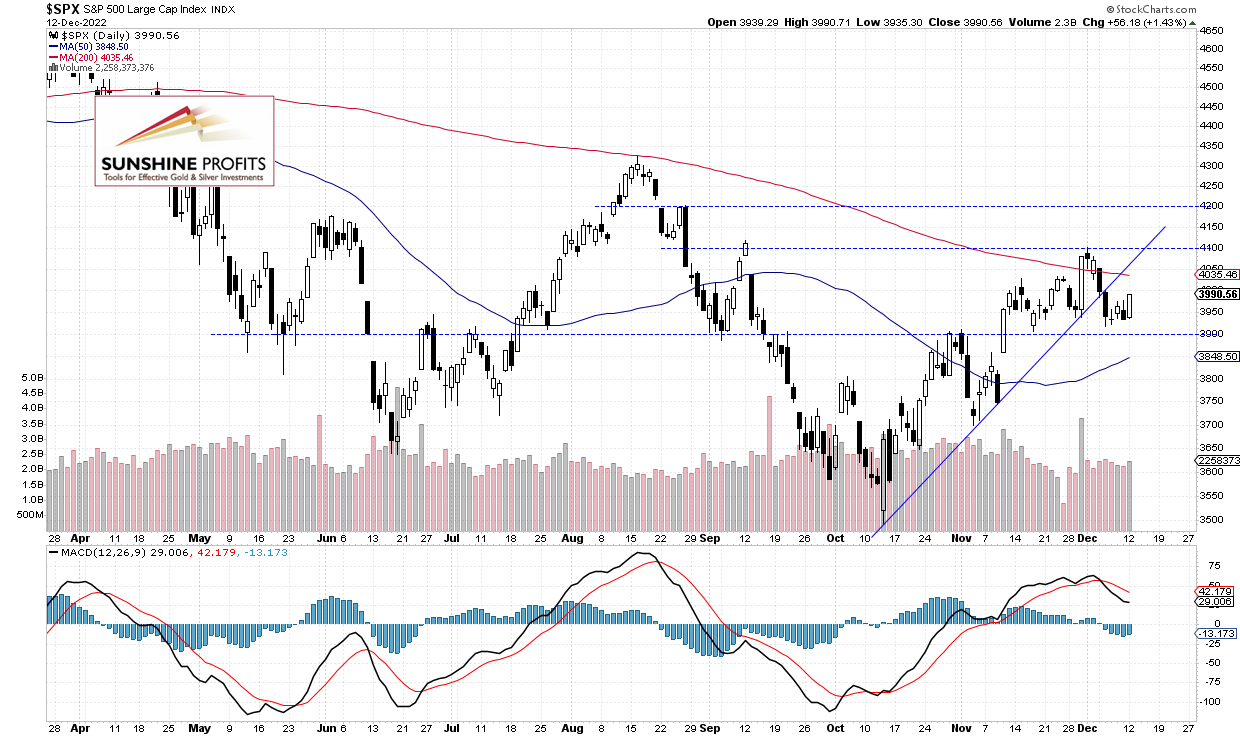
S&P 500

Futures contract rallies to new high

Let’s take a look at the hourly chart of the S&P 500 futures contract. It broke above the previous local highs on the inflation release. The support level is now at 4,050-4,100, marked by the recent resistance level.
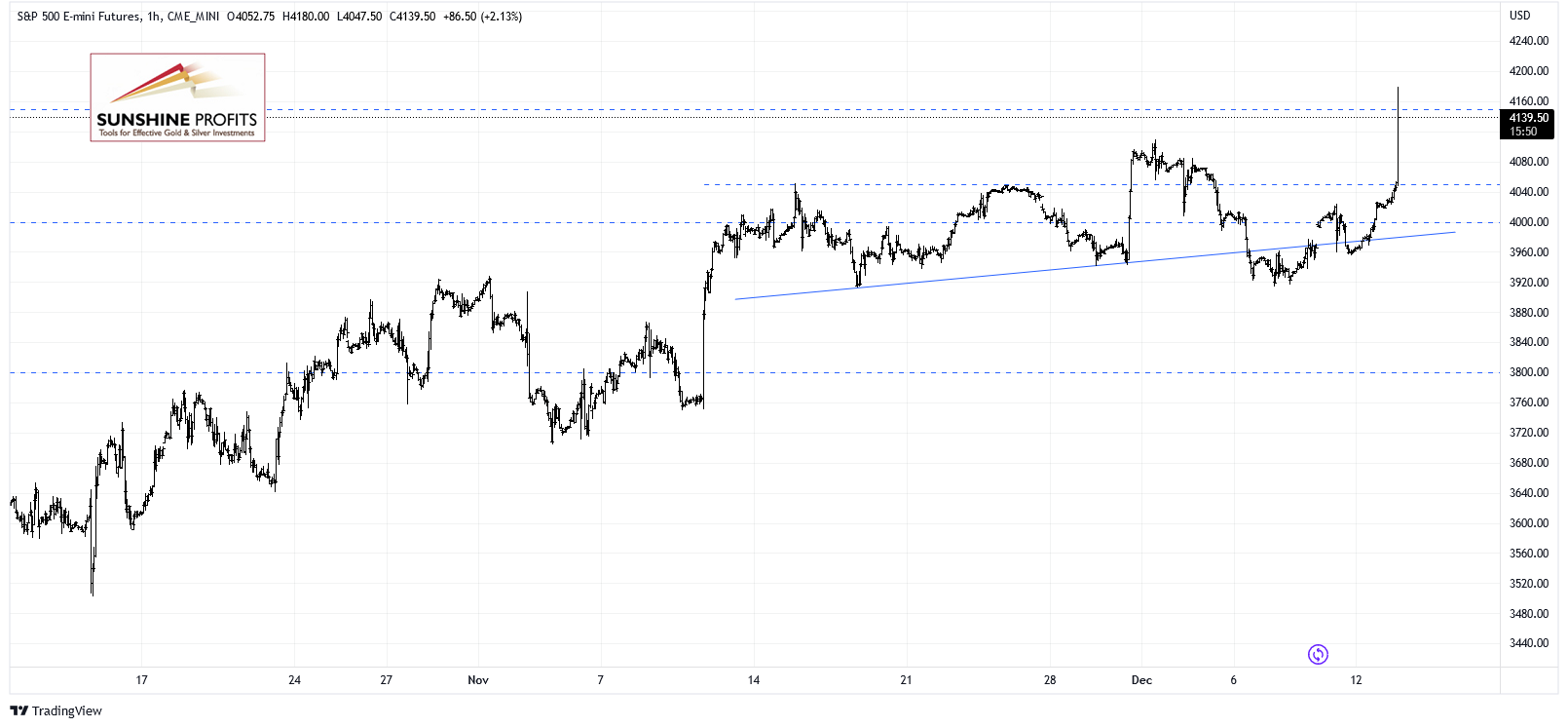
Chart

Conclusion

Stocks are about to open much higher this morning on lower than expected consumer inflation release. So the S&P 500 index will likely get back above the 4,000 level. Tomorrow we will have the important FOMC release, and there will likely be even more volatility.

Here’s the breakdown:

  • S&P 500 index got close to the 4,000 level yesterday, and today it will break above it.

  • Stock prices may resume their two-month-long uptrend.


Want free follow-ups to the above article and details not available to 99%+ investors? Sign up to our free newsletter today!


Want free follow-ups to the above article and details not available to 99%+ investors? Sign up to our free newsletter today!

Author

Paul Rejczak

Paul Rejczak

Gold Price Forecast

Paul Rejczak is a stock market strategist who has been known for the quality of his technical and fundamental analysis since the late nineties.


More from Paul Rejczak
Share:

Editor's Picks

GBP/USD extends losses toward 1.3200 after weak UK PMI data

GBP/USD loses further ground toward 1.3200 in the European session on Tuesday. Political uncertainty in the United Kingdom weighs on the British Pound, alongside weak business PMI data for June. Meanwhile, the US Dollar capitalizes on the risk-off mood and hawkish Fed bets ahead of the US PMI release.

EUR/USD stays weak below 1.1450 after German, EU PMI data

EUR/USD struggles to stage a rebound and trades below 1.1450 in the European session on Tuesday, after the data from Germany showed that the Composite PMI declined to 48 in June from 48.8 May, while that from the Eurozone rose to 49.5. Meanwhile, the US Dollar holds the upper hand against the Euro amid risk-off sentiment and a hawkish Fed outlook, leaving the pair on the defensive. Traders now await the US PMI data.

Gold drops to nearly two-week low, seems vulnerable amid Fed hike bets, bullish USD

Gold adds to its Asian session losses, and drops to a nearly two-week low, around the $4,115 region in the last hour amid a bullish US Dollar. Despite positive signals from US-Iran peace talks, widespread skepticism remains toward a final deal. This helps the USD in preserving its recent strong gains to the highest level since May 2025.

Bears cap Solana below $75 as ETF, retail demand wanes

Solana edges below $72 risking a third consecutive day of losses that could erase the 5% gains from Friday. SOL-focused Exchange Traded Funds reflect muted demand from institutional investors following a minor recovery last week. Meanwhile, retail trading activity hints at a bearish positional buildup.

Big day of PMIs ahead

In the euro area, June flash PMIs are released. Most respondents will likely have answered after the US-Iran deal, yet the impact of lower oil prices is unlikely to already show up in activity data. We expect manufacturing to edge down to 50.9 (May: 51.6), while we expect services to see a modest improvement to 48.8 (May: 47.7).

Regime change: Inside Kevin Warsh's first move to make the Fed unreadable on purpose

The rate did not move. That was the least interesting thing about Kevin Warsh's first meeting in charge of the Fed. The FOMC held its benchmark at 3.50%-3.75% for the fourth straight meeting, exactly as priced, and then the new chair used his first press conference to dismantle the machinery the market has leaned on for a decade.