|premium|

Snap Inc. (SNAP Stock) closed a market cycle from 2018 and entered in correction mode

Snap Inc. is an American camera and social media company, founded on September 16, 2011, by Evan Spiegel, Bobby Murphy, and Reggie Brown based in Santa Monica, California. The company developed and maintained technological products and services, namely Snapchat, Spectacles, and Bitmoji.

SNAP daily chart
SNAP

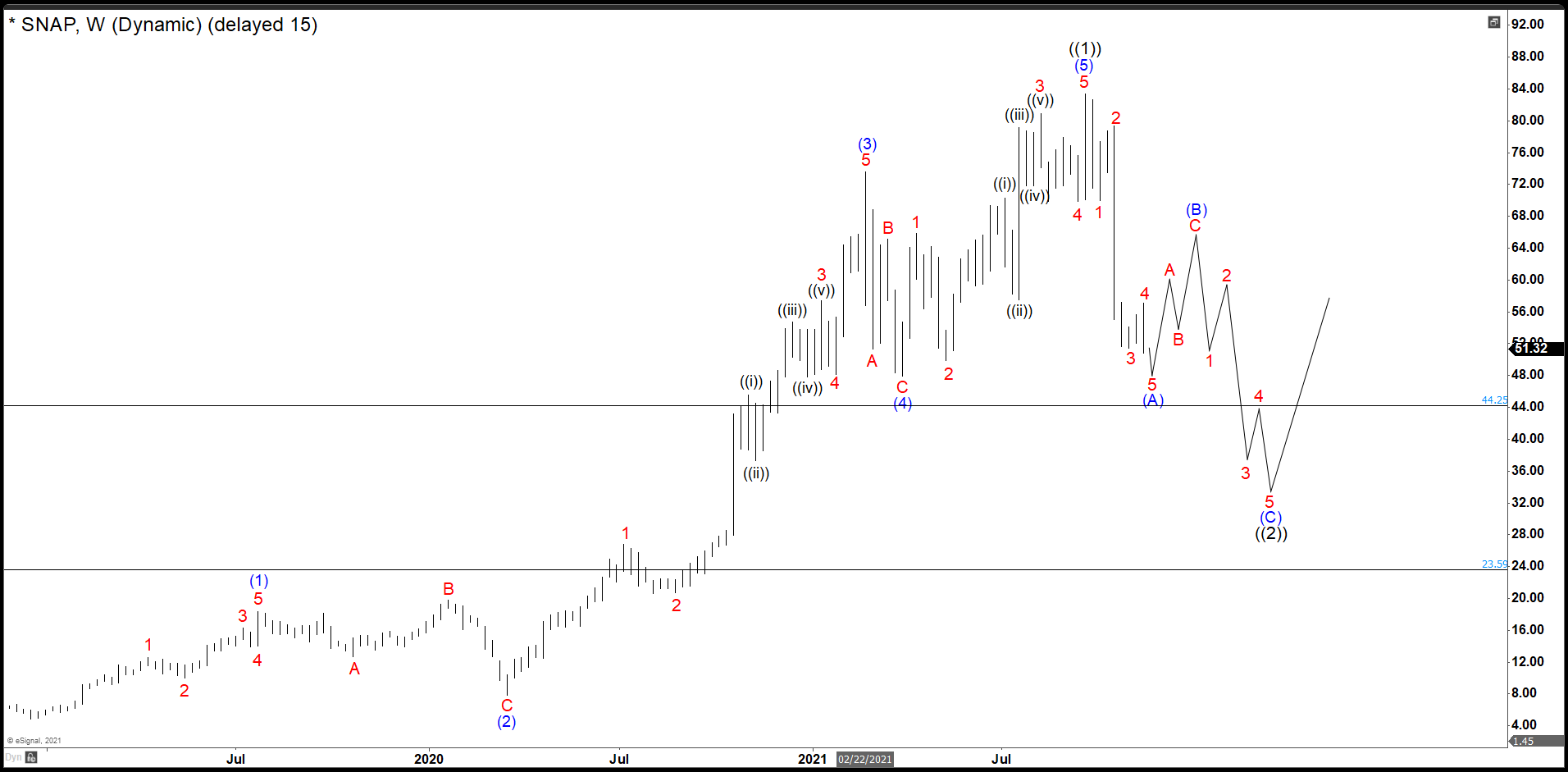
The market cycle began in December 2018 when SNAP found support at $4.82 American dollars. The stock got a bullish momentum and built a motive wave ending near to $84.0, getting more than 900% of return in two and half years. The wave (1) of the impulse ended at $18.36. The pullback made an irregular flat completing at $7.89 as wave 2. Wave (3) started a powerful rally reaching $73.59 in less than a year. Wave (4) correction drop to 38.2% Fibonacci retracement from wave (2) at $47.92 and the last rally to complete wave (5) and the impulse wave ((1)) finished at $83.34.

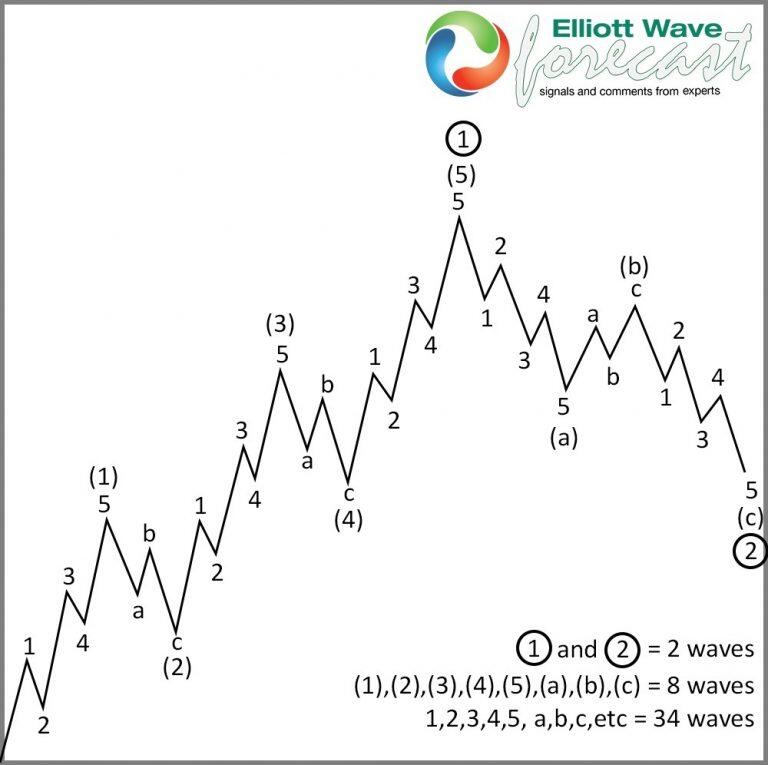
Elliott Wave Theory Motive Wave Structure
Chart

SNAP correction and target

From the peak, SNAP already has 5 swings down, and appears the structure is not finished yet to end wave (A). Therefore, we should see more downside in the next few days. After completing this wave (A), we should bounce in at least 3 swings or 7 swings to correct the drop from the top and that movement we will call wave (B). Then we should resume the downtrend looking for another 5 swings down to repeat the fractal of wave (A), finishing an (A) (B) (C) correction as wave ((2)) and then the stock should find buyers for a new rally. We expect that this correction will end in a $44.25 – $23.59 area and we are going to be updating to look for the best entry in this one.

Premium

You have reached your limit of 3 free articles for this month.

Start your subscription and get access to all our original articles.

Subscribe to PremiumSign In

Author

Elliott Wave Forecast Team

Elliott Wave Forecast Team

ElliottWave-Forecast.com

More from Elliott Wave Forecast Team
Share:

Editor's Picks

GBP/USD declines as market caution lifts US Dollar

GBP/USD extends its gains for the second successive day, trading around 1.3200 during the Asian hours on Wednesday. The currency pair depreciated as the US Dollar gained momentum, driven by a combination of robust domestic economic data and a complex, mixed geopolitical landscape.

EUR/USD weakens below 1.1400 as Fed hike bets lift US Dollar

The EUR/USD pair trades on a negative note near 1.1380 during the early Asian trading hours on Wednesday. The major pair extends the decline as traders continue to assess the developments surrounding the US-Iran peace deal.

$4,050: Gold dives to fresh two-week low as Fed rate hike bets boost US Dollar

Gold drifts lower for the second straight day – also marking the fifth day of a negative move in the previous six – and drops to a nearly two-week low during the Asian session on Wednesday. Despite easing inflationary concerns in the face of the recent fall in Crude Oil prices, traders have been pricing in a greater chance of a rate hike by the US Federal Reserve. 

Global strategy 3Q 2026
With the signing of a framework agreement and subsequent negotiations between the U.S. and Iran in June, the outlook for the third quarter is favorable. Oil prices have already fallen sharply, and futures are pricing in a further decline over the course of the year. This will ease the burden on consumers and reduce uncertainty among businesses, with positive effects on the economy.
"Rearranging the deckchairs on the Titanic": UK's fiscal crisis outlasts another Prime Minister

Keir Starmer's resignation as the UK Prime Minister comes ten years after the Brexit referendum vote, a coincidence that financial markets have been quick to note. The British Pound trades around 1.3220 against the US Dollar on Thursday.

Regime change: Inside Kevin Warsh's first move to make the Fed unreadable on purpose

The rate did not move. That was the least interesting thing about Kevin Warsh's first meeting in charge of the Fed. The FOMC held its benchmark at 3.50%-3.75% for the fourth straight meeting, exactly as priced, and then the new chair used his first press conference to dismantle the machinery the market has leaned on for a decade.