|

Pound Sterling Price News and Forecast: GBP/USD sinks as the Fed overtakes the BoE
Pound Sterling Price News and Forecast: GBP/USD sinks as the Fed overtakes the BoE

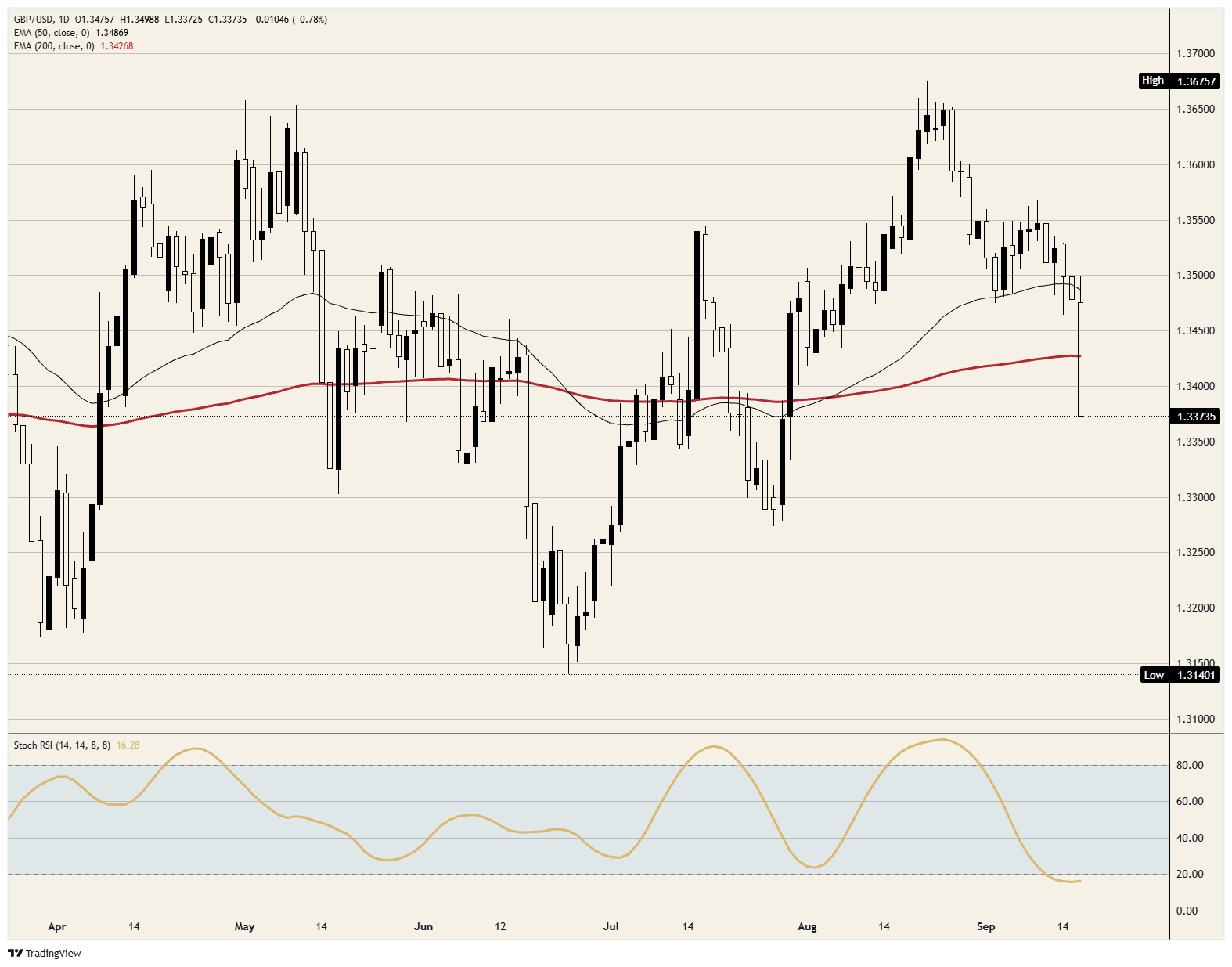
The Pound sinks as the Fed overtakes the BoE

The Pound trades just under 1.3400, 91 pips lower and down 0.68%. The Fed took its rate to 3.75-4.00% and, measured at the midpoint of the new range, American money now pays more than British money for the first time this year. The Bank of England gets seventeen hours to respond to that, and is forecast not to. Read More...
The Pound sells its own inflation spike ahead of a Fed hike

The British Pound (GBP) trades just above 1.3450 on Wednesday, down 23 pips, after a morning that ran in two directions. It climbed into the August inflation release at 06:00 GMT, spiked on it, then spent six hours handing the move back and another 30 pips with it. The release matched the forecast on the monthly rate, on the annual rate and on the core rate. Nothing in it missed, and the Pound sold 53 pips on it. Read More...
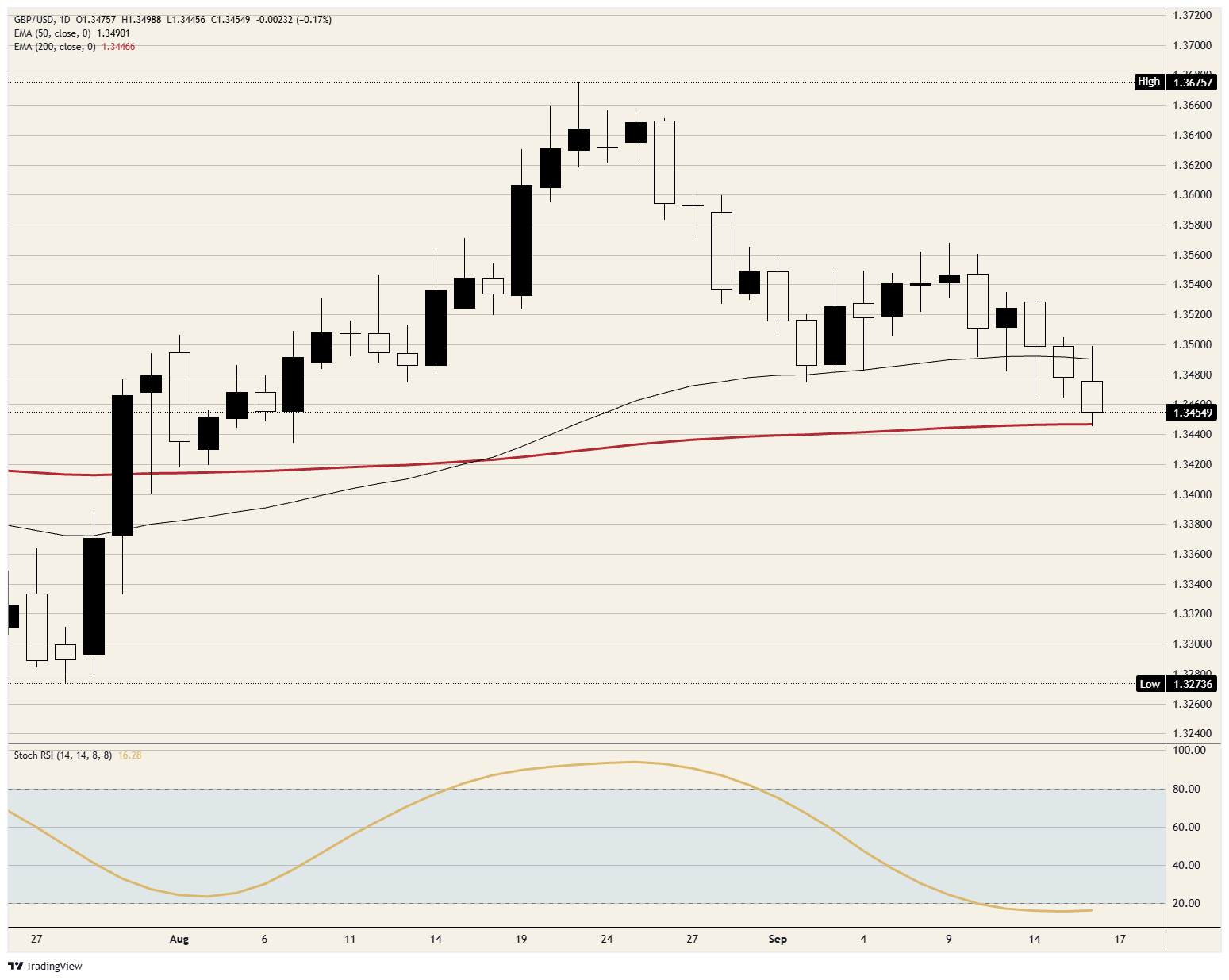
GBP/USD Price Forecast: Fails near 1.3500 as bears eye 200-SMA ahead of Fed decision

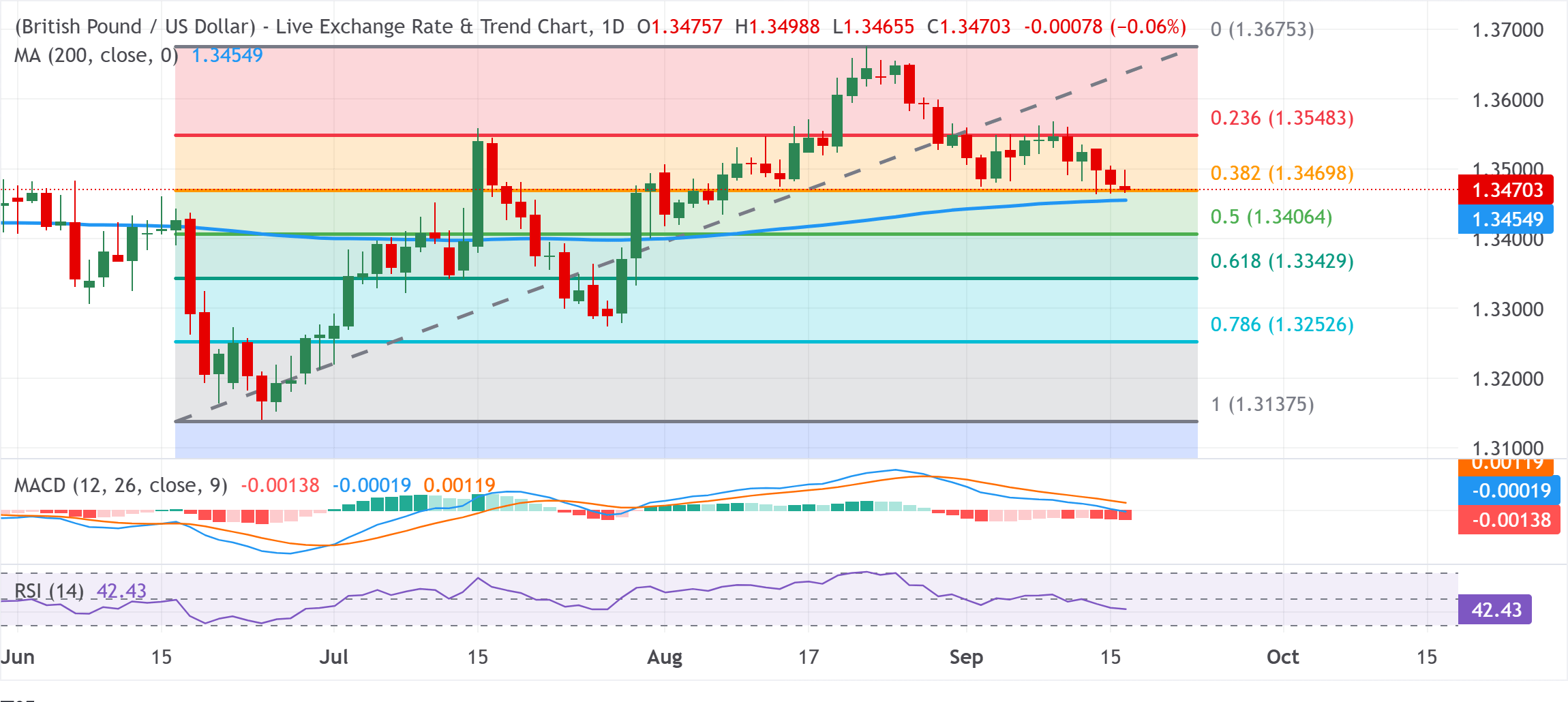
The GBP/USD pair attracts fresh sellers following an intraday uptick to the 1.3500 neighborhood and drops to the lower end of its daily range during the first half of the European session on Wednesday. Spot prices currently trade around the 1.3470-1.3465 region, just above a one-month low touched on Tuesday, as traders keenly await the outcome of a two-day FOMC meeting. Read More...
Author

FXStreet Team

Composed of a group of economic journalists and FX experts, the FXStreet content team produces and oversees all content published on FXStreet. It provides a purely journalistic approach to the Forex market.


More from FXStreet Team
Share:

Editor's Picks

AUD/USD sits at fresh 10-month lows, nears 0.6700

AUD/USD refreshes ten-month lows below 0.6750 and approaches 0.6700 in Wednesday’s Asian session. Fed rate-hike bets, along with fresh exchange of fire between the US and Iran, underpin the safe-haven US Dollar. Furthermore, the RBA’s dovish tilt weighs on the Aussie and the pair.

USD/JPY defends bids near 159.50 on hawkish BoJ Ueda

USD/JPY is defending bids near 159.50 in the Asian session on Wednesday, holding a three-day losing streak after hawkish commentary from BoJ Governor Ueda supports the Japanese Yen amid looming intervention risks. Meanwhile, escalating Middle East tensions revive US Dollar demand amid hawkish Fed bets, which could limit the pair's downside.


Gold keeps falling as $3,800 gives way; FOMC Minutes eyed

Gold keeps falling and gives up the $3,800 level in the Asian session on Wednesday, hitting its lowest level since September 2025. The US Dollar sits near a 19-month high amid a fresh escalation of US-Iran tensions. This, along with firmer Fed rate-hike expectations, underpins the USD and weighs heavily on the non-yielding bullion. Hawkish Fed commentary and strong US Retail Sales data back bets on aggressive Fed hikes.

Nvidia posts record $115.8B Q3 revenue, but crypto stays muted
The crypto market remained subdued on Tuesday despite Nvidia's (NVDA) Q3 earnings release beating analysts' expectations as demand for artificial intelligence infrastructure continued to drive growth across its business. The AI chipmaker reported record third-quarter revenue of $115.8 billion, up 103% YoY and 20% from the previous quarter.
Nvidia results boost confidence in the post-Huang era

Nvidia’s results have landed without a hitch. The stock price is  rising by more than 4% in post-market trading, and investors are giving a warm welcome to the first set of Nvidia earnings without Jensen Huang at the helm. These earnings were similar, yet different, from what we have come to expect from Nvidia. The numbers were definitely familiar.

Gold isn't being sold for thew reason most people think
Gold (XAU/USD) remains under heavy selling pressure on Monday, hitting its lowest level in 13 months. The precious metal is struggling to recover despite escalating geopolitical tensions in the Middle East, a backdrop that would normally encourage investors to seek protection in safe-haven assets. However, the main driver behind Gold's decline is not the geopolitical uncertainty itself.