|

NVIDIA Corp. ($NVDA) blue box area offers a buying opportunity

! In today’s article, we’ll examine the recent performance of NVIDIA Corp. ($NVDA) through the lens of Elliott Wave Theory. We’ll review how the rally from the April 2025 low unfolded as a 5-wave impulse followed by a 7-swing correction (WXY) and discuss our forecast for the next move. Let’s dive into the structure and expectations for this stock.

Five-wave impulse + 7 swing WXY correction  
$NVDA four-hour Elliott Wave chart 8.31.2025
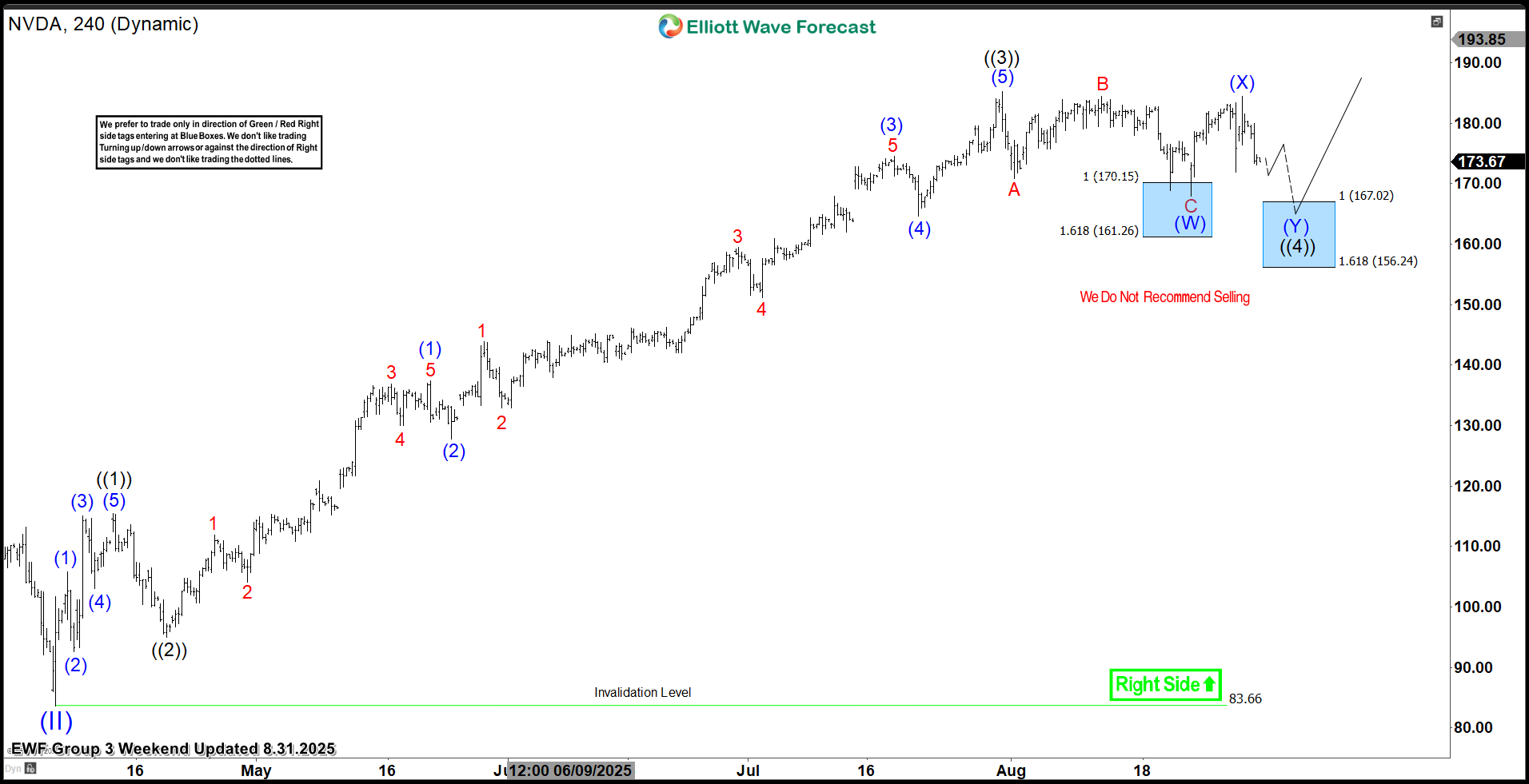
In the 4-hour Elliott Wave count from August 31, 2025, we saw that $NVDA completed a 5-wave impulsive cycle at (5) of ((3)). As expected, this initial wave prompted a pullback. We anticipated this pullback to unfold in 7 swings, likely finding buyers in the equal legs area between $167.02 and $156.24.

This setup aligns with a typical Elliott Wave correction pattern (WXY), in which the market pauses briefly before resuming its primary trend.

Conclusion

In conclusion, our Elliott Wave analysis of NVIDIA Corp. ($NVDA) suggests that it remains supported against September 2025 lows. As a result, traders should buy the dips and monitor the $190 – 197 zone as the next potential target. In the meantime, keep an eye out for any corrective pullbacks that may offer entry opportunities. By applying Elliott Wave Theory, traders can better anticipate the structure of upcoming moves and enhance risk management in volatile markets.

Author

Elliott Wave Forecast Team

Elliott Wave Forecast Team

ElliottWave-Forecast.com

More from Elliott Wave Forecast Team
Share:

Editor's Picks

AUD/USD flirts with 0.7000, lowest since early August amid bullish USD

AUD/USD hits a fresh low since early August during the Asian session on Friday and looks vulnerable near 0.7000 after breaking below the 200-day SMA overnight. Against the backdrop of the hawkish Fed, a two-day rally in oil prices revives inflation fears and continues to push US bond yields to multi-year highs. Adding to this, geopolitical risks lift the US Dollar to a two-month high, overshadowing RBA rate hike bets and weighing on the pair.

USD/JPY pulls back from three-week high after failing near 159.00

USD/JPY edges lower during the Asian session on Friday, stalling its recent strong move to a three-week high of 159.00 as Japanese Yen bears turn cautious amid intervention fears. Meanwhile, the US Dollar retains a strong bullish undertone as the Fed's hawkish outlook and oil-driven inflation fears continue to push US bond yields to multi-year peaks. Furthermore, the BoJ's dovish rate hike last week might cap JPY and support spot prices.

Gold consolidates below $4,300 amid hawkish Fed, higher bond yields, and bullish USD

Gold extends its consolidative price move, and languishes near the weekly low set the previous day amid a bearish fundamental backdrop. The US Dollar pauses for a breather following a strong rally to a nearly two-month high and offers some support to the commodity. However, the US Federal Reserve's hawkish outlook, elevated US bond yields, and persistent geopolitical uncertainties favor USD bulls.

Ripple, Cardano, Solana: ETF inflows and whale demand signal further rally
Ripple (XRP), Cardano (ADA), and Solana (SOL) continue to experience a steady recovery with double-digit gains so far this month. Ripple and Solana experience firm institutional demand, while the percentage of ADA supply in profit rises, underpinned by interest from large-wallet investors, commonly referred to as whales.
Treasury yields at 2007 highs

The combination of energy prices rising back above $100 a barrel, US PMI’s topping multi-year indexes and FOMC members taking tough tones when discussing future rate paths have all led Treasuries at both ends of the curve with higher yields. Treasury Notes account for close to 52% of all marketable Treasuries, so movements in yields are especially painful for the US fiscal outlook.

BoJ Recap: Not as hawkish as expected

The Bank of Japan (BoJ) raised its short-term interest-rate target to 1.25% from 1.00% in a 7-2 vote, marking another step in the normalisation of monetary policy and widely matching what everyone has been expecting for weeks.