|

NVDA Stock News: Nvidia tumbles as market sell off intensifies following Fed rate hike

  • NASDAQ:NVDA fell by 7.33% during Thursday’s trading session.
  • NVIDIA investors took pause following AMD’s impressive earnings.
  • NVIDIA unveils its new VR glasses for the Metaverse.

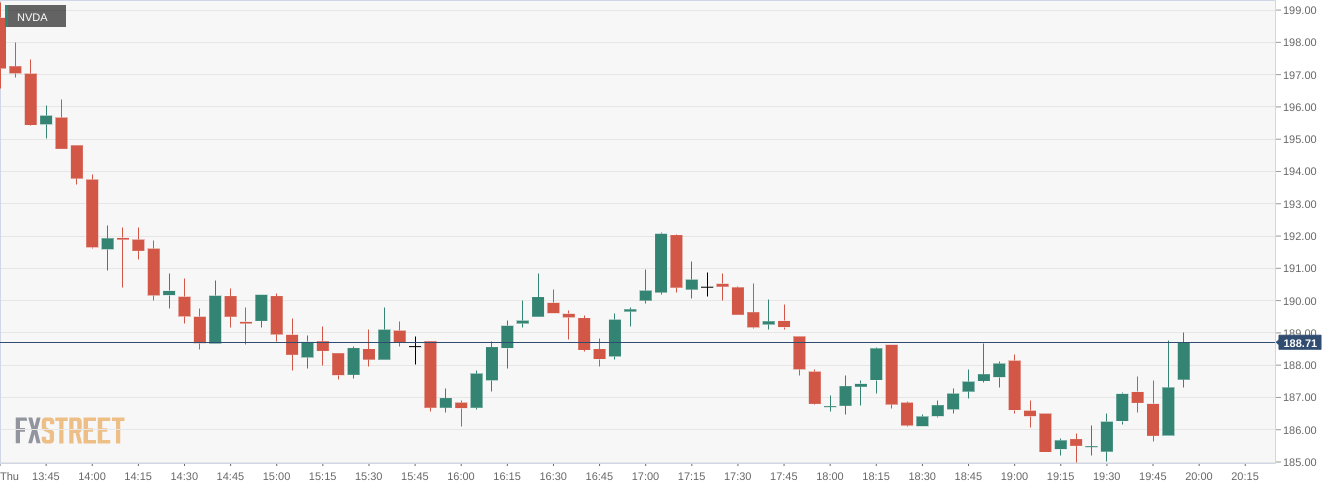
NASDAQ:NVDA showed that even the largest and most influential companies are not immune to a bearish market crash. On Thursday, shares of NVDA dropped by 7.33% and closed the trading session at $188.44. Despite the relief rally during Wednesday’s session, there was no carry over capitulation on Thursday for Cinco de Mayo. All three major indices sank lower for the worst overall session since March of 2020. The Dow Jones plummeted by 1,063 basis points, the S&P 500 dropped by 3.56%, and the NASDAQ tumbled by 4.99% during the session.


Stay up to speed with hot stocks' news!


Following the impressive earnings report from rival AMD (NASDAQ:AMD), NVIDIA investors took pause on Thursday to digest the earnings. NVIDIA should pay particular attention to the progress that AMD has made in the data center and gaming markets. NVIDIA’s data center segment has provided nearly 50% of the company’s total revenues from last quarter. While Goldman Sachs reiterated its buy rating for AMD, Morgan Stanley paused and gave NVIDIA an equal weight rating. There is also overall sentiment from investors and analysts that NVIDIA’s stock is simply too expensive and that a weaker than expected quarter might result in the stock’s multiple being slashed.

Nvidia stock forecast
NVDA Stock

NVIDIA did unveil a prototype for some VR holographic glasses that it has designed in partnership with Stanford University. The ultra-thin design is proposing to replace the bulky headsets from companies like Meta Platforms (NASDAQ:FB). This is still just a concept model, but NVIDIA is clearly gearing up for the launch of the Metaverse and has Meta Platforms in its sights.


Like this article? Help us with some feedback by answering this survey:

Author

More from Stocks Reporter
Share:

Editor's Picks

AUD/USD bulls regain control above 0.6950 amid USD retreat

AUD/USD regains traction and extends the previous day's bounce from the weekly low, aiming for 0.7000 in Asia on Friday. The overnight pullback in US bond yields keeps the US Dollar below an 18-month high, which in turn offers some support to the pair. Meanwhile, hawkish RBA expectations also keep the major underpinned.

USD/JPY holds gains near 158.00 after Japan's weak Household Spending data

USD/JPY clings to gains around 158.00 after data showed on Friday that Japan's Household Spending fell for the ninth straight month, undermining the Japanese Yen. Meanwhile, the US Dollar remains depressed as the overnight fall in US bond yields counters a hawkish Fed and geopolitical uncertainties, could cap any downside in the pair.

Gold remains range-bound below $4,200

Gold has given up some ground after an initial bullish attempt to reach weekly highs, returning to below the $4,200 mark per troy ounce on Friday. The US Dollar’s strong upside momentum, combined with rising US Treasury yields across the curve, seems to keep further gains in the yellow metal under scrutiny.

Has Bitcoin really escaped the macro forces it was built to fight?
Over 17 years ago, Satoshi Nakamoto designed Bitcoin (BTC) on the back of a global financial crisis as an alternative to the global monetary system outside the control of central banks, governments and traditional intermediaries. This raises a key question: has Bitcoin really become independent of the macroeconomic forces it was built to challenge?
The Euro is not the sick man of Europe. France's bond market is
EUR/USD remains under pressure, near the 17-month low of 1.1161 reached on Monday. The pair has lost more than 7% since its yearly peak, as concerns over France's public finances increasingly weigh on the single currency. But behind the weakness of the Euro (EUR), the problem does not necessarily lie with the European economy as a whole.
Has Bitcoin really escaped the macro forces it was built to fight?
Over 17 years ago, Satoshi Nakamoto designed Bitcoin (BTC) on the back of a global financial crisis as an alternative to the global monetary system outside the control of central banks, governments and traditional intermediaries. This raises a key question: has Bitcoin really become independent of the macroeconomic forces it was built to challenge?
















