|

NIO Stock Forecast: Nio opens higher on Monday, up 2.7%

  • NYSE:NIO fell by 1.92% during Friday’s trading session. 
  • Deutsche Bank doubles down on Nio and adds to its stock position.
  • EV makers are on notice as Lucid looks to dominate the luxury EV sector.

UPDATE: NIO rose 2.7% to $43.45 in the first 15 minutes of Monday's New York session. It appears that buyers are getting in ahead of Tuesday's Q3 earnings release.

NYSE:NIO saw its recent win streak snapped on Friday as the EV sector failed to continue on with its hot streak. Shares of NIO fell by 1.92% and the stock closed the trading week at $42.29. It was still a strong week for the popular Chinese EV maker, as Nio managed to climb higher by 11% over the past five sessions. This is a key time of the year for Nio, as the company seems somewhat fragile coming off a disappointing October delivery report. Nio is also set to report its third quarter earnings on November 9. 


Stay up to speed with hot stocks' news!


Just a day after Deutsche Bank analysts reiterated their buy rating for Nio’s stock and provided a bullish $70 price target, the investment firm filed its Form 13F for the quarter, disclosing an even larger stake. Deutsche Bank was already a major investor in Nio, but last quarter the German bank added nearly 1.3 million more shares. This brings Deutsche Bank’s total position up to 7.136 million shares worth an estimated $311 million. Obviously Deutsche Bank’s price target makes more sense now that we are able to see how large of a position the company holds. 

NIO stock price
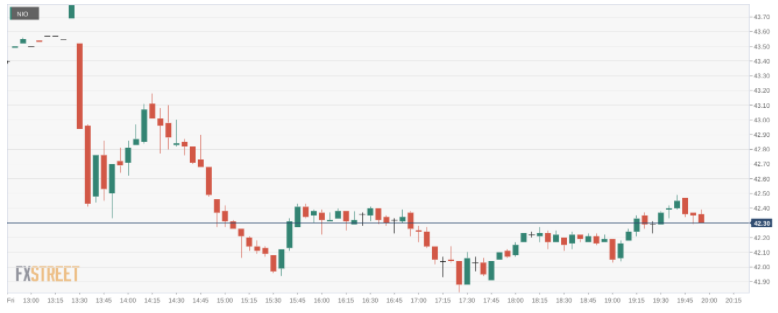
NIO Stock

While it hasn’t made any plans to debut its vehicles in China as of yet, Lucid Group (NASDAQ:LCID) is turning heads all over the EV market. On Friday, shares of the newly public electric vehicle company surged by 12.61% as Motortrend released a stunning review of the new sedans. Nio is one of China’s main luxury EV makers, and the potential of this new rival has some Nio investors looking over their shoulders.

Author

More from Stocks Reporter
Share:

Editor's Picks

AUD/USD turns south toward 0.6900 as USD firms up

AUD/USD sees fresh selling and drops toward 0.6900 in late Asian trading on Monday, as renewed US Dollar strength weighs on the pair amid lingering Middle East and Russia-Ukraine geopolitical tensions. Focus remains on Oil prices, Treasury bond yields, and RBA expectations for fresh trading impetus in the major.

USD/JPY retakes 158.00 amid hawkish BoJ bets, firmer USD

USD/JPY erases losses and retakes 158.00 in the Asian session on Monday, trading within a one-week-old range. Geopolitical uncertainty continues to underpin the US Dollar, despite fading Fed rate hike hopes, supporting the pair's rebound. However, further upside could be capped by hawkish BoJ expectations and looming intervention risks that could support the Japanese Yen.

Gold trades flat as stronger US Dollar offsets easing Fed rate-hike bets

Gold trades little changed on Monday after giving back most of its early gains. The metal remains caught between easing Fed interest-rate hike bets and a stronger US Dollar (USD), while US Treasury yields also remain elevated near multi-year highs.

Crypto Today: Bitcoin rally slows while Ethereum and XRP extend recovery amid slowing ETF inflows

Bitcoin is narrowly consolidating while trading above $86,000 at the time of writing on Monday. Altcoins, on the other hand, show a positive outlook, with Ethereum edging higher above $2,700 while Ripple steadies above $1.52.

Eurozone inflation just hit 3.8%, its highest in three years. This chart shows why the ECB can’t simply hike its way out

The ECB would normally have a relatively straightforward answer to inflation running almost twice its target: raise interest rates. But these are not normal circumstances. This time, the bond market is already doing part of the tightening for it, leaving the ECB facing an increasingly difficult dilemma.

Eurozone inflation just hit 3.8%, its highest in three years. This chart shows why the ECB can’t simply hike its way out

The ECB would normally have a relatively straightforward answer to inflation running almost twice its target: raise interest rates. But these are not normal circumstances. This time, the bond market is already doing part of the tightening for it, leaving the ECB facing an increasingly difficult dilemma.
















