Mexican Peso remains firm despite soft inflation figures
- The USD/MXN maintains its bearish done intact despite the cooling Mexican inflation figures.
- The Mexican Perso approaches the 20.00 support area with the US Dollar looking for direction.
- Technically, USD/MXN’s double top at 20.80 suggests the possibility of a deeper correction.
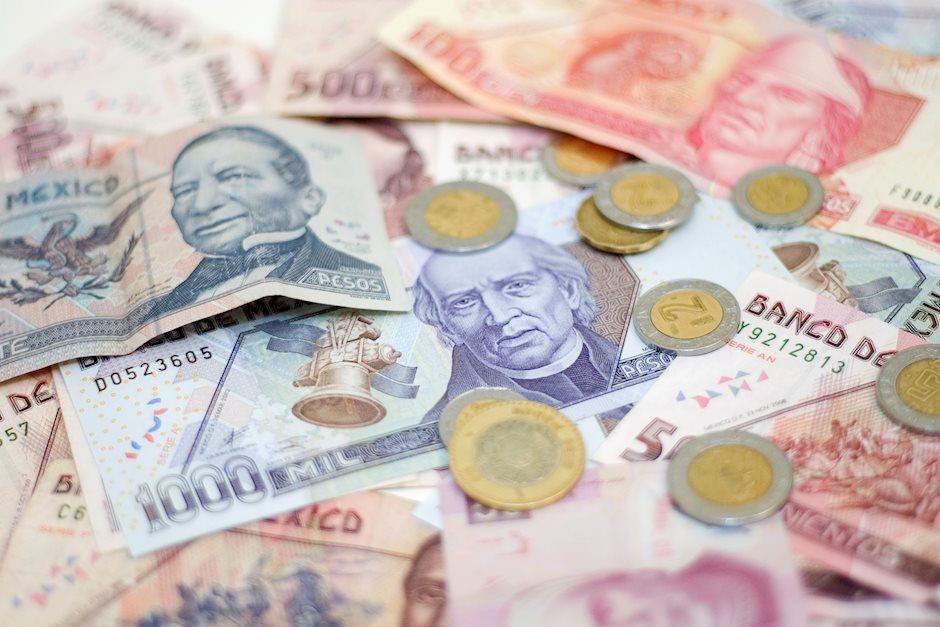

The Mexican Peso (MXN) maintains its broader positive trend intact. The MXN pulled back immediately after weak Consumer Prices Index (CPI) figures hinted to another rate cut by the Bank of Mexico (Banxico) next week, although the Dollar's recovery attempts have remained limited.
The US Dollar Index (DXY) is treading water on Monday. The dust from the strong US Nonfarm Payrolls (NFP) data has settled. Employment creation beat expectations in November, but the higher unemployment rate cemented hopes that the Federal Reserve (Fed) will cut rates again after the December 17 and 18 meeting.
This week, the focus will be on November's US CPI data, which is unlikely to alter market expectations of a 25 bps cut in November but might force investors to reassess their rate cut expectations for 2025.
Daily digest market movers: The MXN resumes its uptrend after a brief post-CPI pullback
- Mexican headline CPI has eased to a 4.55% yearly pace, from 4.76% in October. These figures come below the 4.6% reading forecasted by the markets and reveal the softest inflationary level of the last eight months.
- The Core inflation shows a similar picture with a decline to 3.58% in November, from 3.8% in October, beyond the 3.6% anticipated by market experts.
- The soft Price pressures, offset the hawkish comments by Banxico Deputy Governor Espinosa and boost hopes that the Mexican Central Bank will cut rates in December, just one day after the US Federal Reserve's decision.
- US Nonfarm payrolls increased by 227,000 in November, beating expectations of a 200,000 increase. October’s data was revised to a 36,000 increment from the previously estimated 12,000 payrolls.
- The US unemployment rate, however, increased to 4.2% from 4.1% in October, bolstering the case for a c Federal Reserve (Fed) cut in December, which kept the US Dollar from rallying further.
- Futures markets are now pricing a nearly 90% chance that the Fed will cut rates by 25 basis points in December, up from below 70% last week, according to data from the CME Group’s Fed Watch tool.
Mexican Peso technical outlook: USD/MXN remains close to a key support area at 20.00
The USD/MXN maintains its negative bias intact from the late November highs at around 20.80. The pair, however, faces a strong support area between 20.05 and 20.15.
The 4-hour Relative Strength Index (RSI) is in bearish territory below the 40 level, and the double top at 20.80 suggests the possibility of a deeper correction.
Below the 20.00 psychological level, which is also the neckline of the mentioned double top, the next target would be November’s low at 19.75. Resistances are Friday’s high at 20.25, ahead of the December 2 high at 20.60 and November’s peak at 20.80.
USD/MXN 4-Hour Chart

Inflation FAQs
Inflation measures the rise in the price of a representative basket of goods and services. Headline inflation is usually expressed as a percentage change on a month-on-month (MoM) and year-on-year (YoY) basis. Core inflation excludes more volatile elements such as food and fuel which can fluctuate because of geopolitical and seasonal factors. Core inflation is the figure economists focus on and is the level targeted by central banks, which are mandated to keep inflation at a manageable level, usually around 2%.
The Consumer Price Index (CPI) measures the change in prices of a basket of goods and services over a period of time. It is usually expressed as a percentage change on a month-on-month (MoM) and year-on-year (YoY) basis. Core CPI is the figure targeted by central banks as it excludes volatile food and fuel inputs. When Core CPI rises above 2% it usually results in higher interest rates and vice versa when it falls below 2%. Since higher interest rates are positive for a currency, higher inflation usually results in a stronger currency. The opposite is true when inflation falls.
Although it may seem counter-intuitive, high inflation in a country pushes up the value of its currency and vice versa for lower inflation. This is because the central bank will normally raise interest rates to combat the higher inflation, which attract more global capital inflows from investors looking for a lucrative place to park their money.
Formerly, Gold was the asset investors turned to in times of high inflation because it preserved its value, and whilst investors will often still buy Gold for its safe-haven properties in times of extreme market turmoil, this is not the case most of the time. This is because when inflation is high, central banks will put up interest rates to combat it. Higher interest rates are negative for Gold because they increase the opportunity-cost of holding Gold vis-a-vis an interest-bearing asset or placing the money in a cash deposit account. On the flipside, lower inflation tends to be positive for Gold as it brings interest rates down, making the bright metal a more viable investment alternative.
Author
Guillermo Alcala
FXStreet
Graduated in Communication Sciences at the Universidad del Pais Vasco and Universiteit van Amsterdam, Guillermo has been working as financial news editor and copywriter in diverse Forex-related firms, like FXStreet and Kantox.