Japanese Yen falls as Fed Minutes revive tightening bets
- Fed Minutes show most officials see policy firming warranted.
- Rising Treasury yields keep USD/JPY supported above 162.00.
- Break above 162.84 could expose 163.00 and 165.00.

The Japanese Yen (JPY) depreciates by over 0.26% against the US Dollar (USD) on Wednesday within familiar levels, as the Federal Reserve's (Fed) last meeting minutes showed that the majority of participants indicated that “some policy firming would likely be warranted.” The USD/JPY pair trades at 162.54 after bottoming near 162.03.
USD/JPY weakens as hawkish Fed minutes lift Dollar and yields
Market mood is mixed, following US President Donald Trump's change of tone, turning more hawkish against Iran’s behavior, threatening to escalate the conflict. This boosted the Greenback as the US Dollar Index (DXY) reclaimed the 101.00 figure.
Digging into the US central bank’s minutes, all officials supported leaving rates unchanged and saw a stable labor market. Most participants “preferred” not to use the previous language, pointing to scenarios in which prices would remain elevated due to AI-infrastructure demand.
Worth noting that several participants remarked that they did not see the current policy stance as restrictive, while a few others commented that they saw it as slightly restrictive.
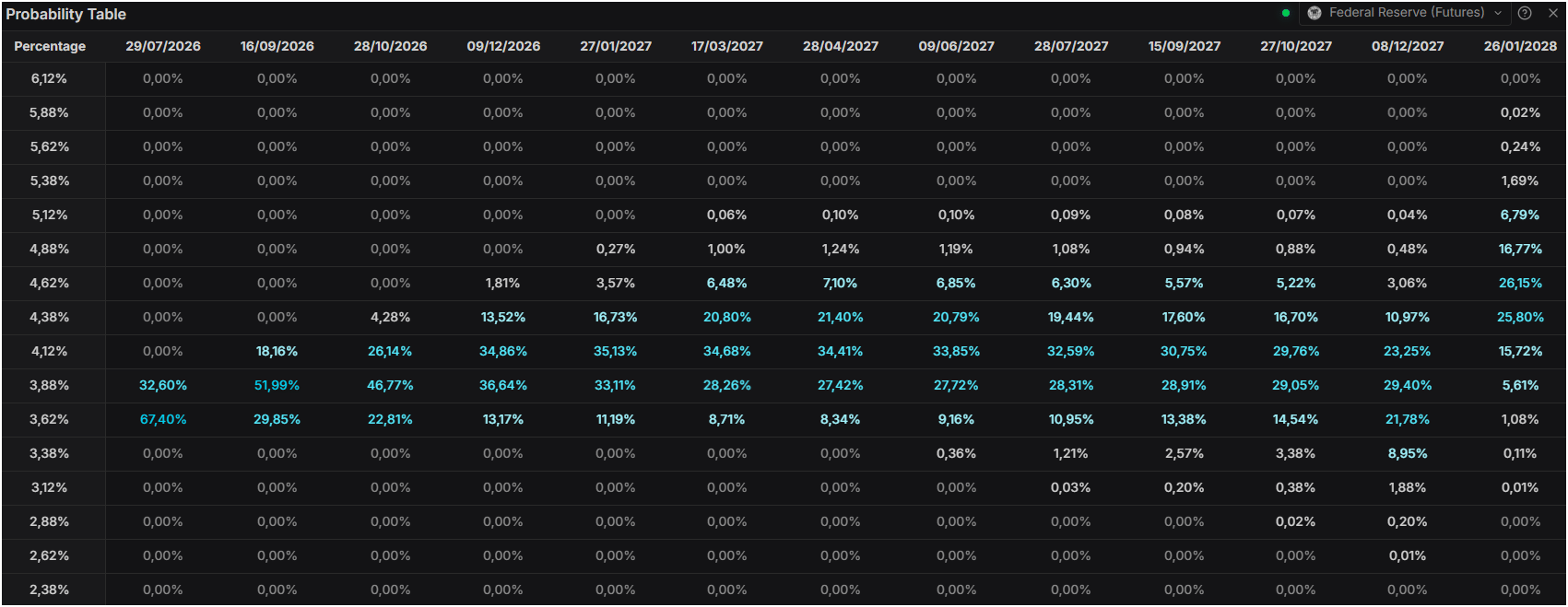
In the meantime, money markets have priced in an 18% chance of a 50-basis-point (bps) rate hike at the September meeting, while the chances of a 25-bps rate hike are close to 52%.
Meanwhile, the US 10-year Treasury yield, which is positively correlated with the USD/JPY pair, is rising by 1.5 basis points to 4.569%, suggesting traders are eyeing further tightening.
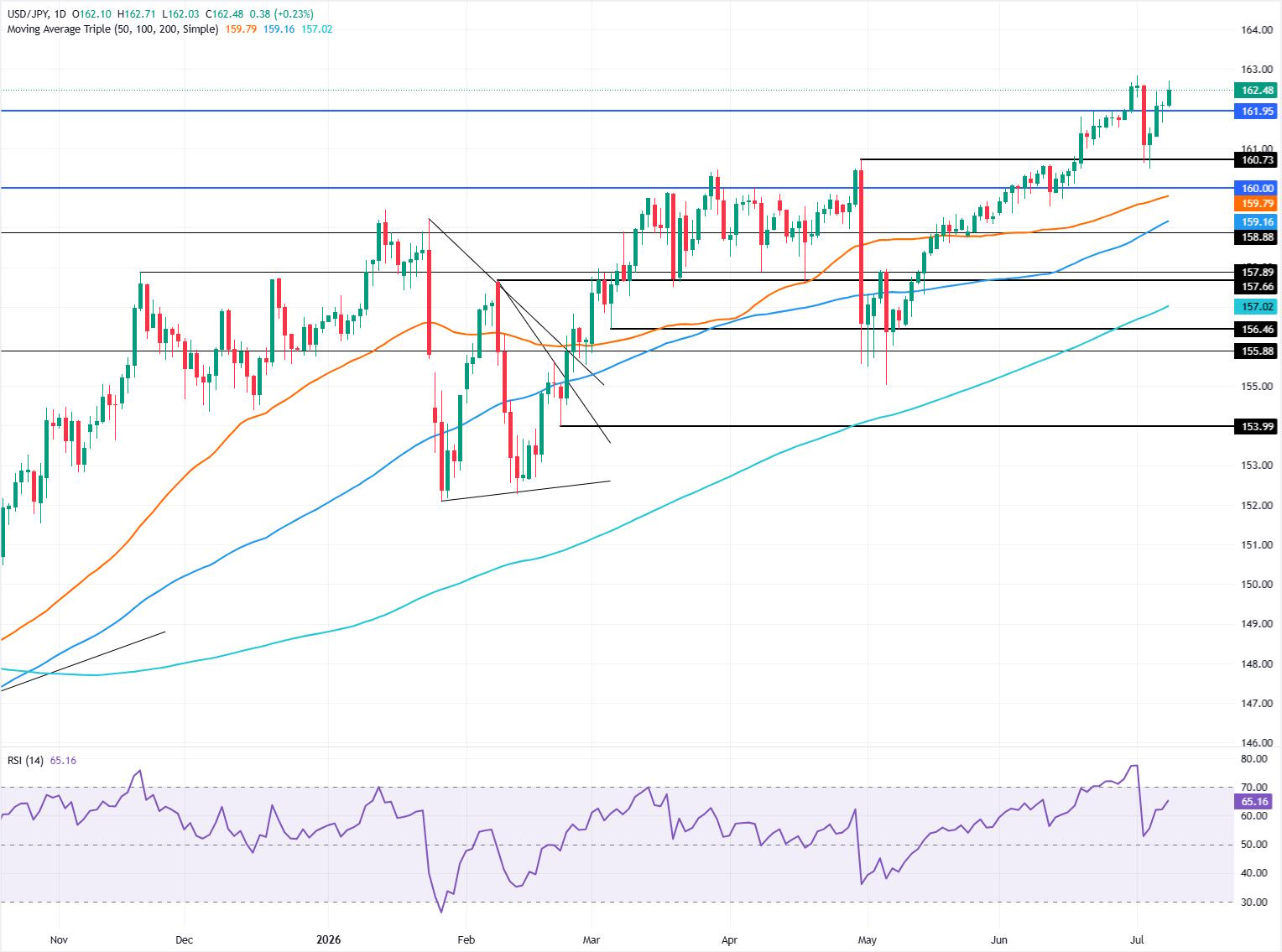
Aside from this, USD/JPY extended its gains and it remains above the 162.00 mark. A breach of the July 1 high of 162.84 clears the door towards 163.00. On further strength, the next area of interest would be 165.00 ahead of the psychological 170.00 figure.
Japanese Yen FAQs
The Japanese Yen (JPY) is one of the world’s most traded currencies. Its value is broadly determined by the performance of the Japanese economy, but more specifically by the Bank of Japan’s policy, the differential between Japanese and US bond yields, or risk sentiment among traders, among other factors.
One of the Bank of Japan’s mandates is currency control, so its moves are key for the Yen. The BoJ has directly intervened in currency markets sometimes, generally to lower the value of the Yen, although it refrains from doing it often due to political concerns of its main trading partners. The BoJ ultra-loose monetary policy between 2013 and 2024 caused the Yen to depreciate against its main currency peers due to an increasing policy divergence between the Bank of Japan and other main central banks. More recently, the gradually unwinding of this ultra-loose policy has given some support to the Yen.
Over the last decade, the BoJ’s stance of sticking to ultra-loose monetary policy has led to a widening policy divergence with other central banks, particularly with the US Federal Reserve. This supported a widening of the differential between the 10-year US and Japanese bonds, which favored the US Dollar against the Japanese Yen. The BoJ decision in 2024 to gradually abandon the ultra-loose policy, coupled with interest-rate cuts in other major central banks, is narrowing this differential.
The Japanese Yen is often seen as a safe-haven investment. This means that in times of market stress, investors are more likely to put their money in the Japanese currency due to its supposed reliability and stability. Turbulent times are likely to strengthen the Yen’s value against other currencies seen as more risky to invest in.
Author

Christian Borjon Valencia
FXStreet
Markets analyst, news editor, and trading instructor with over 14 years of experience across FX, commodities, US equity indices, and global macro markets.