Japanese Trade Balance surges to ¥224B surplus after steep decline in Imports

Japan's Trade Balance for the year ended in June surged to nearly a quarter of a trillion Yen surplus of ¥224B after a steeper-than-expected decline in Imports washed out a slightly-better decline in Export figures.
Japan's YoY Exports in June grew by 5.4%, below the forecast 6.4% and a steeper decline from the previous period's 13.5% upsurge. Despite the decline in Exports growth, Imports growth collapsed back to 3.2%, well below the forecast 9.3% compared to the previous 9.5%.
Looking further into the data, Japan's Exports to the EU declined sharply, falling -13.4% which failed to get offset by an 11.0% YoY increase in Exports to the US.
Market reaction
USD/JPY is testing lower in the early Thursday Pacific market session, testing down into 155.50 as the Yen sees a brief resurgence in strength after months of declines.
USD/JPY hourly chart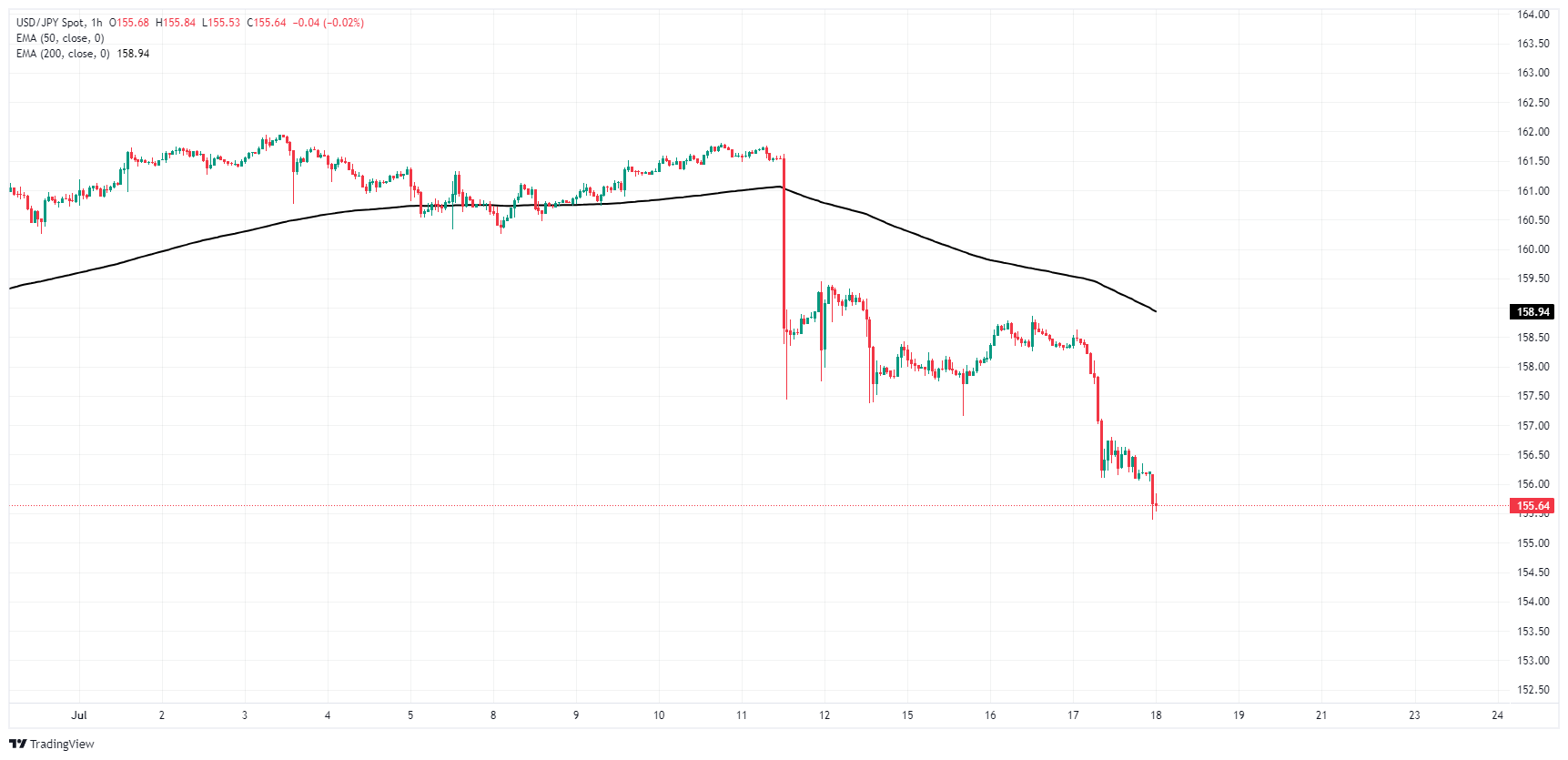
Japanese Yen FAQs
The Japanese Yen (JPY) is one of the world’s most traded currencies. Its value is broadly determined by the performance of the Japanese economy, but more specifically by the Bank of Japan’s policy, the differential between Japanese and US bond yields, or risk sentiment among traders, among other factors.
One of the Bank of Japan’s mandates is currency control, so its moves are key for the Yen. The BoJ has directly intervened in currency markets sometimes, generally to lower the value of the Yen, although it refrains from doing it often due to political concerns of its main trading partners. The current BoJ ultra-loose monetary policy, based on massive stimulus to the economy, has caused the Yen to depreciate against its main currency peers. This process has exacerbated more recently due to an increasing policy divergence between the Bank of Japan and other main central banks, which have opted to increase interest rates sharply to fight decades-high levels of inflation.
The BoJ’s stance of sticking to ultra-loose monetary policy has led to a widening policy divergence with other central banks, particularly with the US Federal Reserve. This supports a widening of the differential between the 10-year US and Japanese bonds, which favors the US Dollar against the Japanese Yen.
The Japanese Yen is often seen as a safe-haven investment. This means that in times of market stress, investors are more likely to put their money in the Japanese currency due to its supposed reliability and stability. Turbulent times are likely to strengthen the Yen’s value against other currencies seen as more risky to invest in.
Author

Joshua Gibson
FXStreet
Joshua joins the FXStreet team as an Economics and Finance double major from Vancouver Island University with twelve years' experience as an independent trader focusing on technical analysis.