|premium|

HSBC Holdings Plc gains as the Hong Kong-based bank continues its volatile week of trading

  • NYSE:HSBC adds 1.32% on Wednesday even as broader markets sell off throughout the day.
  • HSBC continues to recover as China economy strengthens on fading COVID-19 concerns.
  • HSBC shows an upward trajectory following its most recent earnings report beat Wall Street estimates.

NYSE:HSBC has had a tough year alongside much of the global banking sector as low interest rates and financial volatility have ravaged banks around the world. Shares of HSBC on the New York Stock Exchange fell by 1.32% on Wednesday to close the most recent trading session at $25.24. The move comes following a tumultuous week in trading that has seen HSBC spike nearly 5% on Monday following Moderna’s (NASDAQ:MRNA) news about the efficacy of its coronavirus vaccine candidate, which was followed by a 4% drop on Tuesday. 

China and much of Asia have seen a somewhat return to normalcy as the COVID-19 pandemic continues to ravage the West. Hong Kong accounts for over 90% of HSBC’s profits and as the island and mainland China begin to slowly open their economy back up, we can reasonably expect HSBC to follow suit in its top-line revenues. HSBC is rebounding over on the London Stock Exchange as well as the company, like many others, were forced to stop paying a dividend to its investors. At its most recent quarterly earnings call, HSBC forecasted a return to dividend payments starting in 2021.

HSBC stock price and quote
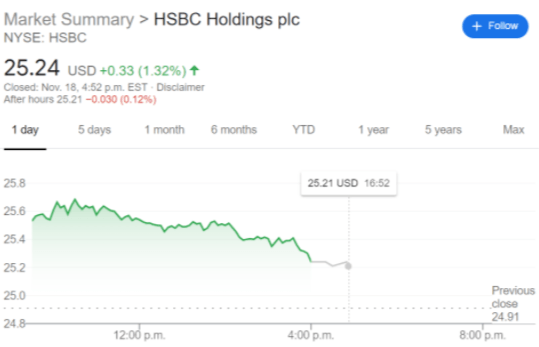
HSBC stock price chart

News of potential COVID-19 vaccines have resurrected sectors that were hit the hardest by the pandemic, and the global banking industry is starting to rally. Despite expected low interest rates over the next couple of years, a re-opening of the economy in China and inevitably the United States, should help HSBC climb back from its current low trading levels. 

Premium

You have reached your limit of 3 free articles for this month.

Start your subscription and get access to all our original articles.

Subscribe to PremiumSign In

Author

More from Stocks Reporter
Share:

Editor's Picks

160.80: Japanese Yen remains close to nearly two-year lows

USD/JPY inches lower after four days of gains, trading around 160.60 during the Asian hours. The USD/JPY pair surged to 160.80 the previous day, marking its highest level since July 2024 and significantly heightening speculation that Japanese authorities could soon intervene to support the struggling Yen.

Australian Dollar remains in positive territory after paring recent gains

AUD/USD pares its daily gains, remaining in the positive territory and trading around 0.7010 during the European hours. The pair appreciated as the Australian Dollar received support from prevailing hawkish sentiment surrounding the Reserve Bank of Australia’s policy outlook.

Gold retreats below $4,250 as USD benefits from hawkish Fed

Gold (XAU/USD) stays on the back foot in the second half of the day and trades in negative territory below $4,250. Although easing tensions in the Middle East help XAU/USD limit its losses, the broad-based USD strength in the Fed aftermath doesn't allow it to gain traction.

Bitcoin slips below $64,000 as hawkish Fed stance weighs on risk appetite

Bitcoin remains under pressure, extending its correction, trading below $64,000. The US Federal Reserve left interest rates unchanged but struck a hawkish tone on Wednesday, dampening the risk sentiment.

Regime change: Inside Kevin Warsh's first move to make the Fed unreadable on purpose

The rate did not move. That was the least interesting thing about Kevin Warsh's first meeting in charge of the Fed. The FOMC held its benchmark at 3.50%-3.75% for the fourth straight meeting, exactly as priced, and then the new chair used his first press conference to dismantle the machinery the market has leaned on for a decade.

The next big AI trade may not be about chips or software

Artificial intelligence has already created some of the biggest winners in modern market history. Chipmakers have surged, data centre construction is booming, and electricity demand forecasts are changing globally.