Grexit, Nexit, Frexit: Is a new sovereign debt crisis in the making? - Natixis
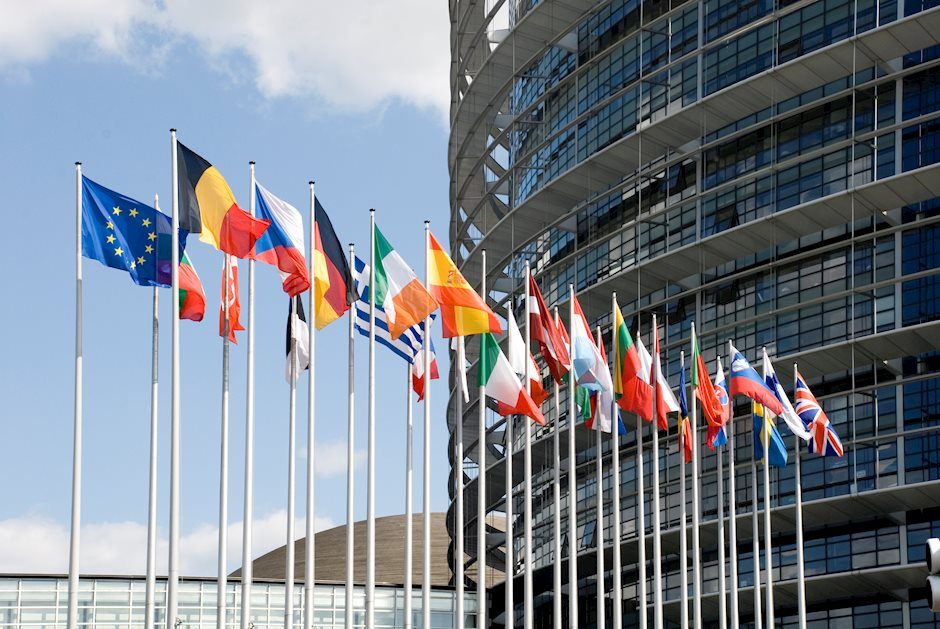

In view of the analysts at Natixis, Frexit is clearly the market mover right now but more generally, investors are concerned that the Eurozone could see a resurgence of the sovereign debt crisis.
Key Quotes
“There has been renewed speculation of a debt re-denomination, triggered by a peripheral Member State leaving the Eurozone (namely Greece) or a total implosion from a core Member State leaving, i.e. a Nexit (following the elections in the Netherlands on 15 March) or a Frexit (after the elections in France). Cleary, if France leaves this would sound the death knell for the Eurozone.”
“It is clear that Frexit presents a systemic risk, not so Grexit (not now or ever before for that matter). Even so, there remains that strains over the renewed possibility of Greece’s exclusion could signal a resurgence of the sovereign debt crisis, with in particular risky policies to exit the single currency that are worrying non-resident investors, who owned 60% of France’s debt in September 2016 and are ultimately bankrolling public spending. What is the risk that Greece will find itself back where it was in 2015? Is there a real risk that Greece will default in July when it is due to repay €6bn to its creditors?”
“The Eurogroup meeting on 20 February revealed that, at the very least, Greece and its European creditors did not see eye to eye. The meeting was not attended by the International Monetary Fund, but it is likely that the Fund’s own view on the resolution of the Greek debt crisis had a telling impact indirectly. Positions diverge over the sustainability of the debt with or without a restructuring, over the level of austerity that is necessary and desirable, and over the measures needed to achieve the targets imposed on Greece. Under these conditions, it is difficult to see how the different stakeholders will reach a consensus.”
“While a very rapid resolution of these differences is not the most likely scenario at this stage, the Eurozone’s Finance Ministers did agree that, going forward, the Greek bailout needed to focus rather more on structural reforms and rather less on further austerity measures1. This refocusing of the policy mix still has to be fleshed out, but it could be such as to overcome some of the obstacles standing in the way of closing the second review of the third bailout. Ideally, this needs to occur before mid-July to enable Greece to honour its obligations towards the European Central Bank. At the same time, the political agenda is not very propitious. Between the spring and the autumn, there will be general elections in the Netherlands, in France (which will also hold a presidential election) and Germany. What leeway European creditors have will be somewhat constrained by their own political priorities at domestic level.”
“What type of compromise is reached to unblock the current deadlock will have a significant bearing on Greece’s capacity to honour repayments, on the Greek banking system (as liquidity could be an issue going forward), on the Greek economic recovery (which needs to be consolidated) and, finally, on the country’s political stability (government has a very slim majority). At this juncture, our view is that a step in the right direction was taken at the last Eurogroup meeting but that, however, there are several factors suggesting that the Greek authorities will play the watch in their discussions with the country’s creditors.”
“All in all, we do not see Greece as a factor likely to trigger a surge in risk aversion. To be a touch cynical, Greece (much like Brexit increasingly) has become a feature in what falls to be considered as a “normative” market environment. The bottom line is that creditors and debtors are too interdependent not to reach an agreement in the end and that there were wrongs on both sides. Therefore a compromise will be reached by Greece (which must undertake what are indispensable reforms if it stays in the Eurozone, even more so if it leaves), and its European partners (which must consent to a small loss in return for the repayment of the capital, which would be reset at a more sustainable level) and the IMF. The real risk is over the French presidential election that, along with the Federal Reserve, will be the main market mover in the next three months. Without France, the Eurozone will be no more. What is likely to air in the next few months is not the Myth of Sisyphus, but rather The Good, The Bad and The Ugly....”
Author
Sandeep Kanihama
FXStreet Contributor
Sandeep Kanihama is an FX Editor and Analyst with FXstreet having principally focus area on Asia and European markets with commodity, currency and equities coverage. He is stationed in the Indian capital city of Delhi.