Gold Price Forecast: XAU/USD attempts to reclaim $1,820 on dollar weakness
- Gold bulls are looking to blue skies on a break of $1,834.
- Nonfarm Payrolls is the next major catalyst event for the market with ECB risks rising.

Update: Gold prices attempt to cross beyond $1,820 and record some gains following the previous session’s consolidative move. The prices seem to be stabilizing now to make a consolidative move in a trading band. The yellow metal is rangebound amid continuing debate over Fed’s monetary policy. A lower USD valuation, which makes the precious metal less expansive for the other currencies holders continues to support gold prices. The softer US ADP data weighed on the greenback. The lower US benchmark Treasury yields also supported gold prices as it enhances the appeal of the non-yielding asset. Concerns over the delta coronavirus crisis reduce investor confidence and risk appetite that eventually supported corrective pullback in gold prices. Investors now turn their attention to the Nonfarm payroll data on Friday for an update on US labour market conditions.
The price of gold is trading at $1,813.88 and between a low of $1,813.33 and a high of $1,814.21.
The US dollar dropped after the ADP National Employment Report showed private payrolls rose by 374,000 in August, up from 326,000 in July but well short of the 613,000 forecasts.
There are now even more expectations for a disappointing jobs number this week which pushes back the case for a taper no sooner than December.
Traders are moving into stocks which are hurting the greenback and listing precious metals subsequently.
The US dollar, as measured against a basket of currencies in the DXY index ended around 0.13% lower and near to 92.500.
The index had fallen to as low as 92.378 on the day, just points above the structural support of 92.344.
In Asia, DXY is sat at 92.50 and waits for the next catalyst.
While the Nonfarm Payrolls is the main event this week, this may come indirectly from across the Atlantic though.
The euro rose against the greenback to a one-month high as inflation worries persisted following data on Tuesday which showed eurozone inflation increased to 3% year-on-year in August, the highest in a decade and above the European Central Bank's 2% target, as well as the 2.7% Reuters forecast.
This is a significant development.
ECB’s Philip Lane was concrete at the Jackson Hole, basically, promising to calibrate the QE program to financial conditions BOTH in an upwards and in a downwards direction.
This currently means that the recent new all-time lows seen in EUR real rates could be used as an argument to tone down PEPP-purchases, potentially as soon as September.
Should sentiment grabbing the front pages be construed as the equivalent of a taper, then this would be expected to continue to weigh on the greenback as the Fed simultaneously dials down its hawkish stance.
Considering the bulls failed to close above 93.50 last week nor for month-end, should the NFP data really disappoint and sentiment shift to a more hawkish ECB, the DXY could be looking into the abyss from a longer-term perspective:
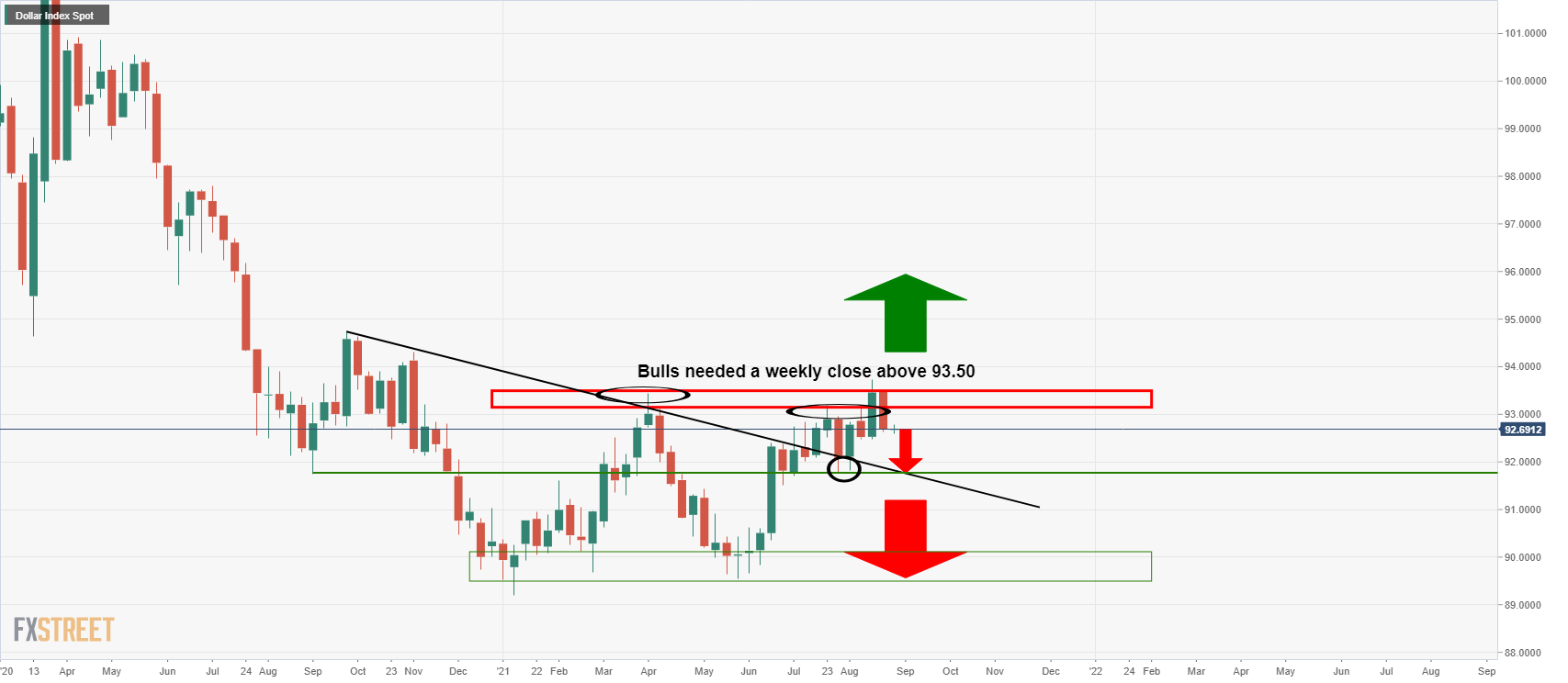
The US dollar, as measured against a basket of currencies in the DXY index ended around 0.13% lower and near to 92.500. The index had fallen to as low as 92.378 on the day, just points above the structural support of 92.344.
Meanwhile, the 10-year yields are pressured to dynamic trendline support.

This could also be considered as neckline support ao the head and shoulders.
But should the yield break below this support it will face 1.2210 as the first horizontal support as the last defence of the double bottom lows:
Gold technical analysis

Should the structural support of DXY 92.344 break, it could be blue skies ahead for the gold bugs above $1,834.
Author

Ross J Burland
FXStreet
Ross J Burland, born in England, UK, is a sportsman at heart. He played Rugby and Judo for his county, Kent and the South East of England Rugby team.