|

GME Stock News: GameStop Corp breaks support as meme stock sector takes a dive

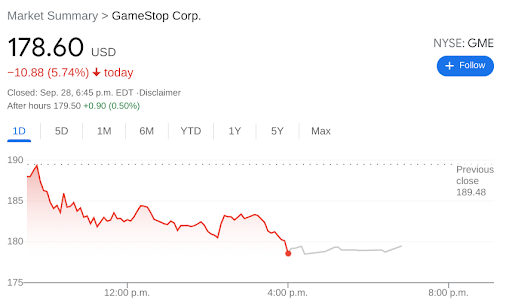
  • NYSE:GME fell by 5.74% during Tuesday’s session.
  • Citadel Securities and Robinhood are hit with a class action lawsuit from investors.
  • Another analyst gave a price cut for GameStop and reiterated a sell rating.

NYSE:GME may finally be running out of lives as the stock backed by Roaring Kitty and the rest of r/WallStreetBets dropped yet again. On Tuesday, shares of GameStop fell by 5.74% and closed the tumultuous trading session at $178.60. The video game retailer has seen its stock lose nearly 15% over the past month as meme stocks have fallen in and out of popularity with retail investors. GameStop has seen most of its trading volume wane as of late, as newer meme stocks like Vinco Ventures (NASDAQ:BBIG) and ContextLogic (NASDAQ:WISH) have emerged as more alluring targets for a short squeeze. 


Stay up to speed with hot stocks' news!


The never ending saga of the GameStop Reddit short squeeze from earlier this year is once again rearing its head. Last week a class action lawsuit was filed against Citadel Securities and Robinhood (NASDAQ:HOOD) by a group of retail investors. The suit claims collusion between Robinhood CEO Vlad Tenev and Citadel Securities founder Ken Griffin to restrict trading of GameStop and AMC (NYSE:AMC). The two parties have both taken to social media to dispel these rumors and are fighting back in an attempt to clear their names from these allegations. 

GME stock forecast
On Monday, another Wall Street analyst joined in on throwing shade at GameStop’s stock. Ascendiant Capital Markets reiterated its sell rating for GameStop, and cut the price target for the stock to a staggering $24. This is more than 80% lower than its current trading levels, which the firm states is built entirely upon its popularity in internet discussion forums. 

Author

More from Stocks Reporter
Share:

Editor's Picks

AUD/USD bounces back toward 0.6950 on fresh USD supply

AUD/USD bounces back toward 0.6950 in the Asian session on Friday. The US Dollar retreats from 17-month highs as traders take profits off the table ahead of the all-important US Nonfarm Payrolls report. Meanwhile, the Australian Dollar draws support from reviving expectations of a November interest rate hike amid elevated global yields and inflation risks.


USD/JPY struggles near 158.00 as USD retreats ahead of NFP

USD/JPY is struggling for fresh impetus near 158.00, moving away from the top end of its weekly range in the Asian session on Friday, after hotter-than-expected Tokyo CPI and amid a broad US Dollar retreat. Traders reposition themselves ahead of US Nonfarm Payrolls.

US Nonfarm Payrolls holds the key to Gold's next big move

Gold has returned to the red zone in Asia after failing several attempts to regain $4,200. Traders now eagerly await the US Nonfarm Payrolls data for September, which could significantly alter market expectations for an October Federal Reserve interest rate hike, having a major bearing on the US Dollar valuation and Gold’s next major move.

Pi Network retreats to key support level as selling pressure resurfaces

Pi Network price remains volatile in the near term, hovering around $0.0900 at press time on Friday after losing over 3% the previous day. The pullback warns of a steeper correction, with a risk of breaking below a rising wedge pattern on the four-hour chart. Pi Network struggles to maintain a steady recovery as the price remains capped below the $0.1000 psychological barrier.

Why speculators slashed Yen longs by the most since August — and what that signals about risk
For much of the past month, the Japanese Yen (JPY) had become one of the market's preferred defensive trades. Hedge funds accumulated more than 170K net long contracts over four weeks as investors positioned for tighter Bank of Japan (BoJ) policy, persistent geopolitical uncertainty and a more cautious outlook for global growth.
Markets are pricing a Fed pause. The jobs data says the hike is still coming
The market has rapidly changed its mind about the Federal Reserve (Fed). Only a week ago, investors saw an October interest-rate hike as the most likely outcome. However, softer inflation and cautious comments from policymakers have since turned a pause into the dominant scenario. Yet beneath that dramatic repricing, the US economy is sending a considerably less dovish message.