Euro falters ahead of 1.0700, no news from ECB Lagarde
- The Euro keeps daily gains vs. the US Dollar.
- European trade widely with losses so far on Friday.
- ECB President Christine Lagarde hinted at upside inflation risks.
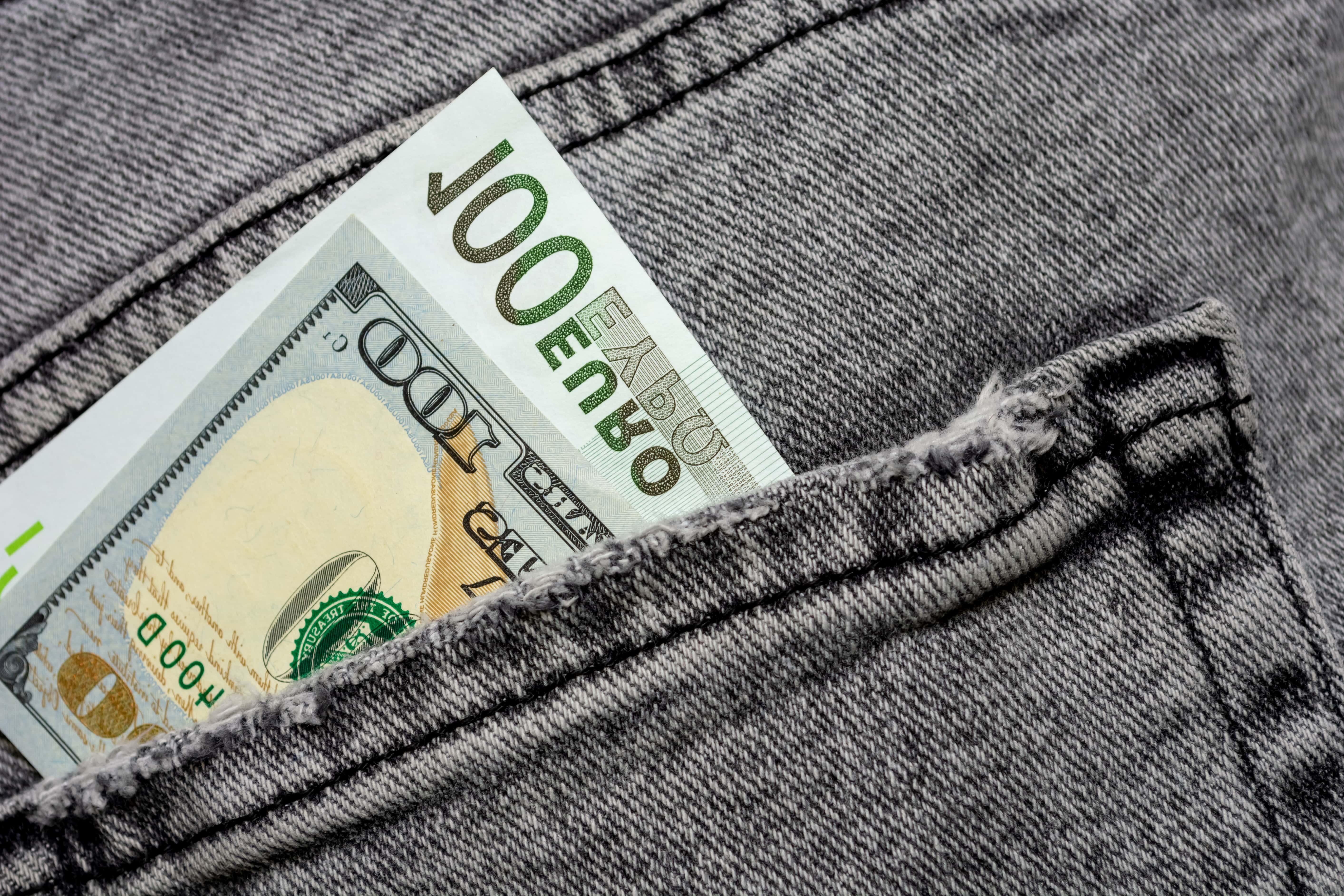
The Euro (EUR) maintains its bid bias unchanged against the US Dollar (USD), prompting EUR/USD to trade with decent gains alebit still below the 1.0700 hurdle.
On the other hand, the Greenback now appears mildly offered around 105.80 when measured by the USD Index (DXY), as investors continue to digest Federal Reserve (Fed) Chair Jerome Powell’s comments on Thursday and US yields look weaker across the curve.
Back to Powell, he confirmed that the Fed is not enthusiastic about raising its benchmark interest rate any further at a time when there is evidence of a gradual reduction in inflationary pressures. He also refrained from ruling out the possibility of another rate hike to help bring inflation closer to the target of 2% and expressed doubts about the effectiveness of the current benchmark rate in consistently achieving the inflation goal.
There was no news from European Central Bank’s (ECB) President Christine Lagarde, as he once again reiterated that inflation risks remain tilted to the upside in the near term, at the time when she suggested keeping an eye on energy prices. In addition, she advocated for inflation to recede to the bank's 2% target if interest rates are kept in restrictive territory for long enough.
In the US economic calendar, the advanced print of the Michigan Consumer Sentiment for November will take the centre stage.
Earlier, Atlanta Fed President Raphael Bostic (2024 voter, centrist) said that there is still work to be done regarding inflation.
Daily digest market movers: Euro loses traction just before 1.0700
- The EUR trades near 1.0700 against the USD.
- US yields correct lower vs. a small uptick in German yields.
- Markets anticipate that the Fed will keep its monetary policy unchanged in December.
- The ECB appears to be considering a long-term pause until H2 2024.
- Geopolitical tensions in the Middle East remain high.
- The RBA’s SoMP leaves the door open to further tightening.
- UK GDP figures surprised to the upside.
Technical Analysis: Euro does not rule out some consolidation near term
EUR/USD maintains the cautious trade in the sub-1.0700 region at the end of the week.
If the selling pressure continues, EUR/USD might initially confront the interim 55-day Simple Moving Average (SMA) at 1.0642 prior to the weekly low of 1.0495 (October 13), and the 2023 low of 1.0448 (October 15).
On the plus side, the November high of 1.0754 (November 6) stands in the way of the 200-day SMA at 1.0801 and another weekly top of 1.0945 (August 30). The psychological level of 1.1000 is oriented north of here, before to the August peak of 1.1064 (August 10) and the weekly high of 1.1149 from July 27. The surpass of the later could pave the way for a move to the 2023 top of 1.1275 seen on July 18.
The pair's outlook remains bearish as long as it trades below the 200-day SMA.
Euro FAQs
What is the Euro?
The Euro is the currency for the 20 European Union countries that belong to the Eurozone. It is the second most heavily traded currency in the world behind the US Dollar. In 2022, it accounted for 31% of all foreign exchange transactions, with an average daily turnover of over $2.2 trillion a day.
EUR/USD is the most heavily traded currency pair in the world, accounting for an estimated 30% off all transactions, followed by EUR/JPY (4%), EUR/GBP (3%) and EUR/AUD (2%).
What is the ECB and how does it impact the Euro?
The European Central Bank (ECB) in Frankfurt, Germany, is the reserve bank for the Eurozone. The ECB sets interest rates and manages monetary policy.
The ECB’s primary mandate is to maintain price stability, which means either controlling inflation or stimulating growth. Its primary tool is the raising or lowering of interest rates. Relatively high interest rates – or the expectation of higher rates – will usually benefit the Euro and vice versa.
The ECB Governing Council makes monetary policy decisions at meetings held eight times a year. Decisions are made by heads of the Eurozone national banks and six permanent members, including the President of the ECB, Christine Lagarde.
How does inflation data impact the value of the Euro?
Eurozone inflation data, measured by the Harmonized Index of Consumer Prices (HICP), is an important econometric for the Euro. If inflation rises more than expected, especially if above the ECB’s 2% target, it obliges the ECB to raise interest rates to bring it back under control.
Relatively high interest rates compared to its counterparts will usually benefit the Euro, as it makes the region more attractive as a place for global investors to park their money.
How does economic data influence the value of the Euro?
Data releases gauge the health of the economy and can impact on the Euro. Indicators such as GDP, Manufacturing and Services PMIs, employment, and consumer sentiment surveys can all influence the direction of the single currency.
A strong economy is good for the Euro. Not only does it attract more foreign investment but it may encourage the ECB to put up interest rates, which will directly strengthen the Euro. Otherwise, if economic data is weak, the Euro is likely to fall.
Economic data for the four largest economies in the euro area (Germany, France, Italy and Spain) are especially significant, as they account for 75% of the Eurozone’s economy.
How does the Trade Balance impact the Euro?
Another significant data release for the Euro is the Trade Balance. This indicator measures the difference between what a country earns from its exports and what it spends on imports over a given period.
If a country produces highly sought after exports then its currency will gain in value purely from the extra demand created from foreign buyers seeking to purchase these goods. Therefore, a positive net Trade Balance strengthens a currency and vice versa for a negative balance.
Author

Pablo Piovano
FXStreet
Born and bred in Argentina, Pablo has been carrying on with his passion for FX markets and trading since his first college years.
















