|

EUR/USD tumbles to lows near 1.2310 post-ZEW

  • The pair reverted initial gains and is now trading in daily lows.
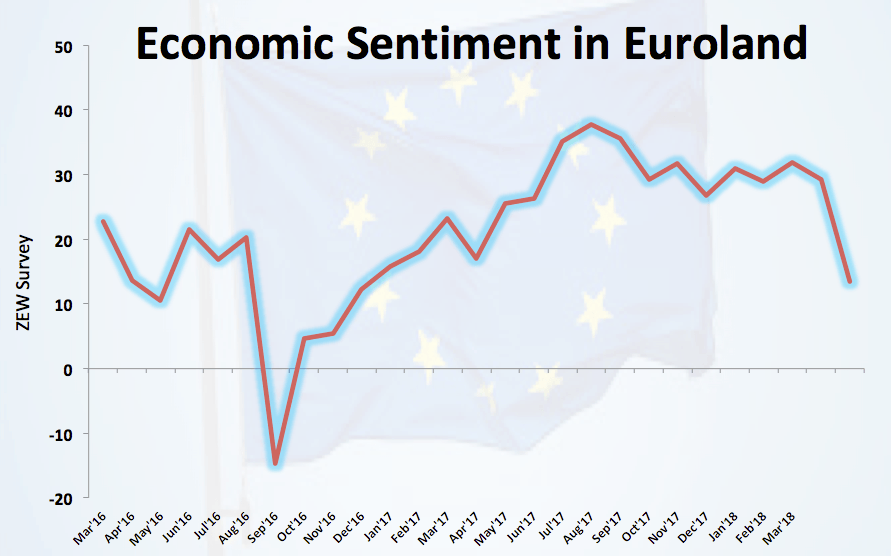
  • EMU’s Economic Sentiment dropped to 13.4 for the month of March.
  • Ahead in the week, the next risk event for EUR will be the FOMC meeting.

The selling pressure around the European currency is now picking up pace and is forcing EUR/USD to drop to the 1.2515/10 band, or session lows.

EUR/USD offered on ZEW, USD stronger

Spot is now trading on a weak note following mixed results from the ZEW Survey in Germany and the euro bloc. In fact, German Economic Sentiment dropped sharply to 5.1 for the current month, while Current Conditions came in at 90.7, a tad above estimates albeit lower than February’s reading.

Still around the ZEW but regarding the euro zone, Economic Sentiment also decreased markedly to 13.4 for the same period.

In the meantime, the pair is now trading within the negative territory, closer to the 1.2300 milestone in response to a bout of buying interest around the greenback, pushing the US Dollar Index (DXY) back above the critical 90.00 handle.

EUR/USD levels to watch

At the moment, the pair is down 0.21% at 1.2310 facing immediate contention at 1.2258 (low Feb.19) seconded by 1.2206 (low Feb.9) and finally 1.2165 (low Jan.18). On the upside, a break above 1.2414 (high Mar.14) would target 1.2448 (high Mar.8) en route to 1.2557 (2018 high Feb.16).
Author

Pablo Piovano

Born and bred in Argentina, Pablo has been carrying on with his passion for FX markets and trading since his first college years.


More from Pablo Piovano
Share:

Editor's Picks

AUD/USD bulls regain control above 0.6950 amid USD retreat

AUD/USD regains traction and extends the previous day's bounce from the weekly low, aiming for 0.7000 in Asia on Friday. The overnight pullback in US bond yields keeps the US Dollar below an 18-month high, which in turn offers some support to the pair. Meanwhile, hawkish RBA expectations also keep the major underpinned.

USD/JPY holds gains near 158.00 after Japan's weak Household Spending data

USD/JPY clings to gains around 158.00 after data showed on Friday that Japan's Household Spending fell for the ninth straight month, undermining the Japanese Yen. Meanwhile, the US Dollar remains depressed as the overnight fall in US bond yields counters a hawkish Fed and geopolitical uncertainties, could cap any downside in the pair.

Gold remains range-bound below $4,200

Gold has given up some ground after an initial bullish attempt to reach weekly highs, returning to below the $4,200 mark per troy ounce on Friday. The US Dollar’s strong upside momentum, combined with rising US Treasury yields across the curve, seems to keep further gains in the yellow metal under scrutiny.

Week ahead: US CPI, France’s budget crisis and Q3 earnings to set the market tone
The US dollar held relatively strong this week, despite the disappointing US jobs report on October 2, which further decreased the probability of a back-to-back rate hike by the Fed at the upcoming gathering on October 28.
CFTC Report: Euro and Aussie shorts expand amid diverging signals

The week in one sentence: Euro and Australian Dollar shorts deepened in the week to October 6, while Yen longs rebuilt. In addition, Coffee buying continued, and Gold exposure remained elevated despite another price decline. Speculators turned more negative on the Euro, increasing the net exposure to around 99.3K contracts.

Has Bitcoin really escaped the macro forces it was built to fight?
Over 17 years ago, Satoshi Nakamoto designed Bitcoin (BTC) on the back of a global financial crisis as an alternative to the global monetary system outside the control of central banks, governments and traditional intermediaries. This raises a key question: has Bitcoin really become independent of the macroeconomic forces it was built to challenge?