EUR/USD holding steady near 1.0960 after Eurozone PMIs, US labor data beat expectations
- EUR/USD climbed on Thursday after EU PMI figures beat expectations.
- US jobs data handily cleared forecasts, giving investors cause for pause.
- Friday’s US NFP data dump looms ahead alongside Eurozone inflation numbers.

The EUR/USD climbed half a percent bottom-to-top on Thursday, tapping 1.0970 before settling into the 1.0960 neighborhood as markets digest data beats from both sides of the Pacific heading into Friday’s US Nonfarm Payrolls (NFP) print.
The Eurozone’s HCOB Composite Purchasing Managers’ Index (PMI) beat expectations early Thursday, printing at 47.6 for December versus the median market forecast of a steady hold of 47.0 to match November’s headline figure. Much of the Composite PMI’s upside came from a healthy uptick in the HCOB Services PMI component, which climbed to 48.8 compared to the expected 48.1.
Despite beating expectations, both PMI components remain in contraction territory, with the Composite PMI printing below 50.0 for a seventh straight month.
The US ADP Employment Change for December jumped unexpectedly to 164K, easily clearing the forecast 115K and hurdling over November’s 101K ADP jobs additions (revised slightly lower from 102K).
US Thursday jobs data beats the street ahead of Friday NFP
US Initial Jobless Claims also beat expectations, showing 202K new jobless benefits seekers for the week ended December 29 compared to the forecast 216K and dropping even further away from the previous week’s 220K (revised upwards slightly from 218K).
The US S&P Global Services PMI also beat forecasts, but only by the slimmest of margins, printing at 51.4 versus the expected 51.3. Despite the beat in the PMI services component, the Composite PMI still declined slightly, dragged down by lagging performance in physical manufacturing. The Composite PMI declined to 50.9 versus the forecast steady hold at 51.0.
Friday brings a double-header of high-impact data on both continents, with the Eurozone Harmonized Index of Consumer Prices (HICP) for the year ended December expected to rebound from 2.4% to 3.0% as inflation continues to weigh on the European continent.
Eurozone inflation metrics will be followed up by the US NFP from December, which is expected to show 170K new jobs additions compared to November’s 199K. US Average Hourly Earnings are expected to ease slightly from 0.4% to 0.3% MoM in December, and the ISM Services PMI follow-up is expected to tick down from 52.7 to 52.6 in December.
EUR/USD Technical Outlook
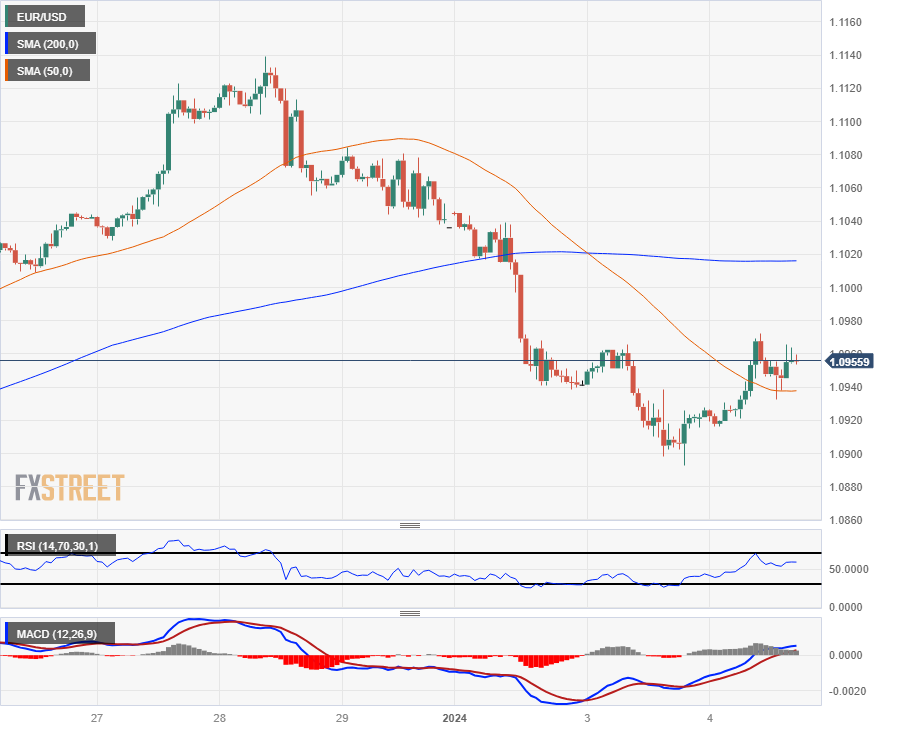
Thursday’s rebound in the EUR/USD brings the pair into the near-term consolidation zone between the 200-hour and 50-hour Simple Moving Averages (SMA) near 1.1020 and 1.0940 respectively. The pair shed the 1.1000 handle in the early week to kick off 2024, and Euro bidders are struggling to find a foothold to climb back over the key price level.
Despite Thursday’s mild bounce, the pair remains down 1.6% from 2023’s late peak of 1.1140.
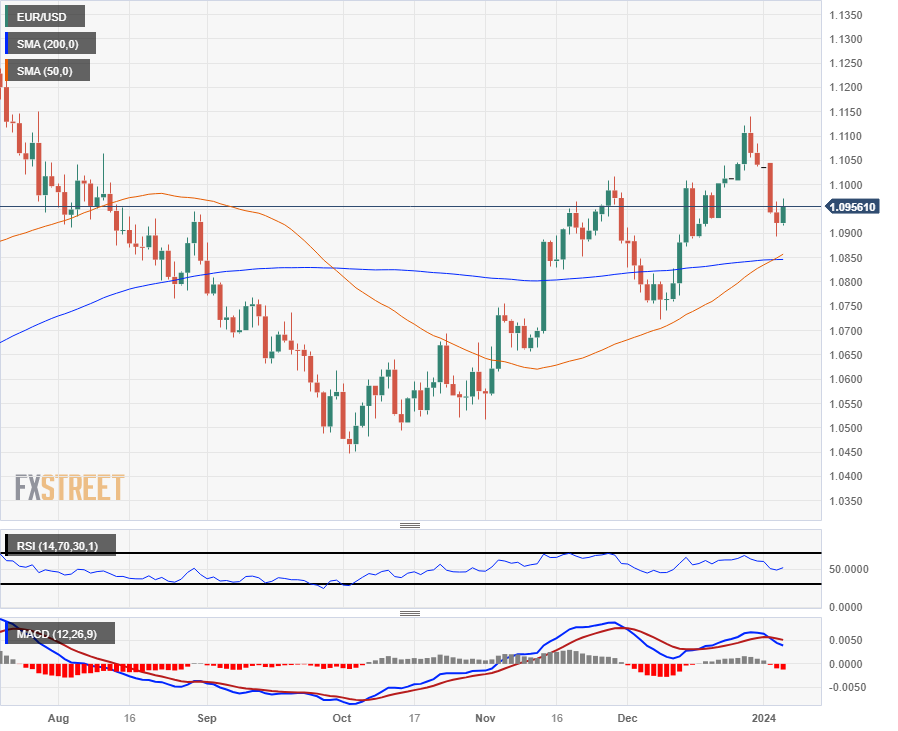
Daily candlesticks have the EUR/USD set for a challenge of technical support from a bullish crossover of the 50-day and 200-day SMAs near 1.0850, and a pattern of higher lows remains intact after a bounce from last October’s bottom bids near 1.0450.
EUR/USD Hourly Chart
EUR/USD Daily Chart
EUR/USD Technical Levels
Author

Joshua Gibson
FXStreet
Joshua joins the FXStreet team as an Economics and Finance double major from Vancouver Island University with twelve years' experience as an independent trader focusing on technical analysis.















