EUR/GBP declines amid upbeat UK employment data
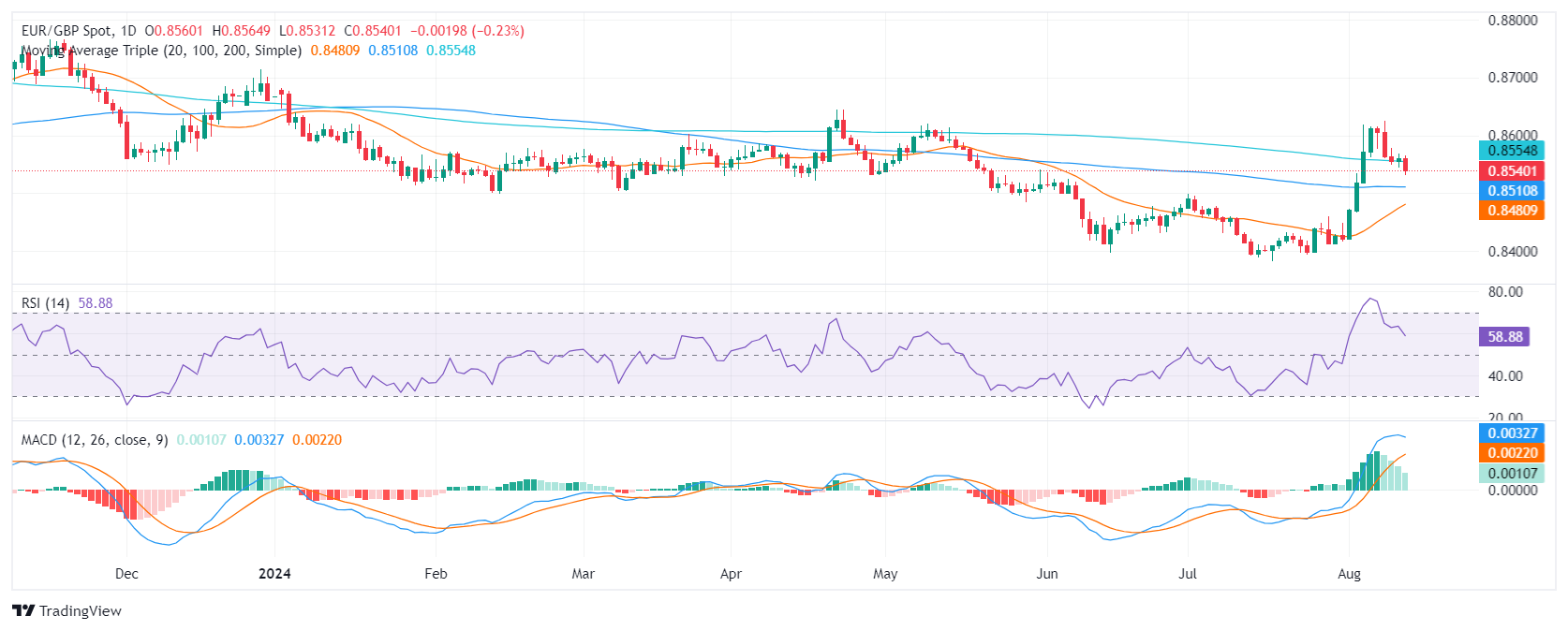
- The EUR/GBP declined to 0.8540, below the 200-day SMA.
- UK employment data bolstered the Pound Sterling during the European session.
- Sentiment data made the Euro lose interest during the session.

Tuesday witnessed the EUR/GBP pair fall, after the release of UK employment data, which supported the Pound Sterling. On the other hand, weak European Sentiment figures weighted on the Euro.
The UK released mixed labor market data for the three months ending in June. Average weekly earnings, excluding bonuses, rose by 5.4% YoY, aligning with expectations but slightly above the Bank of England's (BoE) Q2 projection of 5.1%. When including bonuses, total earnings growth slowed to 4.5% YoY, a 1.2 percentage point decrease. This deceleration in wage growth could support the BoE's easing stance, though upcoming Consumer Price Index (CPI) data will be crucial. Additionally, unemployment unexpectedly dropped to 4.2%, the lowest since February.
Meanwhile, Germany's August ZEW survey indicated significant economic weakness. Expectations fell to 19.2, down from 41.8 in July, while the current assessment worsened to -77.3. This marks the second consecutive decline in expectations, reaching the lowest level since January, signaling continued economic challenges in the second half of the year. The deteriorating eurozone outlook suggests the European Central Bank (ECB) may continue easing, with a September rate cut anticipated.
EUR/GBP technical analysis
The Relative Strength Index (RSI) of the EUR/GBP is escaping the overbought conditions. Concurrently, the Moving Average Convergence Divergence (MACD) indicator indicated a discernible decrease in its green bars and this shift implies nearing a bearish outlook for the EUR/GBP. This is also backed by the loss of the 200-day Simple Moving Average (SMA) of 0.8575 which is now a resistance. The 0.8530-0.8500 zone is the next target for the sellers.
EUR/GBP daily chart
Author

Patricio Martín
FXStreet
Patricio is an economist from Argentina passionate about global finance and understanding the daily movements of the markets.

















