China Five-Year Plan: Steps up tech, energy and decarbonisation efforts
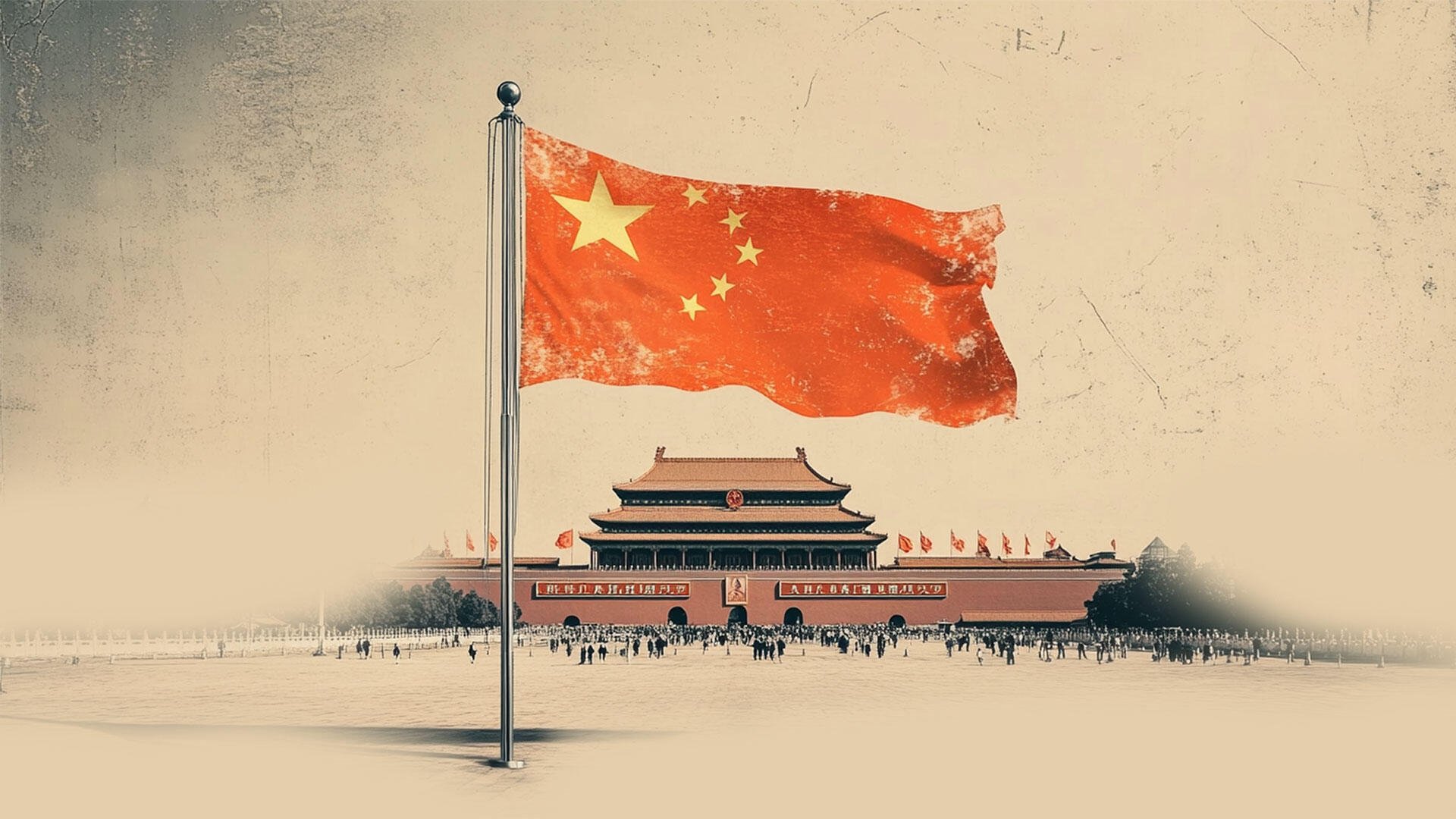
China's 15th Five-Year Plan (2026–2030) was officially submitted for review to the National People's Congress (NPC) on Thursday. This strategic blueprint marks a critical shift toward "high-quality development" and technological self-reliance to navigate a more volatile global environment.
Key quotes
Use high-value scenarios to drive deployment, iteration, and upgrades of model applications.
Advance general-purpose foundation models and industry-specific models in parallel.
Explore development pathways toward general artificial intelligence.
Encourage innovation in multimodal AI, agents, embodied intelligence, and swarm/group intelligence.
Speed up research on more efficient training and inference methods.
Increase long-term, stable support for young stem talents engaged in basic research.
Build high-level research universities into the main force for basic research and main base for talent cultivation,
Construct regional sci-tech innovation centres, industrial sci-tech innovation hubs.
Plans to make back up for all key industries.
For "AI+" action plan, deploy ai across the full industrial chain—design, pilot testing, production, and operations.
For "AI+" action plan, in services, including software and it, finance and commerce, transport and logistics, drive widespread use of intelligent terminals and agents.
For "AI+" action plan, develop native ai apps for efficiency and companionship.
For "AI+" action plan, explore new human–machine collaboration workforms, apply embodied intelligence in labor-shortage and high-risk jobs.
For "AI+" action plan, expand ai use in market regulation, workplace safety oversight, disaster prevention and relief, public security, cyberspace maintenance, and ecological and environmental protection.
For "AI+" action plan, explore a safe governance system coordinating natural persons, digital humans, and intelligent robots.
Vigorously develop venture capital for sci-tech, facilitate foreign investment in equities and venture capital.
Accelerate construction of national strategic talent forces around innovation needs.
Increase training and support for strategic scientists and leading sci-tech research talents.
On university degrees: make unconventional arrangements for urgently needed disciplines in emerging fields like AI, integrated circuits.
Coordinate the orderly construction of AI data centres, promote large-scale green development of AI data centres.
Steadily promote deployment and application of large-scale AI models in govt sector.
Promote establishment of AI governance framework with broad intl participation.
Build open global ai ecosystem, support global south countries in strengthening AI capabilities.
Severely crack down on infiltration, sabotage, subversion, and separatist activities by hostile forces.
Prioritize safeguarding major security issues concerning the long-term stability of the country.
Strengthen the fight against sanctions, interference and long-arm jurisdiction.
Market reaction
At the press time, the AUD/USD pair is down 0.60% on the day to trade at 0.7035.
Australian Dollar FAQs
One of the most significant factors for the Australian Dollar (AUD) is the level of interest rates set by the Reserve Bank of Australia (RBA). Because Australia is a resource-rich country another key driver is the price of its biggest export, Iron Ore. The health of the Chinese economy, its largest trading partner, is a factor, as well as inflation in Australia, its growth rate and Trade Balance. Market sentiment – whether investors are taking on more risky assets (risk-on) or seeking safe-havens (risk-off) – is also a factor, with risk-on positive for AUD.
The Reserve Bank of Australia (RBA) influences the Australian Dollar (AUD) by setting the level of interest rates that Australian banks can lend to each other. This influences the level of interest rates in the economy as a whole. The main goal of the RBA is to maintain a stable inflation rate of 2-3% by adjusting interest rates up or down. Relatively high interest rates compared to other major central banks support the AUD, and the opposite for relatively low. The RBA can also use quantitative easing and tightening to influence credit conditions, with the former AUD-negative and the latter AUD-positive.
China is Australia’s largest trading partner so the health of the Chinese economy is a major influence on the value of the Australian Dollar (AUD). When the Chinese economy is doing well it purchases more raw materials, goods and services from Australia, lifting demand for the AUD, and pushing up its value. The opposite is the case when the Chinese economy is not growing as fast as expected. Positive or negative surprises in Chinese growth data, therefore, often have a direct impact on the Australian Dollar and its pairs.
Iron Ore is Australia’s largest export, accounting for $118 billion a year according to data from 2021, with China as its primary destination. The price of Iron Ore, therefore, can be a driver of the Australian Dollar. Generally, if the price of Iron Ore rises, AUD also goes up, as aggregate demand for the currency increases. The opposite is the case if the price of Iron Ore falls. Higher Iron Ore prices also tend to result in a greater likelihood of a positive Trade Balance for Australia, which is also positive of the AUD.
The Trade Balance, which is the difference between what a country earns from its exports versus what it pays for its imports, is another factor that can influence the value of the Australian Dollar. If Australia produces highly sought after exports, then its currency will gain in value purely from the surplus demand created from foreign buyers seeking to purchase its exports versus what it spends to purchase imports. Therefore, a positive net Trade Balance strengthens the AUD, with the opposite effect if the Trade Balance is negative.
Author

Lallalit Srijandorn
FXStreet
Lallalit Srijandorn is a Parisian at heart. She has lived in France since 2019 and now becomes a digital entrepreneur based in Paris and Bangkok.

















