Breaking: UK annual CPI inflation falls to 8.7% in April vs. 8.2% expected
- UK CPI rises 8.7% YoY in April vs. 8.2% expected.
- Monthly UK CPI arrives at 1.2% in April vs. 0.8% expected.
- GBP/USD rises above 1.2450 on upbeat UK CPIs.

According to the latest data published by the UK Office for National Statistics (ONS) on Wednesday, the United Kingdom annual Consumer Price Index (CPI) rose 8.7% in April against the 10.1% jump recorded in March. The market consensus was for an 8.2% increase.
Meanwhile, the Core CPI gauge (excluding volatile food and energy items) increased 6.8% YoY last month, compared with a 6.2% rise seen in March while beating expectations of a 6.2% clip.
The monthly figures showed that the UK Consumer Price Index climbed 1.2% in March vs. 0.8% estimates and 0.8% previous.
The UK Retail Price Index for April accelerated 1.5% MoM and 11.4% YoY, beating expectations across the time horizon.
An official from the UK Finance Minister Jeremy Hunt’s office said that “we must stick resolutely to plan to get inflation down.”
Meanwhile, Hunt noted, “although it is positive that it is now in single digits, food prices are still rising too fast.”
Additional takeaways (via ONS)
UK core CPI rate highest since March 1992.
Food and non-alcoholic drink inflation eased slightly to 19.1% from 19.2%.
FX implications
In an initial reaction to the UK CPI numbers, the GBP/USD pair jumped nearly 20 pips to hit daily highs at 1.2466 before reversing slightly to 1.2455, where it now wavers. The pair is up 0.32% on the day.
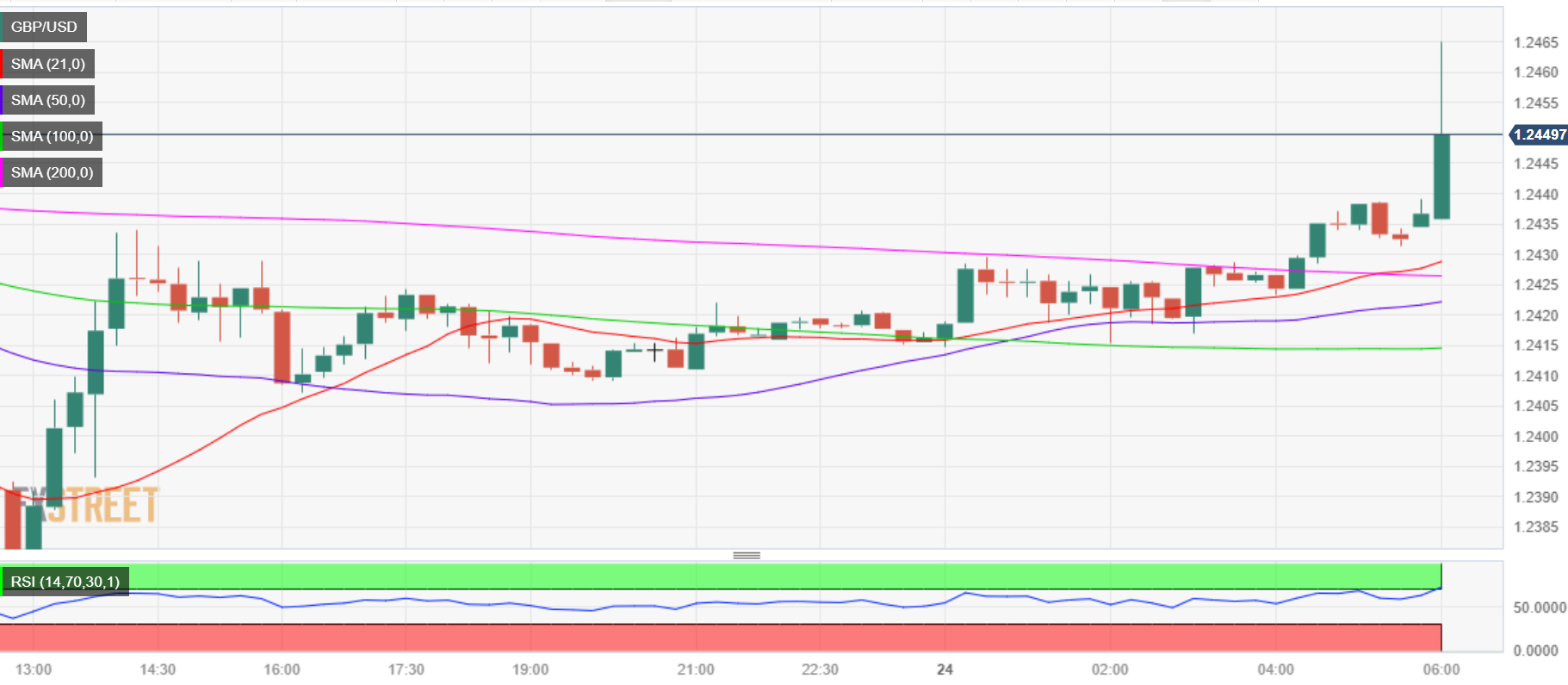
GBP/USD: 15-minutes chart
Why does UK inflation matter to traders?
The Bank of England (BOE) is tasked with keeping inflation, as measured by the headline Consumer Price Index (CPI) at around 2%, giving the monthly release its importance. An increase in inflation implies a quicker and sooner increase in interest rates or the reduction of bond buying by the BOE, which means squeezing the supply of pounds. Conversely, a drop in the pace of price rises indicates looser monetary policy. A higher-than-expected result tends to be GBP bullish.
Author

FXStreet Team
FXStreet
Composed of a group of economic journalists and FX experts, the FXStreet content team produces and oversees all content published on FXStreet. It provides a purely journalistic approach to the Forex market.