Breaking: UK annual CPI inflation steadies at 8.7% in May vs. 8.4% expected
- United Kingdom CPI increased 8.7% YoY in May vs. 8.4% expected.
- Monthly British CPI inflation data arrived at 0.7% in May vs. 0.5% expected.
- The GBP/USD pair jumps to test 1.2800 on upbeat UK CPIs.

According to the latest data published by the UK Office for National Statistics (ONS) on Wednesday, the United Kingdom's annual Consumer Price Index (CPI) accelerated 8.7% in May, at the same pace seen in April. The market consensus was for an 8.4% increase.
Meanwhile, the Core CPI gauge (excluding volatile food and energy items) increased 7.1% YoY last month, compared with a 6.8% rise seen in April while outpacing estimates of a 6.8% clip.
The monthly figures showed that the UK Consumer Price Index advanced 0.7% in March vs. 0.5% expectations and 1.2% prior.
The UK May core CPI ex-energy, food, alcohol and tobacco increased 0.8% MoM.
The UK Retail Price Index for May accelerated 0.7% MoM and 11.3% YoY, beating expectations across the time horizon.
Commenting on the inflation data, UK Finance Minister, Jeremy Hunt, noted, “we know how much high inflation hurts families and businesses across country.”
“We will not hesitate in our resolve to support Bank of England as it seeks to squeeze inflation out of our economy,” he added.
FX implications
In a knee-jerk reaction to the UK CPI data, the GBP/USD pair jumped nearly 40 pips to test 1.2800 before reversing slightly to 1.2790, where it now wavers. The pair is up 0.19% on the day.
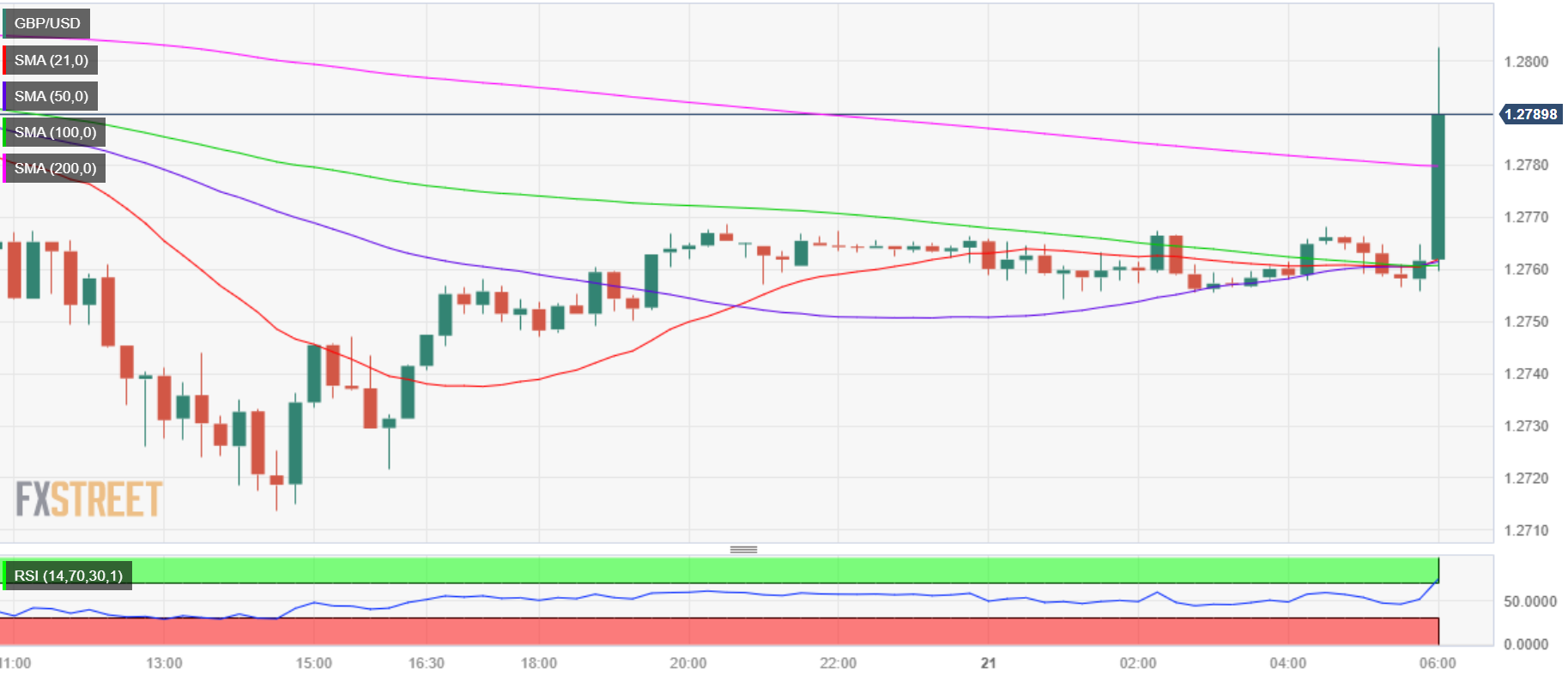
GBP/USD: 15-minutes chart
Why does UK inflation matter to traders?
The Bank of England (BOE) is tasked with keeping inflation, as measured by the headline Consumer Price Index (CPI) at around 2%, giving the monthly release its importance. An increase in inflation implies a quicker and sooner increase in interest rates or the reduction of bond buying by the BOE, which means squeezing the supply of pounds. Conversely, a drop in the pace of price rises indicates looser monetary policy. A higher-than-expected result tends to be GBP bullish.
Author

FXStreet Team
FXStreet
Composed of a group of economic journalists and FX experts, the FXStreet content team produces and oversees all content published on FXStreet. It provides a purely journalistic approach to the Forex market.