Breaking: NZ CPI sends Kiwi nearly 50 pips higher

New Zealand's Consumer Price Index is out as follows:
New Zealand Q2 consumer price index +1.3 pct vs pvs quarter (Reuters poll +0.8 pct).
NZ Q2 Consumer Price Index +3.3 pct vs year ago (Reuters poll +2.8 pct).
NZ Q2 Consumer Price Index non-tradables +1.2 pct vs pvs quarter.
NZ Q2 Consumer Price Index non-tradables +3.3 pct vs year ago.
ANZ Bank insights
- ''There’s a lot of noise still in the inflation data. The headline CPI figure in Q2 was pumped up by a higher minimum wage, strong oil prices, supply disruptions, and base effects (prices fell in Q2 2020, making the y/y% look very large). But, we’re also seeing signs that sustained inflation pressures are building underneath all the noise, with the labour market tightening, and firms passing on higher costs to consumers.''
- ''For the RBNZ, today’s data marks the first time since before COVID that inflation was above the 2% midpoint. More importantly, measures of core inflation have headed in to the stratosphere – increasing to over 3% y/y in Q2. The RBNZ’s Sectoral Factor Model, released at 3pm, should provide another view on core inflation pressure, but at this point, it’s clear that inflation momentum is very strong. All up, this extremely strong data print absolutely confirms our view that the OCR will need to be lifted in August, given the economy is at risk of becoming dangerously overheated.''
NZD/USD update
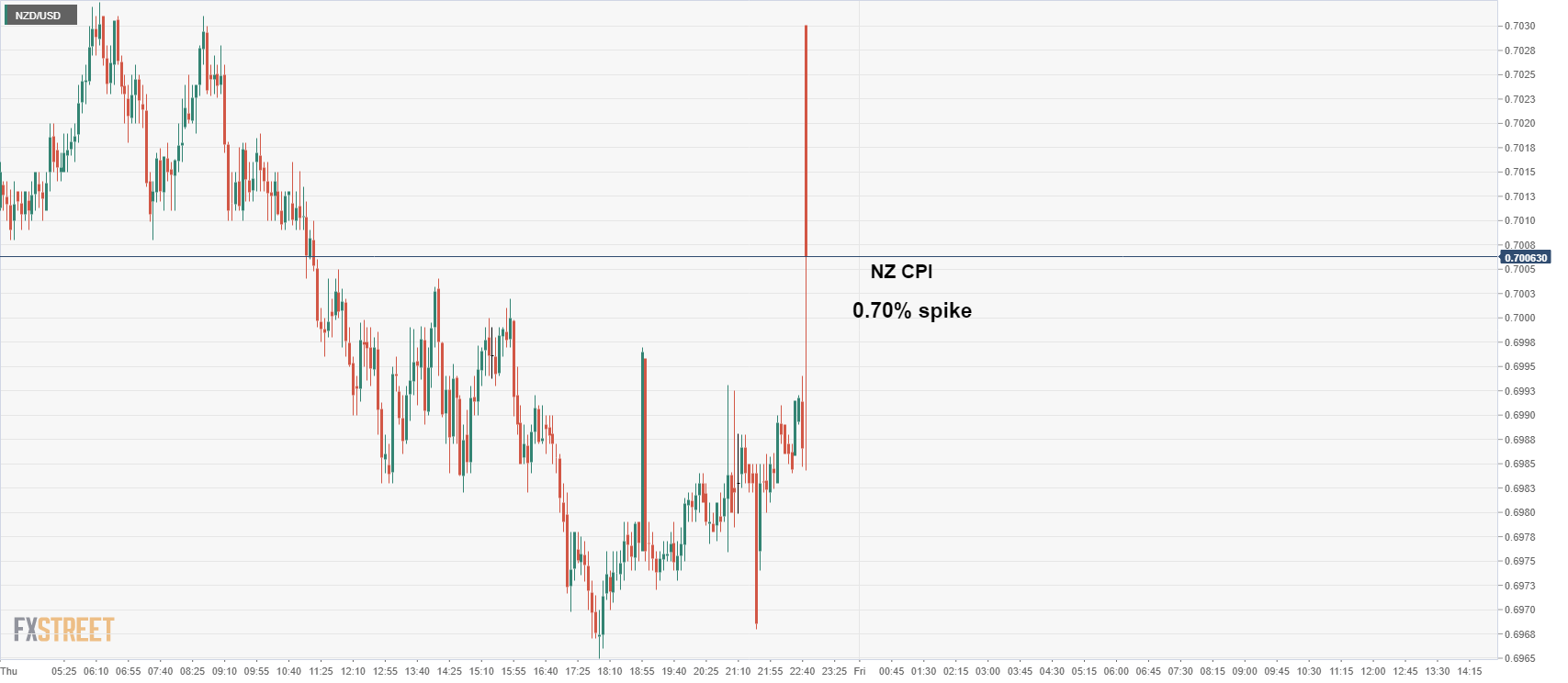
The data has impacted the markets and NZD/USD is firmly bid by nearly 50 pips on the release as follows:
5-min chart
Daily chart
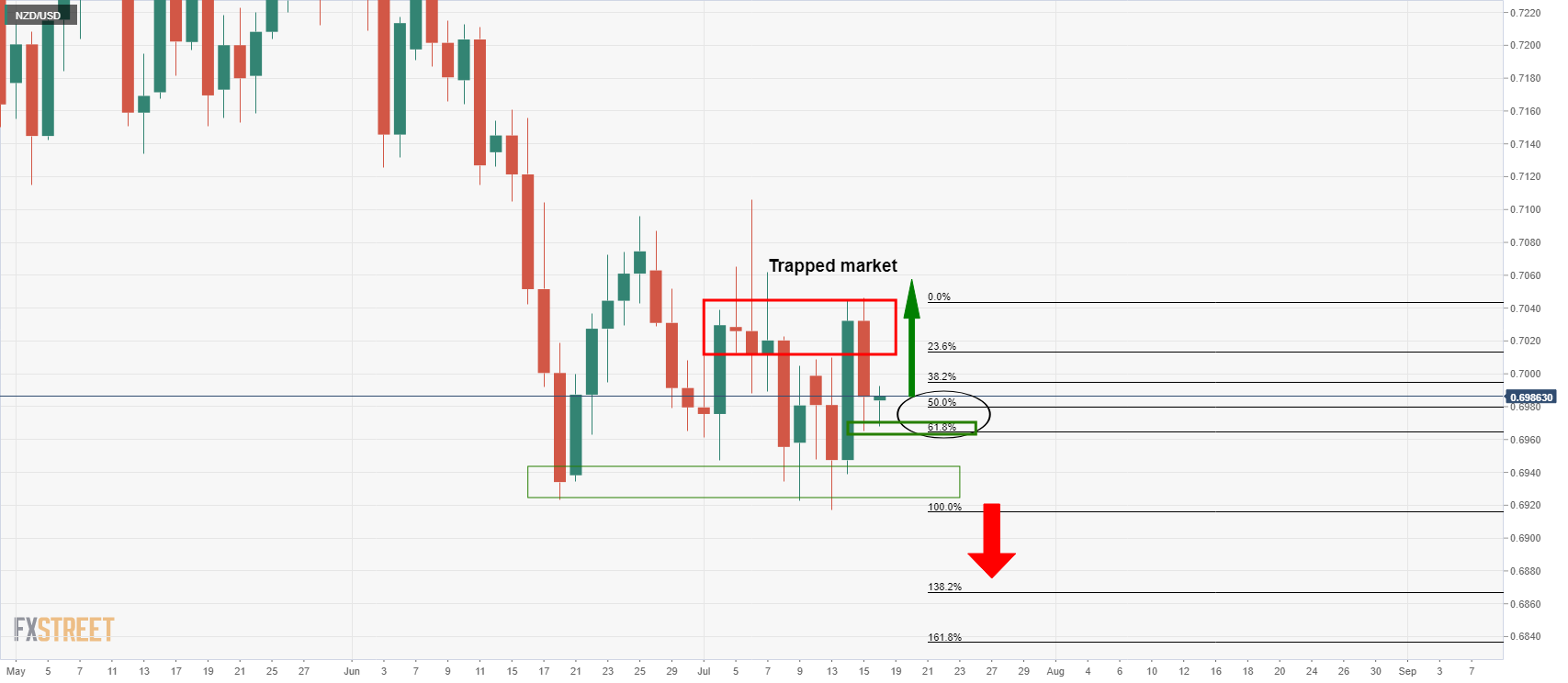
Meanwhile, the market is otherwise trapped on the daily chart and it will take more from the bulls to break into the highs.
About the Consumer Price Index
Consumer Price Index released by the Statistics New Zealand is a measure of price movements by the comparison between the retail prices of a representative shopping basket of goods and services . The purchase power of NZD is dragged down by inflation. The CPI is a key indicator to measure inflation and changes in purchasing trends. A high reading is seen as positive (or bullish) for the NZD, while a low reading is seen as negative.
Author

FXStreet Team
FXStreet
Composed of a group of economic journalists and FX experts, the FXStreet content team produces and oversees all content published on FXStreet. It provides a purely journalistic approach to the Forex market.