BoJ’s Ueda: Japan’s economy recovering moderately
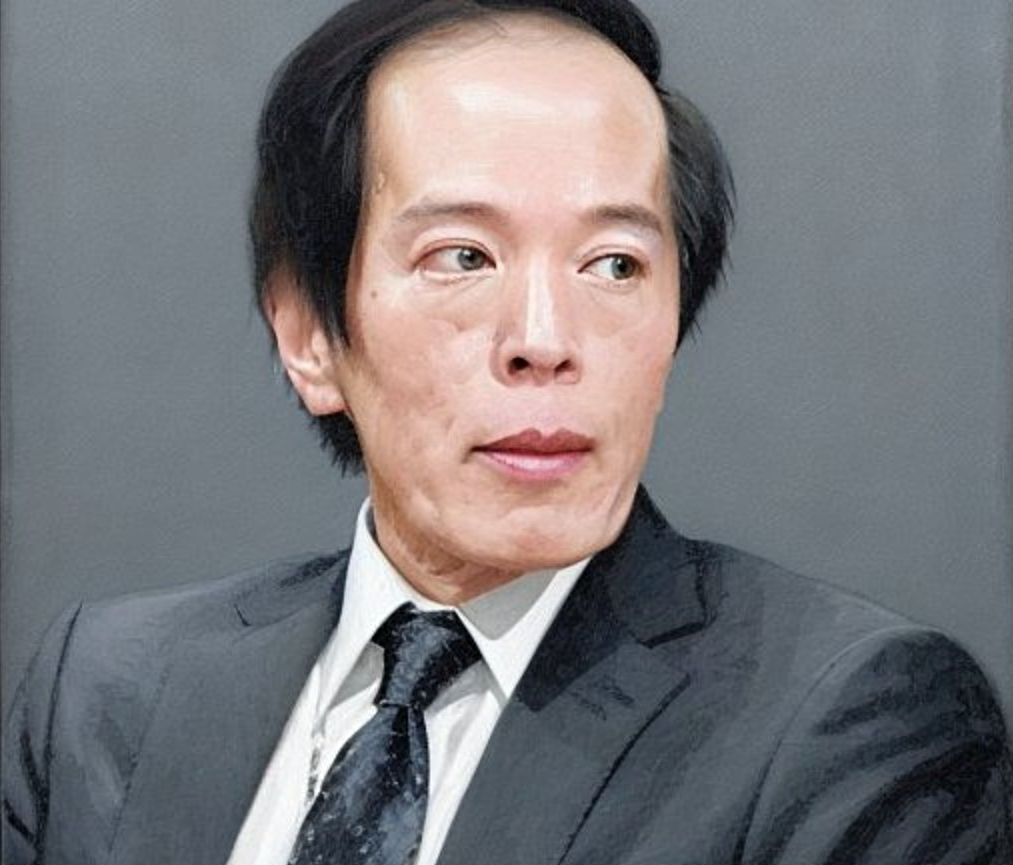
The Bank of Japan (BoJ) Governor Kazuo Ueda said on Monday that the Japanese economy is recovering moderately despite weak signs.
Key quotes
Japan’s economy recovering moderately despite weak signs.
Will increase interest rates upon realization of strong economic outlook.
To increasingly raise policy rate to adjust monetary support in line with economic and price forecasts.
Monitoring effects of various risks on economic outlook.
Sees moderate increase in private consumption trend.
Maintains stance to support economic activity.
Sees rise in income in both corporate and household sectors.
Gradually adjusting monetary support will help achieve price target through sustained economic growth.
Must monitor various risks, including US economy.
Increase in spending is gradually intensifying virtuous cycle.
To monitor wage negotiations in the future.
Sees executives of large firms announce commitment to sustained wage growth.
Firms should pass on higher labor costs through price hikes.
Gradual adjustment to easing to aid inflation goal.
Long-term inflation expectations embedded among households and firms.
Supports firm monetary policy to boost the economy.
Projects strengthening inflationary pressure from wage increases.
High uncertainty over future growth pace in China.Expects underlying inflation to continue rising moderately.
To focus on outlook of wage negotiations and how increased wages will affect inflation.
It is crucial to achieve a sustained increase in real wages, such as by raising productivity.
Sees increasing likelihood of soft landing.
Need to monitor US economy carefully.
Cautions volatile markets based on economic data and geopolitical risks.
Underlying inflation expected to moderately increase.
High uncertainty over China's growth rate.
Japan's economy and prices remain vulnerable to volatile market moves.Greatly interested in how US policy under President-elect Trump will unfold given the outlook of the US economy will have a big impact on the global economy.
It will take quite a long time before we get clarity on how US economic policy under Trump will unfold.
Market reaction to the BoJ’s Ueda speech
At the time of writing, USD/JPY is trading 0.46% higher on the day to trade at 155.01.
Bank of Japan FAQs
The Bank of Japan (BoJ) is the Japanese central bank, which sets monetary policy in the country. Its mandate is to issue banknotes and carry out currency and monetary control to ensure price stability, which means an inflation target of around 2%.
The Bank of Japan embarked in an ultra-loose monetary policy in 2013 in order to stimulate the economy and fuel inflation amid a low-inflationary environment. The bank’s policy is based on Quantitative and Qualitative Easing (QQE), or printing notes to buy assets such as government or corporate bonds to provide liquidity. In 2016, the bank doubled down on its strategy and further loosened policy by first introducing negative interest rates and then directly controlling the yield of its 10-year government bonds. In March 2024, the BoJ lifted interest rates, effectively retreating from the ultra-loose monetary policy stance.
The Bank’s massive stimulus caused the Yen to depreciate against its main currency peers. This process exacerbated in 2022 and 2023 due to an increasing policy divergence between the Bank of Japan and other main central banks, which opted to increase interest rates sharply to fight decades-high levels of inflation. The BoJ’s policy led to a widening differential with other currencies, dragging down the value of the Yen. This trend partly reversed in 2024, when the BoJ decided to abandon its ultra-loose policy stance.
A weaker Yen and the spike in global energy prices led to an increase in Japanese inflation, which exceeded the BoJ’s 2% target. The prospect of rising salaries in the country – a key element fuelling inflation – also contributed to the move.
Author

Lallalit Srijandorn
FXStreet
Lallalit Srijandorn is a Parisian at heart. She has lived in France since 2019 and now becomes a digital entrepreneur based in Paris and Bangkok.
















