|

BOE's Ramsden: Structural shocks to the economy from Brexit can’t be offset by monetary policy
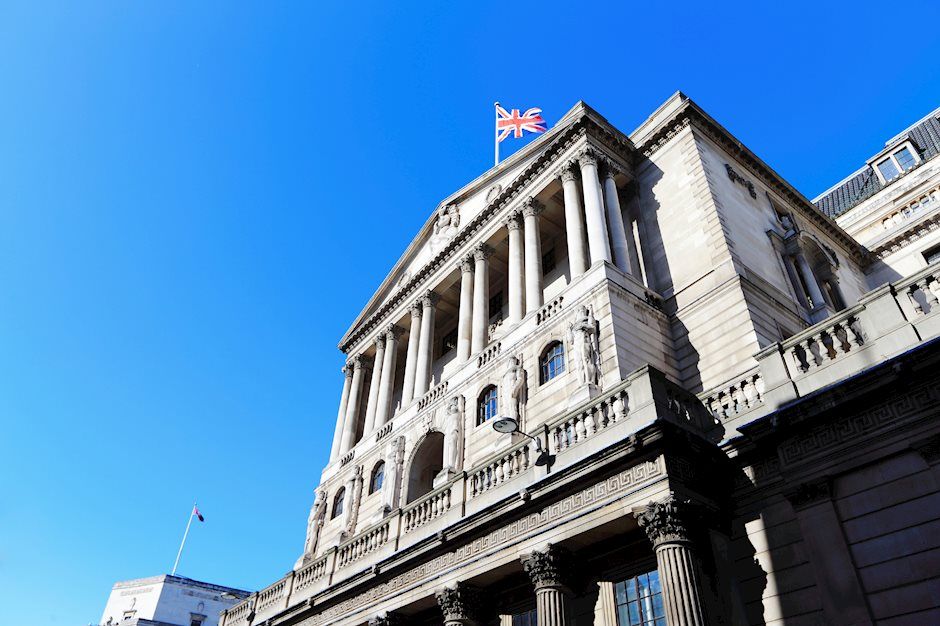
BOE Deputy Governor David Ramsden, during a scheduled speech in Cambridge, was noted saying that structural shocks to the economy from Brexit can't be offset by monetary policy.

Key quotes:

   •  Weak productivity remains a key consideration of monetary policy
   •  MPC views weakness and uncertainty of UK productivity as a key consideration for monetary policy
   •  Pace of productivity influences what happens to inflation
   •  Most recent data show signs of productivity growth rising in the second half of 2017
   •  Still no confirmation that productivity pickup is sustained in the near-term
   •  UK business investment has been unusually weak relative to past recoveries
   •  MPC's judgement is that productivity growth will settle at just over 1% over the next three years
   •  MPC's view is that the economy's speed limit is likely to be around 1½%
   •  There are significant risks in both directions to the outlook for productivity
   •  Naturally lower productivity growth, and dampening effect of Brexit are risks to productivity
   •  A clearer transition path and future trading arrangements post-Brexit, could reduce uncertainty
   •  Latest evidence from Bank's Decision Maker Panel Survey suggests impact of Brexit holding back business investment growth may be less in 2018 than 2017

Author

Haresh Menghani

Haresh Menghani is a detail-oriented professional with 10+ years of extensive experience in analysing the global financial markets.


More from Haresh Menghani
Share:

Editor's Picks

EUR/USD clings to gains around 1.1800

EUR/USD manages to regain composure and retests the 1.1800 region in quite a positive start to the week. The pair’s bounce follows the US Dollar’s offered stance post-SCOTUS ruling ahead of important US data and Fedspeak on Tuesday.

GBP/USD treads water near 1.3500 as BoE-Fed divergence debate stalls

GBP/USD spent Monday spinning in place as market participants await a fresh catalyst to break the pair out of its recent range. The BoE's February hold came with a surprisingly dovish 5-4 split, and UK Consumer Price Index data last week showed inflation easing to 3.0%, reinforcing the case for earlier rate cuts, with most economists now looking to April or March for the next move. 

Gold climbs above $5,200 on geopolitical tensions, trade uncertainty

Gold price jumps to around $5,230 during the early Asian session on Tuesday. The rally of the precious metal is bolstered by heightened geopolitical tensions and global trade uncertainty following US tariff decisions. Traders brace for the US January Producer Price Index report on Friday for fresh impetus. 

Solana DeFi platform Step Finance to close operations following treasury hack

The Solana based decentralized finance platform Step Finance announced it will end all operations effective immediately following a breach that drained its treasury.

Supreme Court nixes tariffs, Trump teases 15% global tariff

On February 20th, the Supreme Court ruled that Trump’s global tariffs under IEEPA authority were unconstitutional, effectively nullifying the framework. However, the relief was short-lived. Within hours, Trump floated a 15% blanket tariff under an alternative legal authority.

XRP recovers slightly as bearish sentiment dominates crypto market

Ripple is rising above $1.40 at the time of writing on Monday amid fresh tariff-triggered headwinds in the broader cryptocurrency market. The sell-off to $1.33, the token’s intraday low, can be attributed to macroeconomic uncertainty, geopolitical tensions and risk-averse sentiment among other factors.