|

BOC Survey: Half of firms expect Canada to be in mild recession over next year

In its quarterly Business Outlook Survey published on Monday, the Bank of Canada said about half of polled firms expect Canada to go into a mild recession over the next year, down from roughly two-thirds in the previous survey, per Reuters.

Additional takeaways

"79% of firms expect inflation to remain above 3% for the next two years, down from 84% in Q4."

"59% of firms expect inflation to stay well above 2% until at least 2025."

"For 5th consecutive quarter, businesses anticipate sales growth to slow; slowdown follows period of exceptional strength over the past year."

"Businesses link expectations of weaker sales growth to rate hikes, high inflation and concern over a recession."

"Although surveys were conducted before global banking stresses emerged in early March, evidence suggests business sentiment has not changed much since then."

"Firms continue to view labor market as tight, although labor shortages and wage growth pressure have eased."

"Firms expect size and pace of output prices to moderate; this suggests firms are gradually shifting closer to normal price-setting practices."

"Separate BOC Q1 survey on consumer expectations shows 20.3% of Canadians expect significant economic decline in next 12 months, 37.7% expect small decline."

"Expectations for 1-year ahead inflation fell to 6.03% from 7.18% in Q4; 2-years ahead inflation expectations drop to 4.27% from 5.14%."

"Expectations for 5-year ahead inflation have edged down to 2.92% from 3.10%."

Market reaction

The USD/CAD stays under bearish pressure and was last seen losing 0.6% on the day at 1.3437.

Author

Eren Sengezer

As an economist at heart, Eren Sengezer specializes in the assessment of the short-term and long-term impacts of macroeconomic data, central bank policies and political developments on financial assets.


More from Eren Sengezer
Share:

Editor's Picks

AUD/USD climbs toward 0.7000 after strong China data dump

AUD/USD attracts follow-through buyers for the second straight day on Monday, extending last week's recovery toward 0.7000 in Monday's Asian trading. Strong Chniese Q3 GDP and activity data for September strengthen the pair's advance, following RBA Assistant Governor Chris Kent's hawkish remarks.

USD/JPY struggles near 158.00 amid hawkish BoJ, subdued USD

USD/JPY remains defensive near 158.00 in the Asian session on Monday, as the US Dollar remains depressed near a two-week low amid the recent decline in US bond yields. Furthermore, looming intervention risks underpin the Japanese Yen and weigh on the pair amid BoJ Governor Kazuo Ueda's hawkish remarks. However, Fed rate-hike bets and geopolitical uncertainties could limit USD losses and the major.

Gold stalls below $4,200 as Fed rate-hike bets limit upside

Gold (XAU/USD) struggles after opening the week higher. The US Dollar (USD) and US Treasury yields find some footing following last week’s pullback as traders assess the Federal Reserve’s (Fed) interest rate path and geopolitical developments.

Crypto Today: Bitcoin, Ethereum, XRP extend recovery despite ETFs outflows

Bitcoin edges higher above $82,000, building strong structural support despite roughly $229 million in ETF outflows last week. Ethereum recovers above $2,400 as bulls strive to regain trend control, backed by a subtle recovery in momentum indicators.

Higher than expected inflation shakes markets: What to prepare for?

US CPI report came in stronger than expected, lifting the probability of a December rate hike higher once again. Even though Fed Chair Warsh reinforced expectations of a hold for the October’s meeting, markets now face a two-step event: a likely pause on October 28, followed by an interest rate hike on December 9.

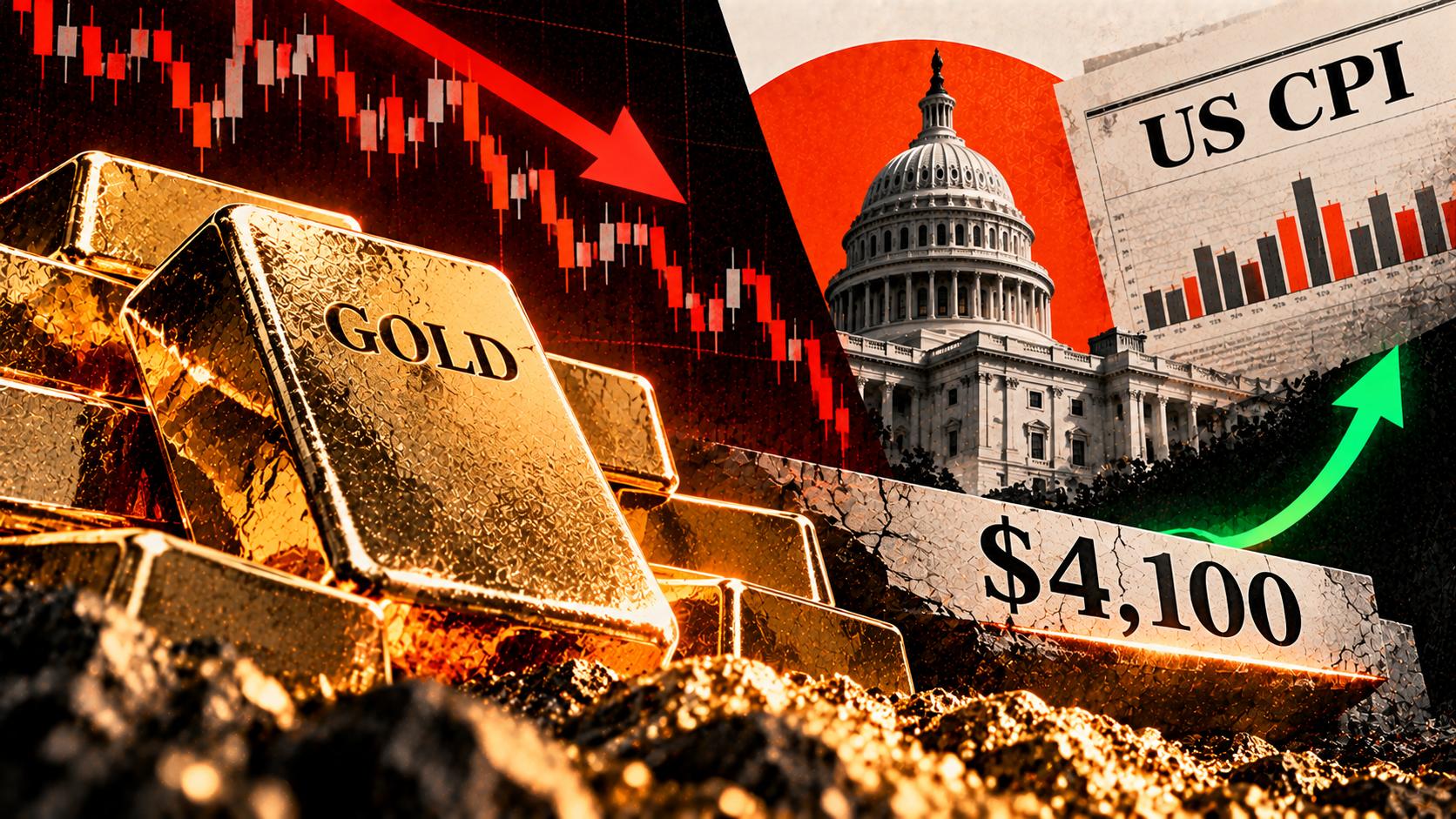
Everyone's dumping Gold after hot US inflation. Here's why $4,100 could be a floor, not a cliff
Gold (XAU/USD) is recovering from a sharp sell-off triggered by hotter-than-expected United States (US) inflation data released on Wednesday. The precious metal briefly plunged toward $4,073 as investors increased their bets on further Federal Reserve (Fed) interest rate hikes before recovering as US Treasury yields and the US Dollar (USD) reversed their initial gains.